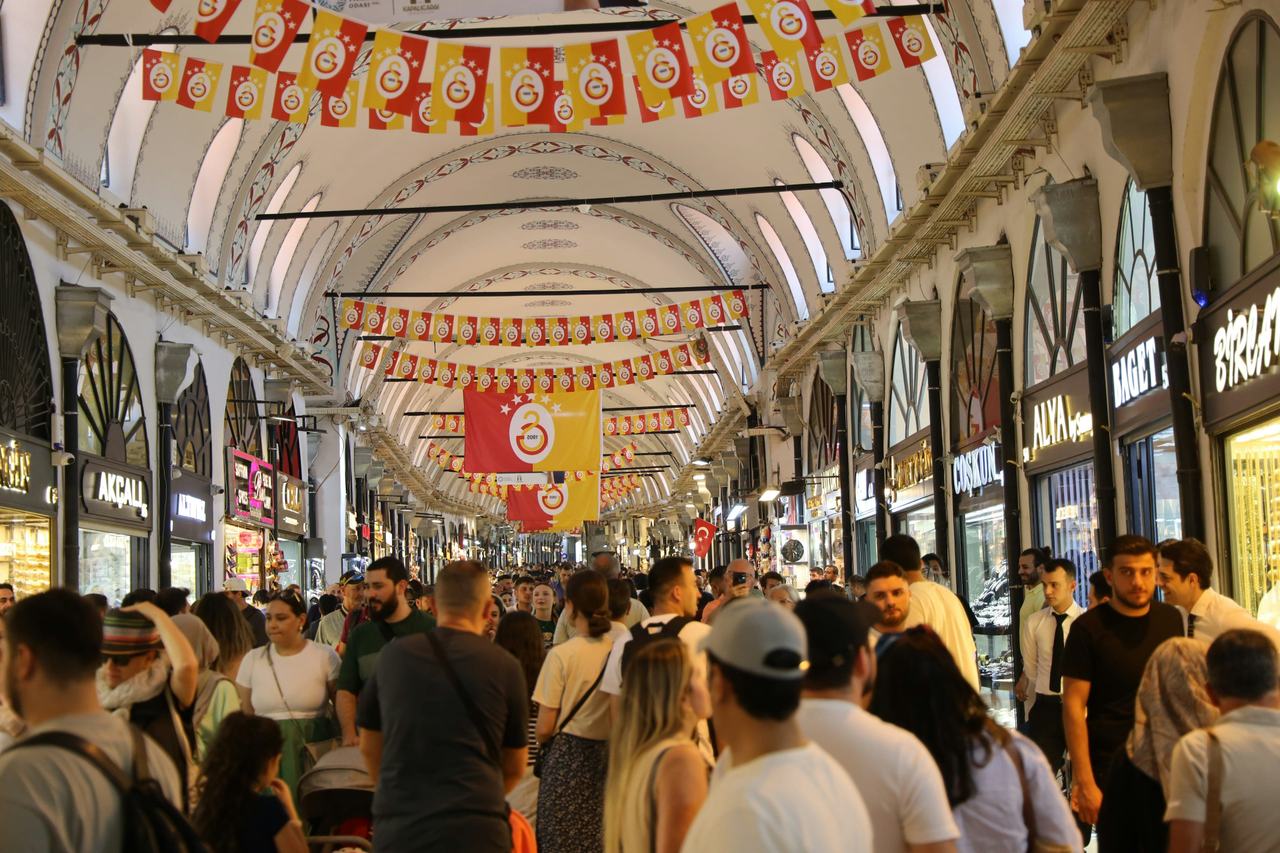
Begun under Mehmed II after 1453 around a stone bedesten, the Grand Bazaar spread until it formed a covered maze of more than sixty streets. Jewelers and dealers in carpets, ceramics and lamps still gather by trade, around the old hans.
The story
The Grand Bazaar grew around a market building commissioned by Sultan Mehmed II after the Ottoman conquest of Constantinople to encourage commerce in the city. Construction of this core, now known as the İç Bedesten, began in the winter of 1455–56 and ended in the winter of 1460–61; it housed the trade in textiles and jewels. Shops gradually filled the spaces around this building and a second bedesten, creating a commercial quarter that had largely taken shape by the early 17th century. Repeated fires and earthquakes brought rebuilding and changes, leaving a sprawling covered market between the Beyazıt and Nuruosmaniye mosques rather than a complex built to a single plan.
Did you know?
-
A Byzantine relief of an eagle is set above the İç Bedesten’s east gate.
Its presence led some scholars to argue that the building was Byzantine, although analysis of the brickwork places most of its structure in the second half of the 15th century.
-
The bazaar once contained a book market, but the 1894 earthquake prompted its relocation to a site near the Beyazıt Mosque.
On site, look closely
-
The old bedesten
At the heart of the bazaar, the oldest covered hall, closed by heavy doors, held the precious goods: jewelry, weapons, antiques.
-
The hans
Around the covered streets, arcaded courtyards called hans served as warehouses and workshops; some still house craftsmen.
-
The painted vaults
Look up: the bazaar’s streets are covered with decorated vaults, pierced by skylights that let the light fall through.