



Istanbul in three layers
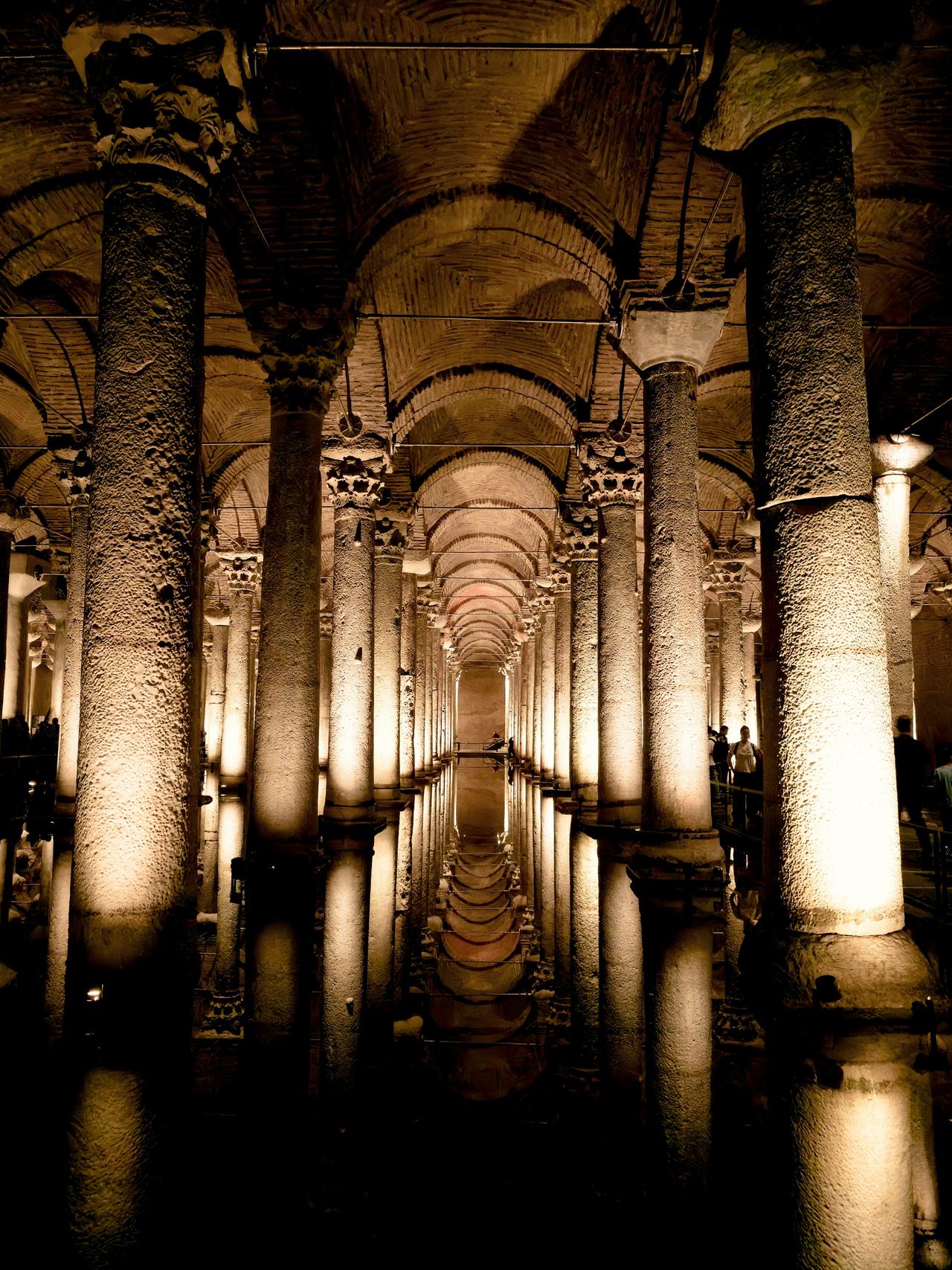
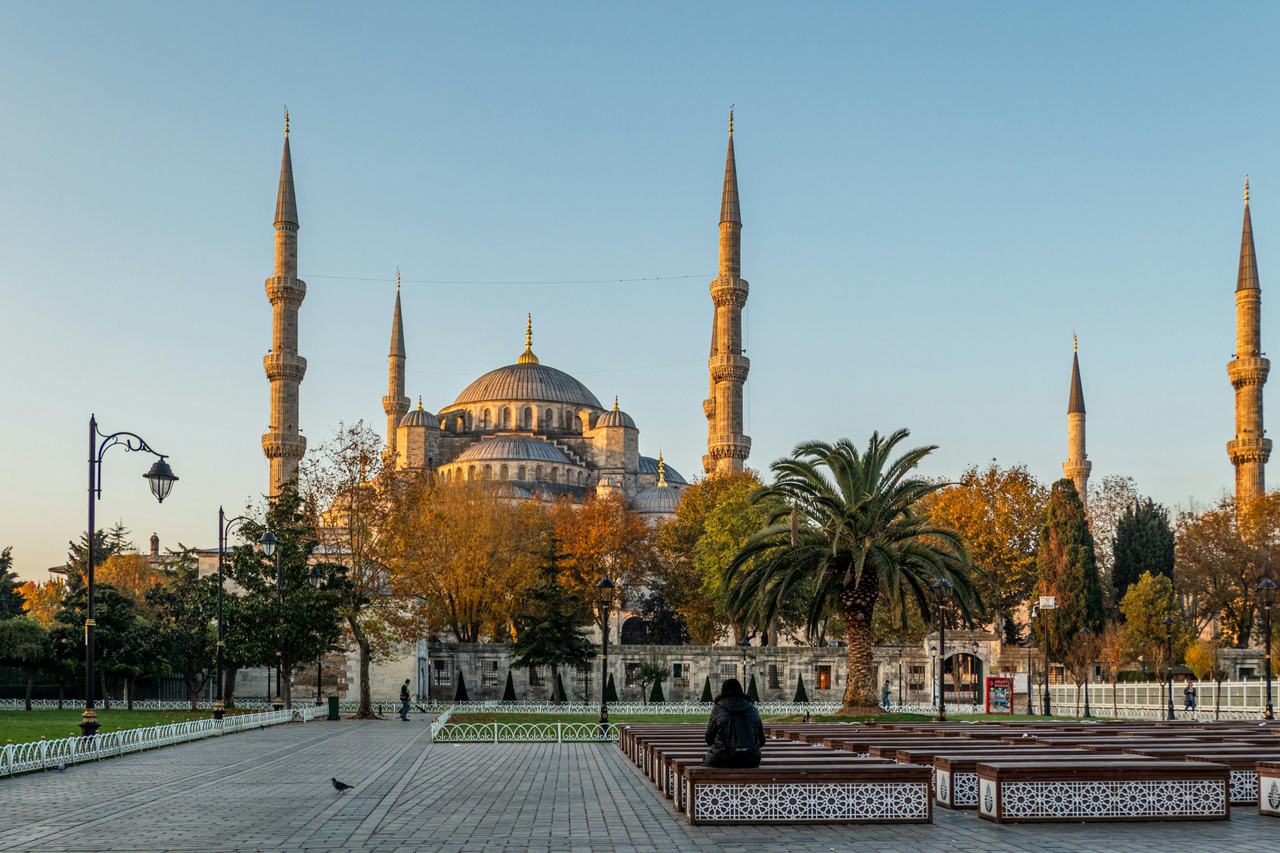
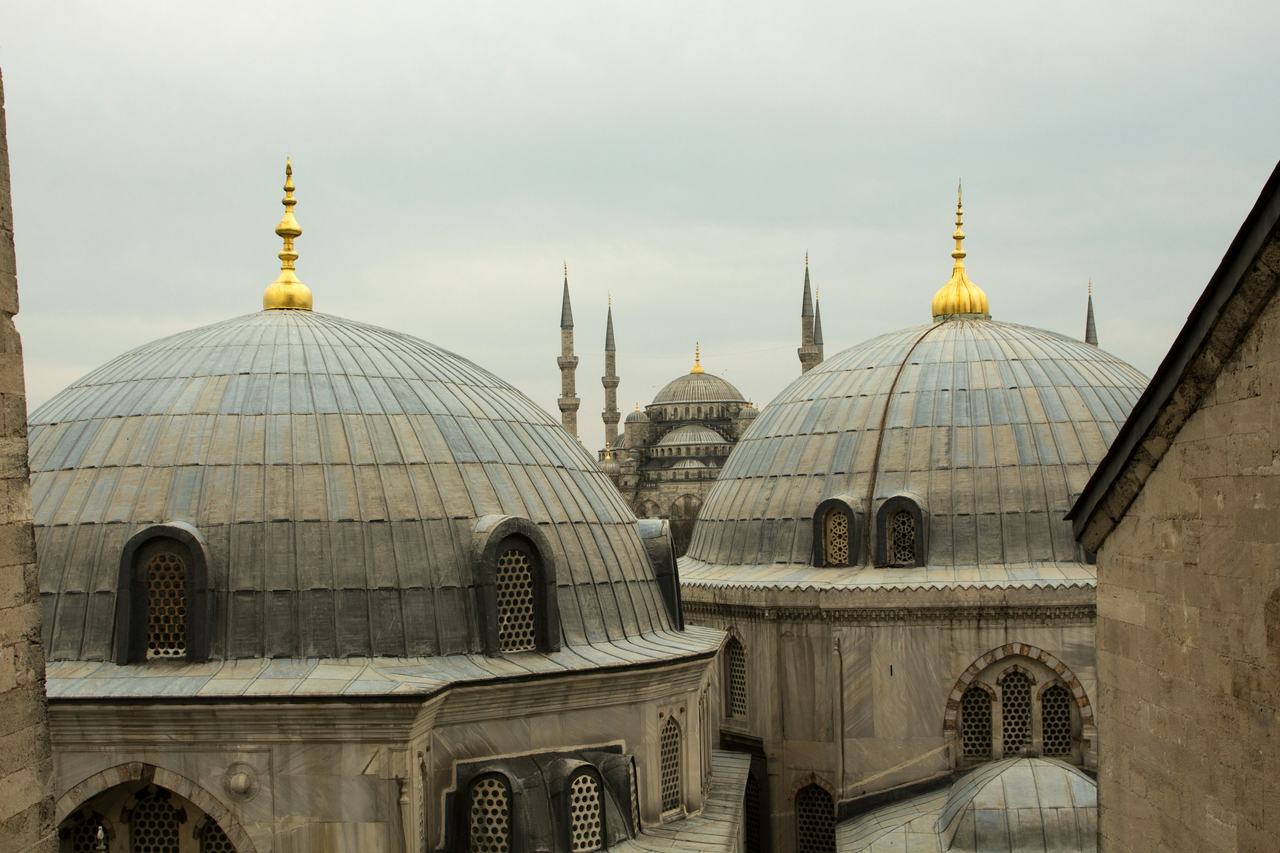
Under the old city, a cistern held up by 336 columns. At street level, a Roman racetrack. Above it all, domes fifteen centuries old. A walk through Sultanahmet, read from the bottom up.
Read the story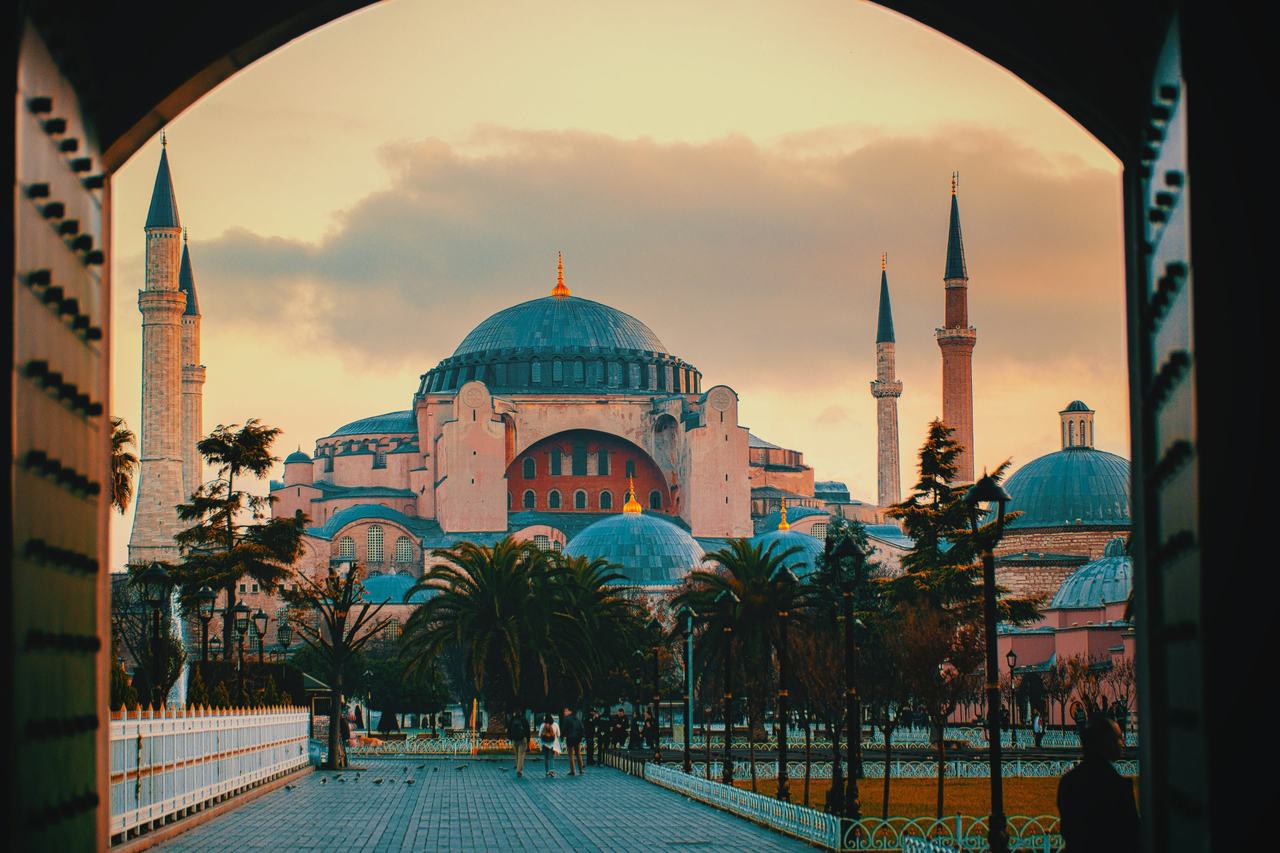
Hagia Sophia at sunset, seen through an arched doorway · Photo by Ibrahim Uzun, Unsplash
Sources: Lonely Planet, “Hagia Sophia has new rules for visitors” (admission, dress code); Lonely Planet, “Hagia Sophia Grand Mosque” (best time); Encyclopædia Britannica, “Hagia Sophia” (don’t miss). Photo by Ibrahim Uzun, Unsplash.
Byzantine basilica, Ottoman mosque, museum, then mosque again: few buildings have carried so many stories without losing their shape.
Hagia Sophia was built between 532 and 537 for Emperor Justinian I, replacing a church destroyed during the Nika riots. Designed by Anthemius of Tralles and Isidore of Miletus, its vast domed interior became a defining achievement of Byzantine architecture and an inspiration for later Ottoman mosques. It served as Constantinople’s cathedral, including a period under Latin Catholic control from 1204 to 1261, before Mehmed the Conqueror converted it into a mosque after the Ottoman conquest in 1453. Opened as a museum in 1935, it was redesignated as a mosque in 2020.
The name refers to Holy Wisdom, not to a saint named Sophia; the church was dedicated to the wisdom of God.
In 1054, the papal envoy Humbert of Silva Candida delivered the excommunication of Patriarch Michael I Cerularius here, an act traditionally associated with the beginning of the East–West Schism.
The mosaics of the galleries
In the upper galleries, the Deësis shows Christ flanked by the Virgin and Saint John the Baptist, one of the summits of Byzantine art.
A Viking graffito
On a balustrade in the galleries, runes carved by a Scandinavian soldier of the imperial guard have come down through a thousand years.
The medallions
The eight giant discs hung beneath the dome bear the names of Allah, the Prophet, the first four caliphs and the Prophet’s two grandsons.
Too far to walk comfortably: take public transit.
Distances as the crow flies; walking times are estimates. Known places from Wikidata.