



Istanbul in three layers
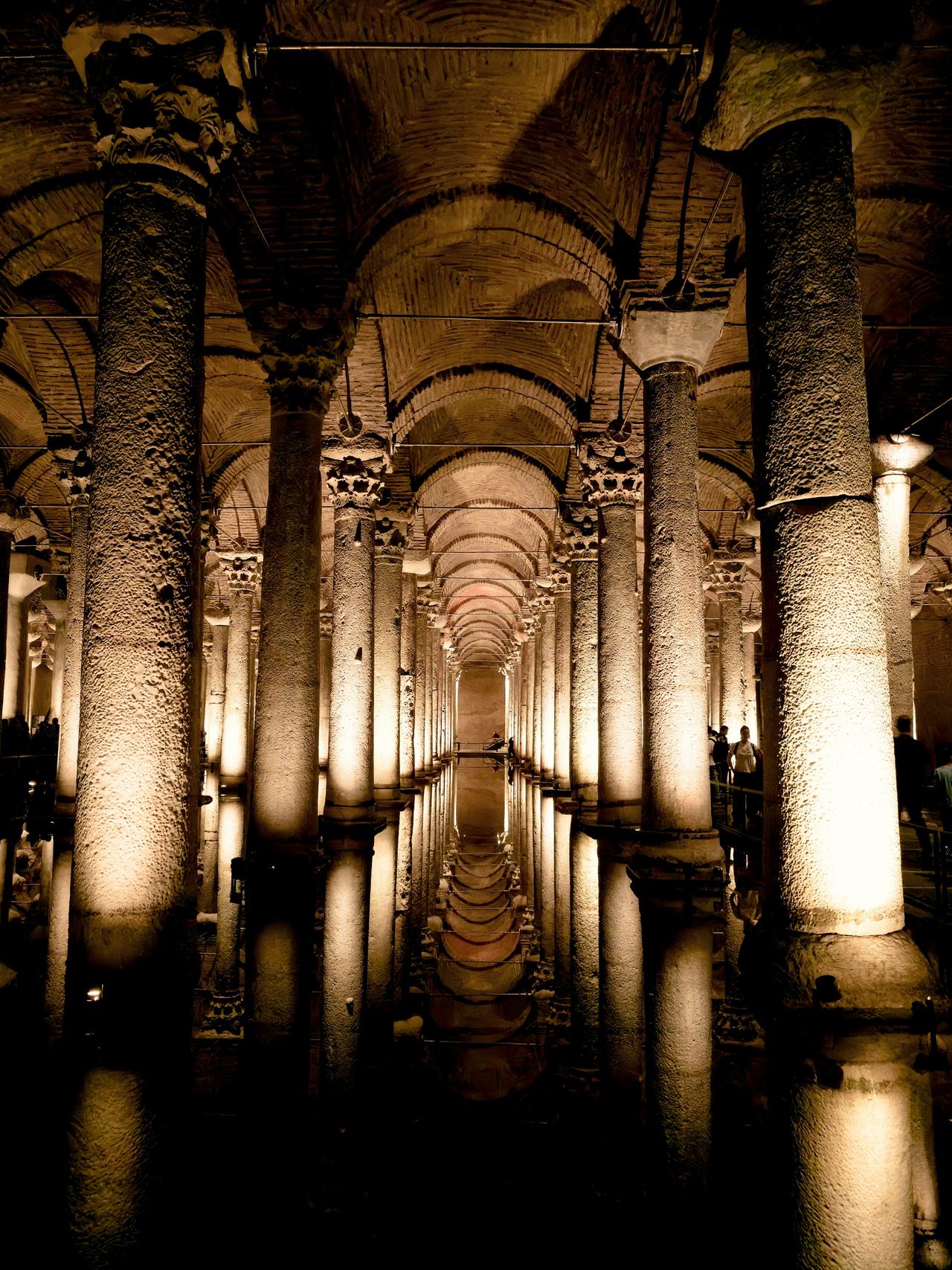
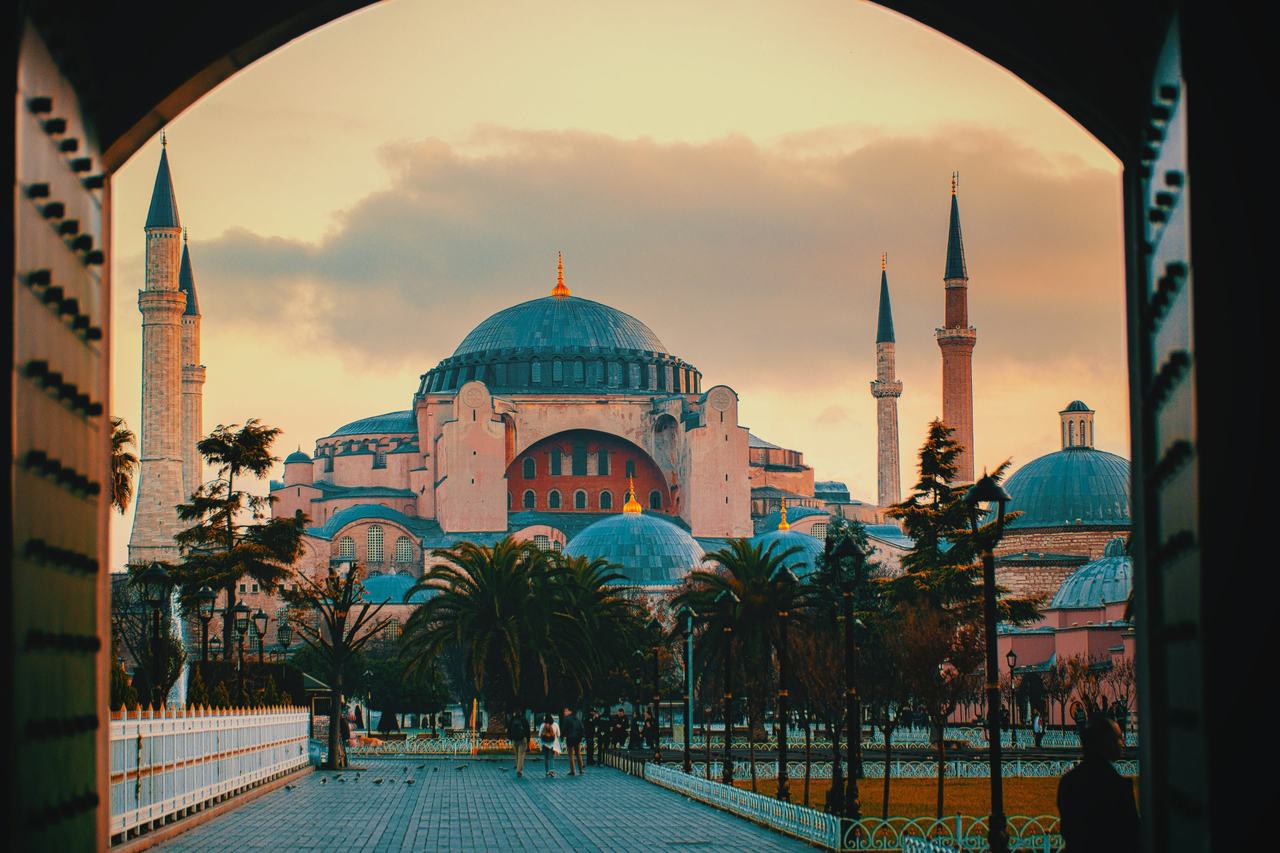
Under the old city, a cistern held up by 336 columns. At street level, a Roman racetrack. Above it all, domes fifteen centuries old. A walk through Sultanahmet, read from the bottom up.
Read the story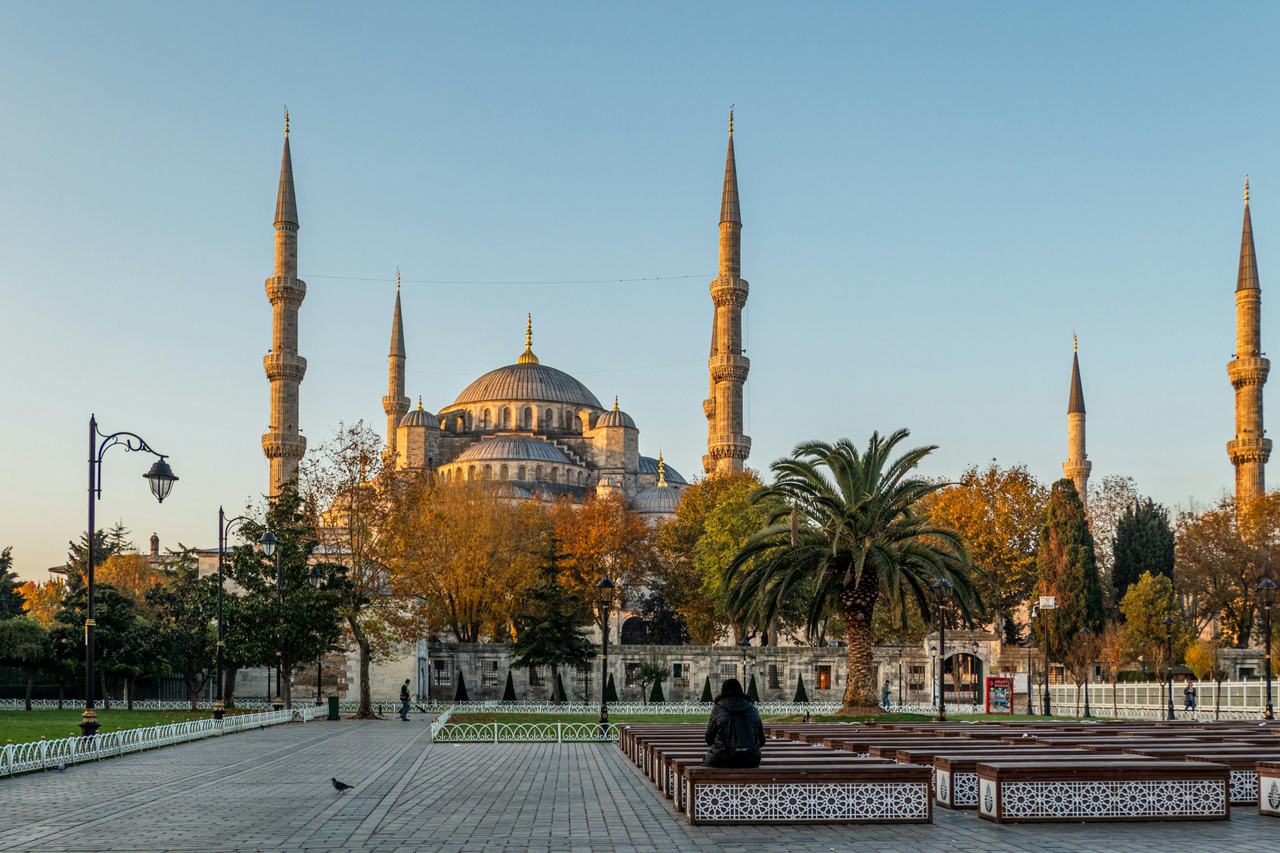
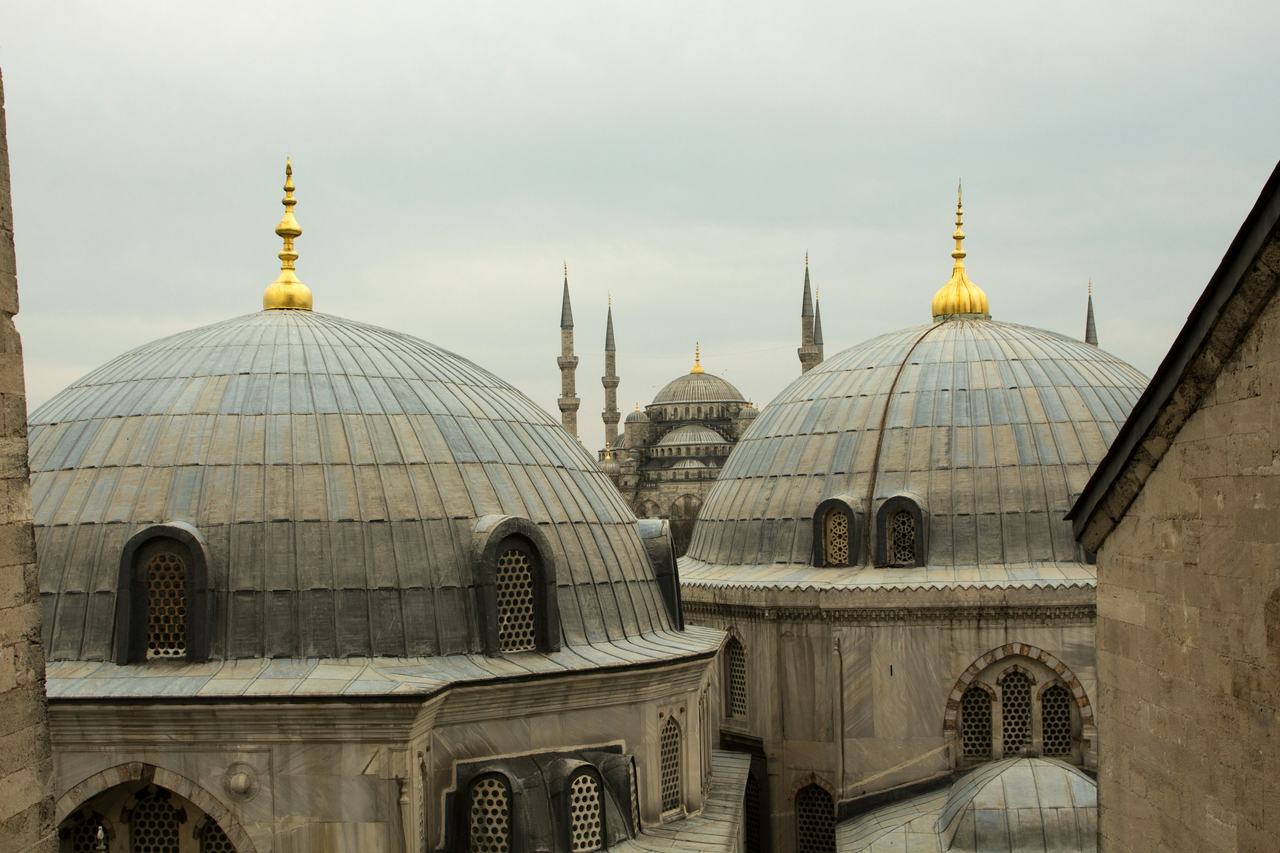
The Blue Mosque and its minarets in golden light, seen from Sultanahmet Square · Photo by Lewis J Goetz, Unsplash
Sources: Lonely Planet, “Blue Mosque” (admission, closed, best time); GoTürkiye (Türkiye tourism board) (don’t miss). Photo by Lewis J Goetz, Unsplash.
Facing Hagia Sophia, the young Sultan Ahmed I wanted a mosque that could answer it. Four centuries later, the conversation goes on.
The Blue Mosque stands beside Istanbul’s former Hippodrome, across from Hagia Sophia, on a site previously occupied by Ottoman viziers’ palaces. Commissioned by Sultan Ahmed I and built between 1609 and 1617, it was designed by Sedefkar Mehmed Agha, a pupil of the architect Sinan. Its prayer hall rises beneath a central dome surrounded by four semi-domes, with a large courtyard in front and six minarets outside. Thousands of Iznik tiles and predominantly blue floral painting give the mosque its popular name; the wider religious complex also includes Ahmed’s tomb and a madrasa.
Ahmed I financed the project from the treasury rather than the spoils of conquest, provoking opposition from Islamic legal scholars, who went so far as to forbid Muslims from praying there.
Early 20th-century excavations uncovered ancient Hippodrome seats in the mosque’s courtyard, a physical trace of the Byzantine arena that preceded it.
The courtyard
Enter through the great arcaded courtyard: its central fountain and its galleries prepare you for the calm of the prayer hall.
The İznik tiles
Step close to the walls of the galleries: every tile is hand-painted, and the patterns vary from one panel to the next.
The old Hippodrome
The square alongside the mosque was the Hippodrome of Constantinople. An Egyptian obelisk and the Serpent Column still stand there.
Too far to walk comfortably: take public transit.
Distances as the crow flies; walking times are estimates. Known places from Wikidata.