Istanbul in three layers
Under the old city, a cistern held up by 336 columns. At street level, a Roman racetrack. Above it all, domes fifteen centuries old. A walk through Sultanahmet, read from the bottom up.
Most cities are read from left to right, along their streets. The oldest part of Istanbul is better read from bottom to top. Within a few hundred meters of each other, in the district of Sultanahmet, three cities are stacked: one underground, one at your feet and one in the sky. Take them in that order.
Below: the city of water
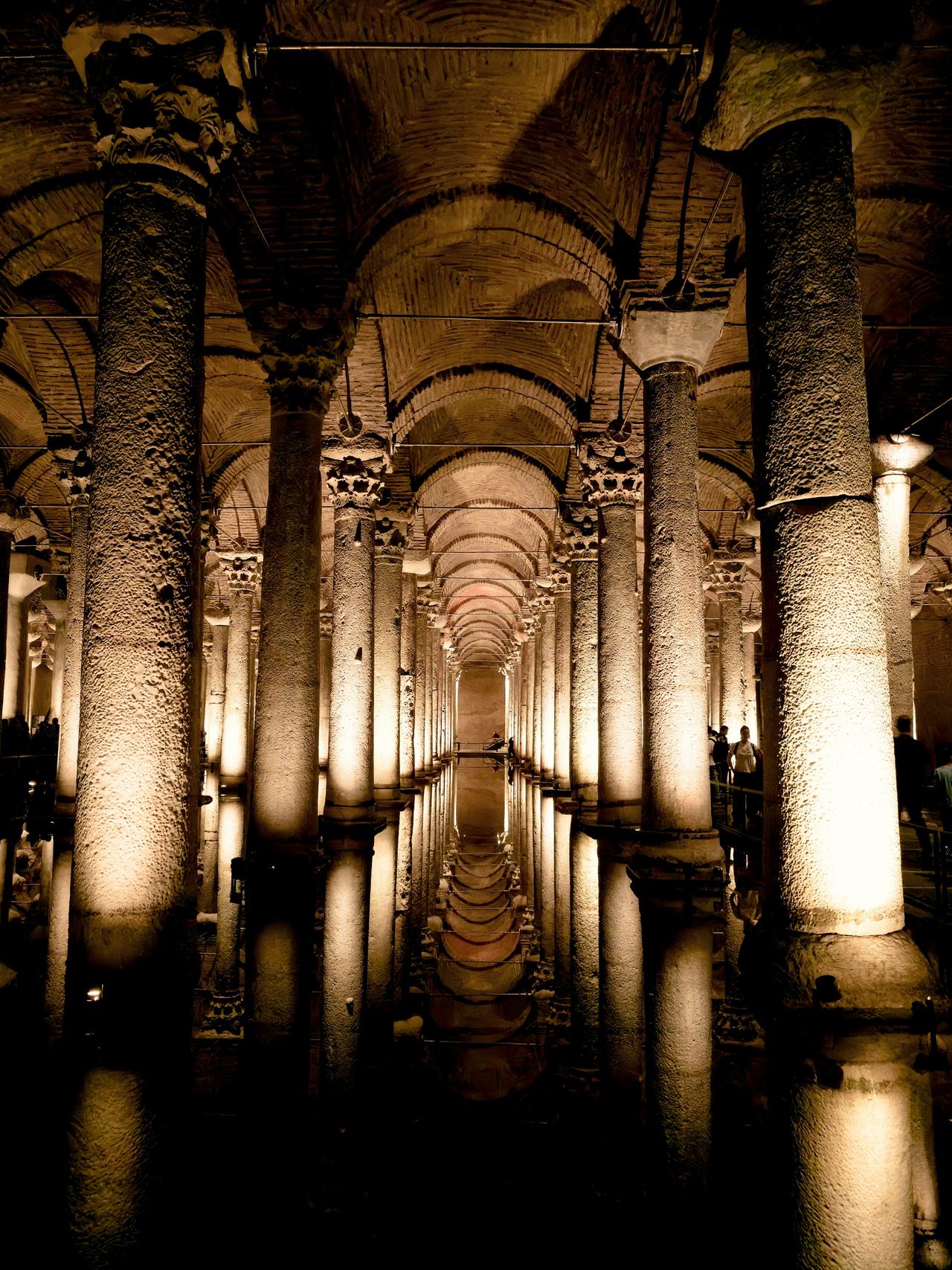
Start by going down. The Basilica Cistern was built in the sixth century, under the emperor Justinian, to store water for the palace quarter. It is a hall of about 138 by 65 meters whose roof rests on 336 marble columns, each nine meters tall, in twelve rows of twenty-eight. It could hold 80,000 cubic meters of water. The columns do not match, because they were taken from older buildings. In one corner, two of them stand on reused blocks carved with the face of Medusa. The cistern reopened in 2022 after a long restoration.
At your feet: the city of the crowd
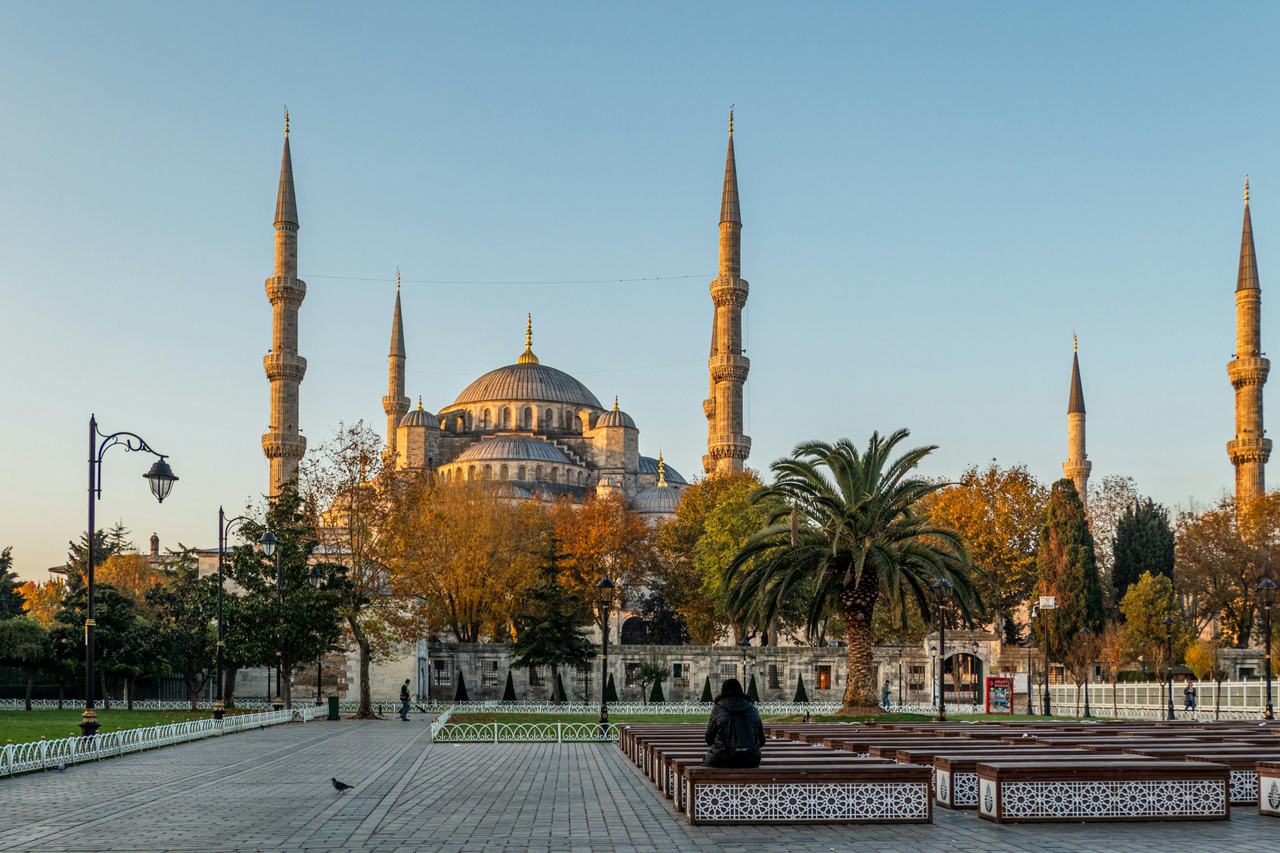
Back in daylight, the long square beside the Blue Mosque keeps the outline of a racetrack. This was the Hippodrome of Constantinople, where chariots ran and emperors were cheered or shouted down. Its center line is still marked by monuments, among them an Egyptian obelisk carved for the pharaoh Thutmose III and raised here in 390 by the emperor Theodosius. The ground has risen since then. Look down at the base of the obelisk to see where the Roman city stood.
Above: the city of domes
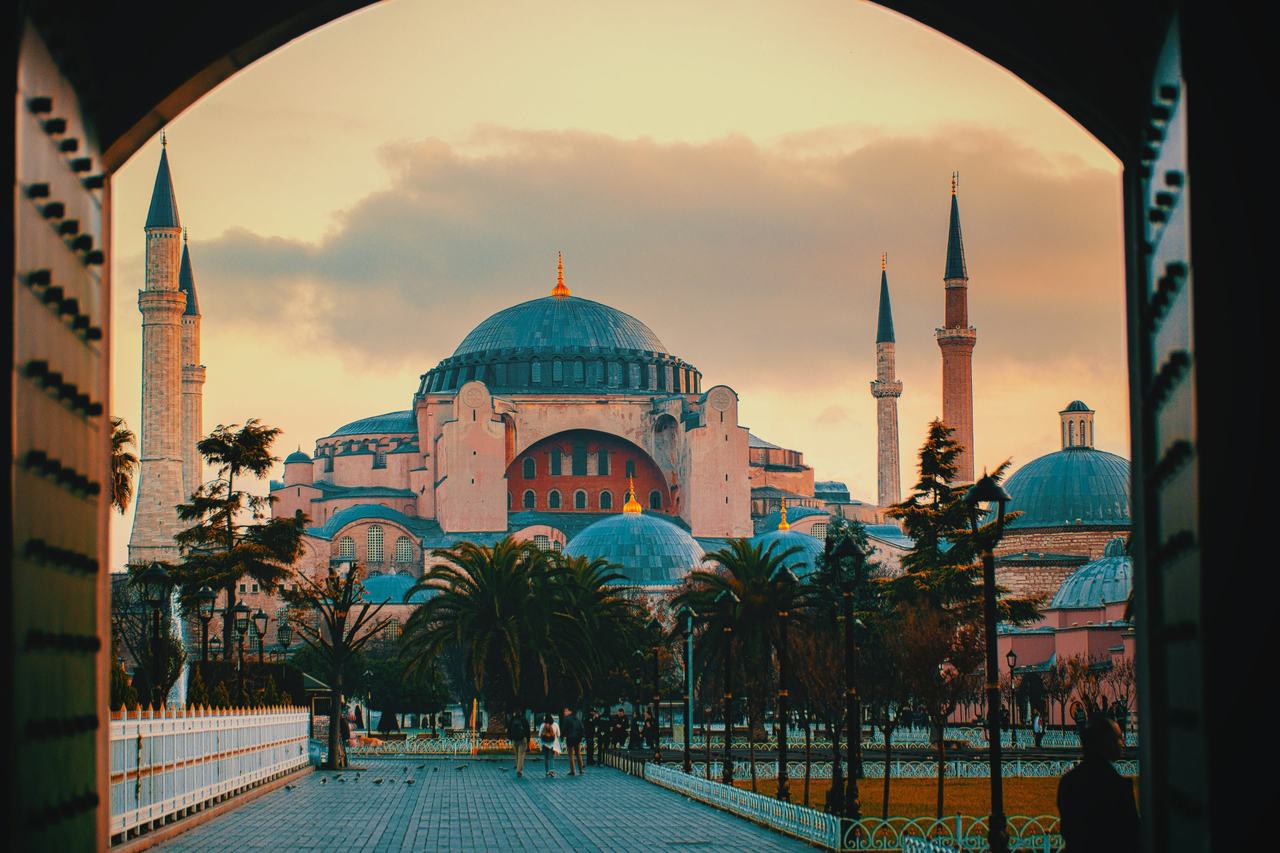
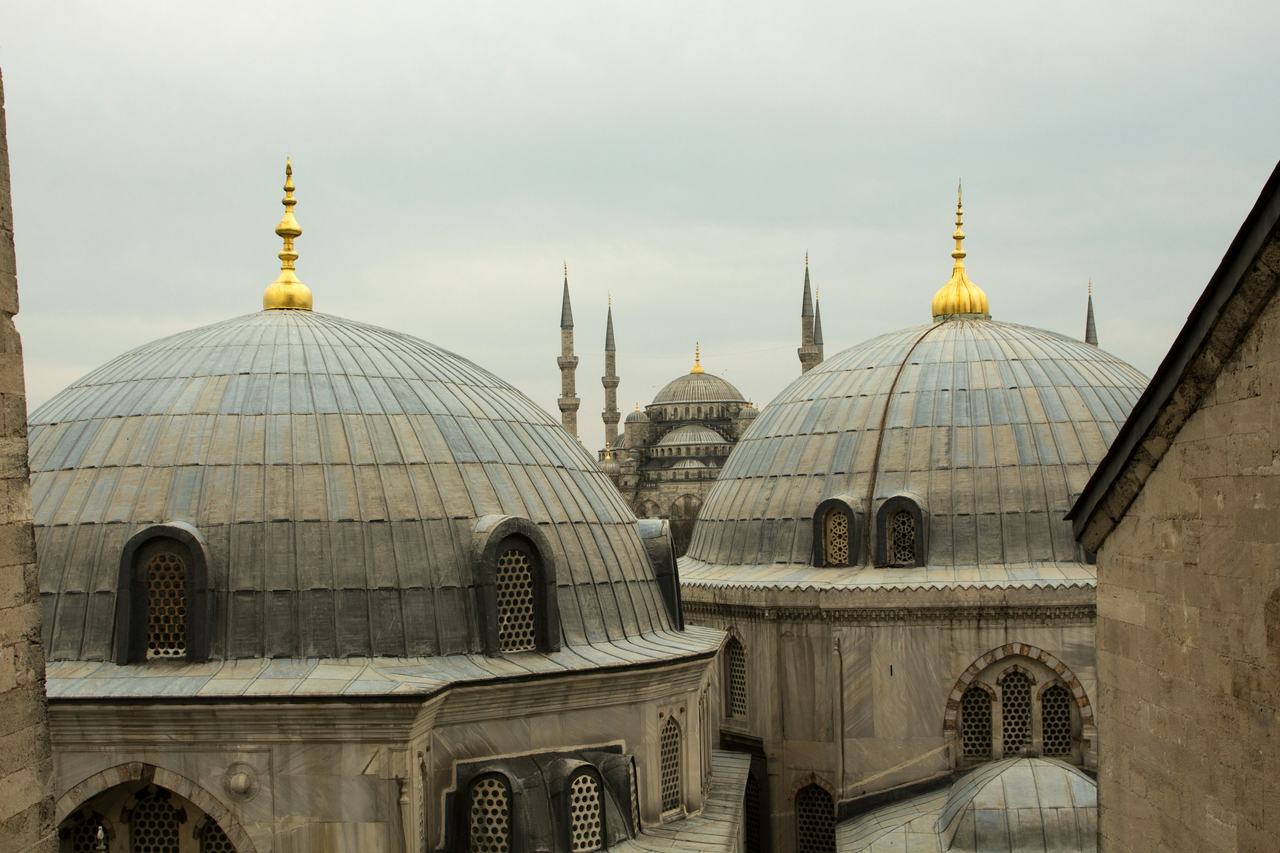
Then look up. Hagia Sophia was built between 532 and 537 by two geometers, Isidore of Miletus and Anthemius of Tralles, and its dome still hangs 55.6 meters above the floor. For more than five hundred years it was the largest church in the world. It became a mosque in 1453, a museum in 1935 and a mosque again in 2020. Across the square, the Blue Mosque answered it between 1609 and 1617 with a cascade of domes and six minarets.
Three cities are stacked here: one underground, one at your feet and one in the sky.
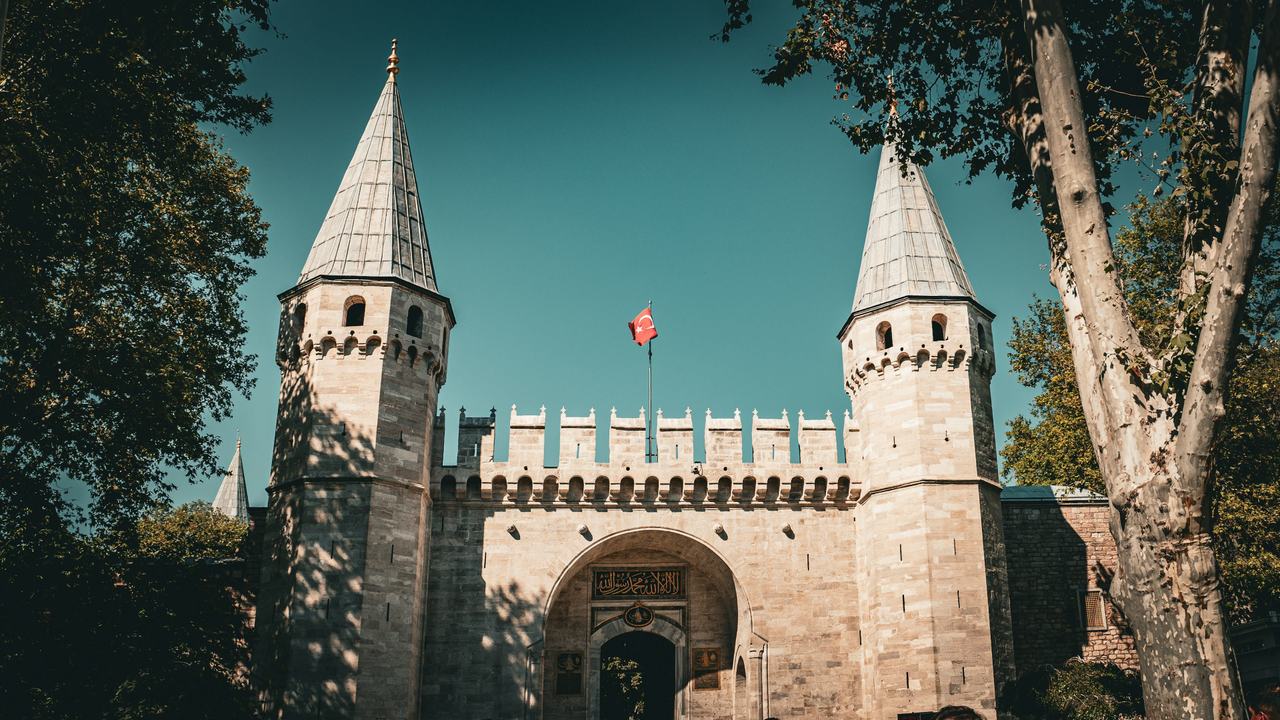
End at Topkapı Palace, on the tip of the peninsula, where the sultans lived from the fifteenth century. There the three layers give way to a fourth: the water of the Bosphorus, which explains why all of this was built here.