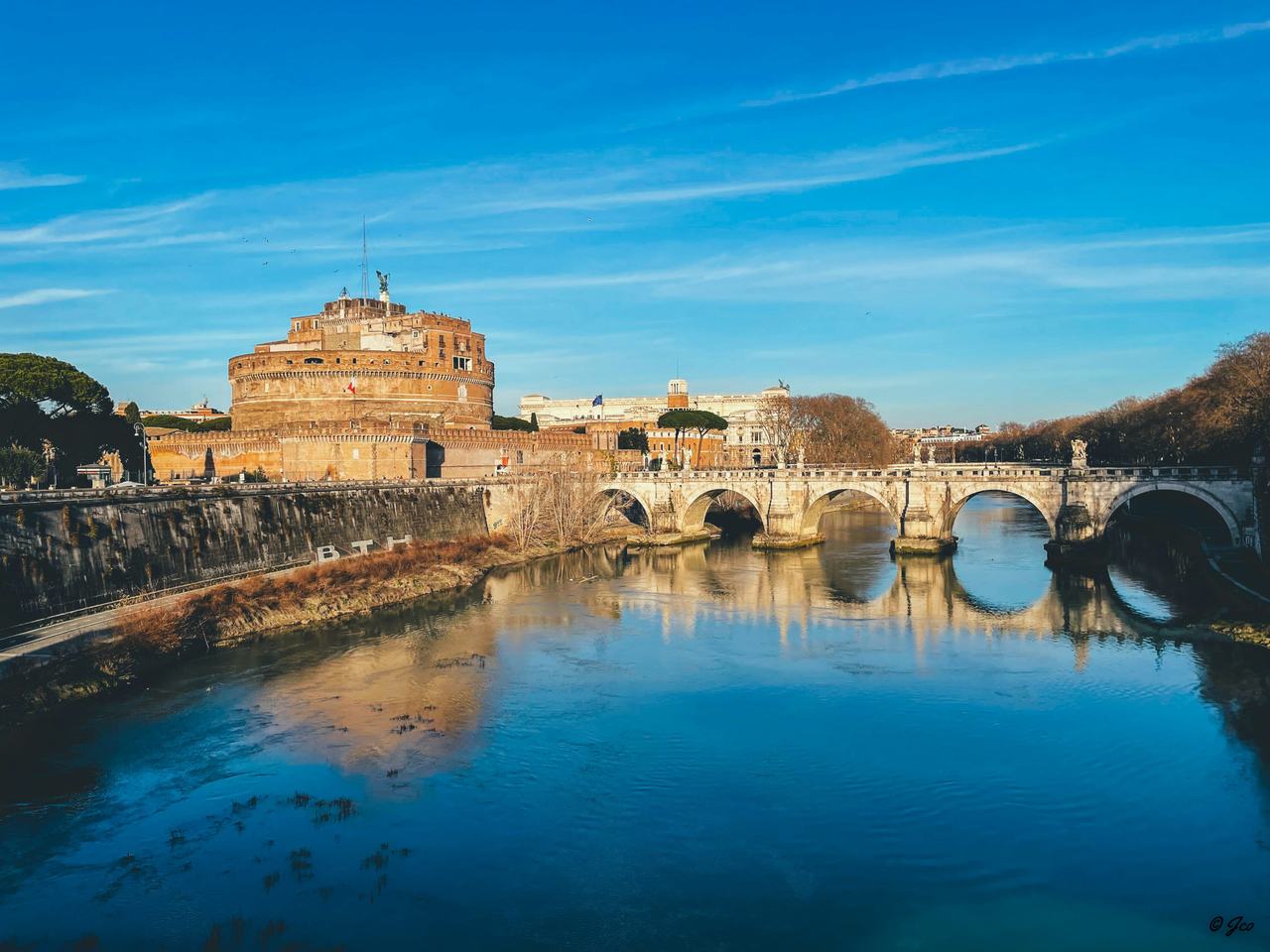
Raised around 135–139 as the mausoleum of the emperor Hadrian, Castel Sant’Angelo became a fortress, then the fortified residence of the popes, linked to the Vatican by the Passetto. Today it is a national museum, from the ancient ramp to the Renaissance apartments.
The story
Castel Sant’Angelo began as Emperor Hadrian’s mausoleum in the second century AD, beside the Tiber, and became the burial place of several subsequent Roman emperors. Incorporated into Rome’s defenses in late antiquity, it later developed into a papal stronghold, with fortified walls, prisons, and residential apartments. The Passetto di Borgo, an elevated passage linking it to the Vatican, provided an escape route for Pope Clement VII during the Sack of Rome in 1527. Today, its museum preserves both the ancient funerary structure and the richly decorated rooms created for Renaissance popes.
Did you know?
-
The castle’s name comes from the tradition that Pope Gregory the Great saw the Archangel Michael sheathing his sword above the building during a plague in 590, signaling its end. The bronze angel now crowning the summit was made by Peter Anton von Verschaffelt in the eighteenth century.
-
In the final act of Puccini’s opera Tosca, the castle’s ramparts become the setting for Cavaradossi’s execution and Tosca’s fatal leap.
On site, look closely
-
Hadrian’s Mausoleum
Before it was a fortress, it was the tomb of Emperor Hadrian: the ancient spiral ramp still climbs into the heart of the monument.
-
The angel on the terrace
At the top, a bronze Archangel Michael sheathes his sword, in memory of the apparition said to have announced the end of a plague in 590.
-
The Passetto
A fortified corridor links the castle to the Vatican: popes used it to take refuge here in times of danger.