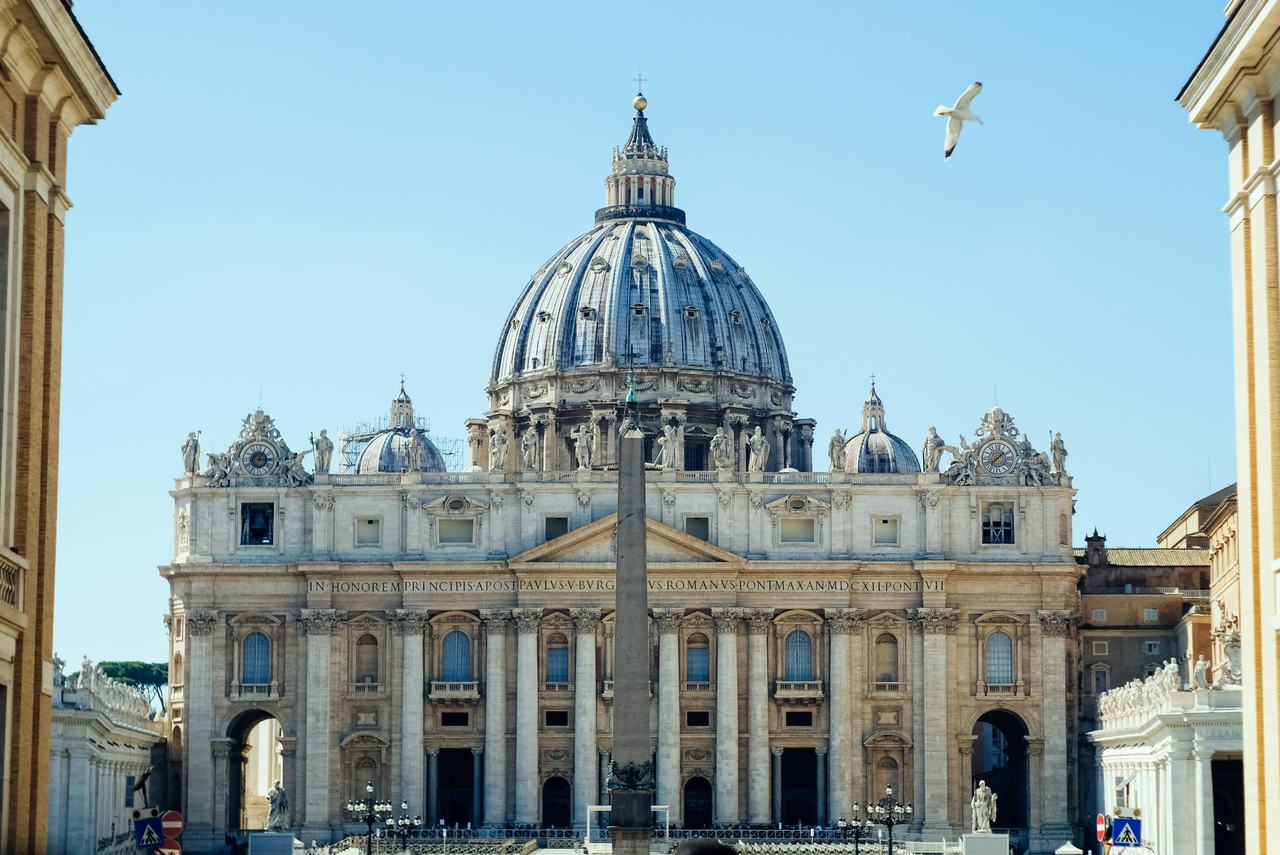
Begun in 1506 and consecrated in 1626, the basilica raised, according to tradition, over the tomb of Saint Peter occupied Bramante, Michelangelo, Maderno and Bernini. Admission is free; the dome is visited with a separate ticket.
The story
St. Peter's Basilica stands on the site of a fourth-century church commissioned by Emperor Constantine I beside a necropolis where tradition places the burial of the apostle Peter. Pope Julius II began its replacement on April 18, 1506, entrusting the project to Donato Bramante, whose early designs centered on a Greek-cross plan beneath a great dome. Construction of the present basilica continued until 1626, during the pontificate of Urban VIII, producing a work that brings together Italian Renaissance and Baroque architecture. As a papal chapel adjoining the Apostolic Palace, it hosts major papal celebrations and was the setting for the First and Second Vatican Councils.
Did you know?
-
Despite its central role in Catholic worship, St.
Peter's is not the cathedral of Rome: that title belongs to the Basilica of St. John Lateran.
-
In a drawing known as the “parchment plan,” Bramante pursued architectural balance so intently that he omitted any indication of the high altar.
On site, look closely
-
The Pietà
In the first chapel on the right as you enter, Michelangelo’s Pietà.
-
The baldachin
Above the papal altar, Bernini’s baldachin marks the spot tradition gives to the tomb of Saint Peter.
-
The markers in the nave
Look at the floor of the nave: markers show, from the entrance, the length of other great churches.