Behind the spectacle of marble and water lies an ancient aqueduct still in service, and an architect who never saw his work finished.
The story
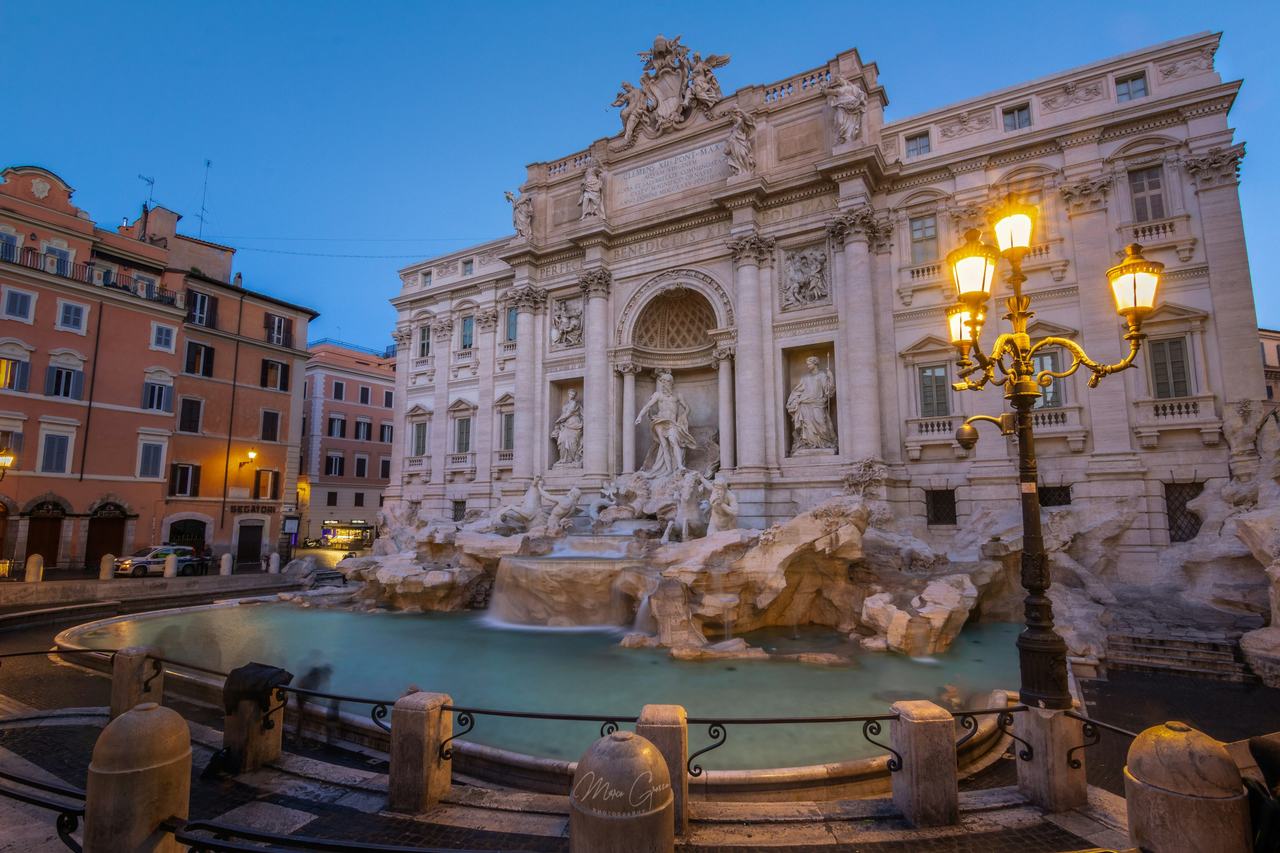
The Trevi Fountain turns the facade of Palazzo Poli into a monumental setting for water, sculpture, and rockwork. Its present form grew out of a competition called by Pope Clement XII in 1731; construction began the following year to Nicola Salvi’s design, and Giuseppe Pannini later brought the project to completion. Inaugurated in 1762, it is Rome’s largest Baroque fountain. Behind this eighteenth-century monument lies a much older water supply: the Aqua Virgo aqueduct, originally brought into Rome under Agrippa to serve his baths.
Did you know?
-
Around 1640, Gian Lorenzo Bernini enlarged the space in front of the fountain and changed its orientation to the alignment you see today. His unfinished scheme was financed in part by an unpopular tax on wine.
-
In 1453, Pope Nicholas V commissioned Leon Battista Alberti to replace the earlier fountain’s three separate basins with one long rectangular basin.
On site, look closely
-
The coin
Tradition has it that you toss a coin over your shoulder, with your back to the fountain, to be sure of returning to Rome. The coins are collected and given to a charity in the city.
-
The two horses
Look at them closely: one is calm, the other restless. They stand for the two faces of the sea.
-
Early morning
The square is tiny and almost always full. Early in the morning, you can finally hear the water.