Born in 1471 when Pope Sixtus IV gave ancient bronzes to the people of Rome, the Capitoline Museums fill the palaces on the Piazza del Campidoglio, designed by Michelangelo. They hold the Capitoline Wolf, the original equestrian statue of Marcus Aurelius and a picture gallery with Caravaggio and Titian.
The story
The Capitoline Museums occupy the Palazzo dei Conservatori and Palazzo Nuovo, facing each other across Michelangelo’s Piazza del Campidoglio. Their foundation dates to 1471, when Pope Sixtus IV gave the city a collection of ancient bronzes from the Lateran, including the Capitoline Wolf. In 1734, Pope Clement XII opened the collections to the public, making the institution widely regarded as the world’s first public museum. His successor, Benedict XIV, added a picture gallery through the acquisition of the Sacchetti and Pio family collections, expanding a museum of antiquities into a broader history of art.
Did you know?
-
The original bronze equestrian statue of Marcus Aurelius is preserved inside the museums; the statue standing in the square has been a replica since 1996.
-
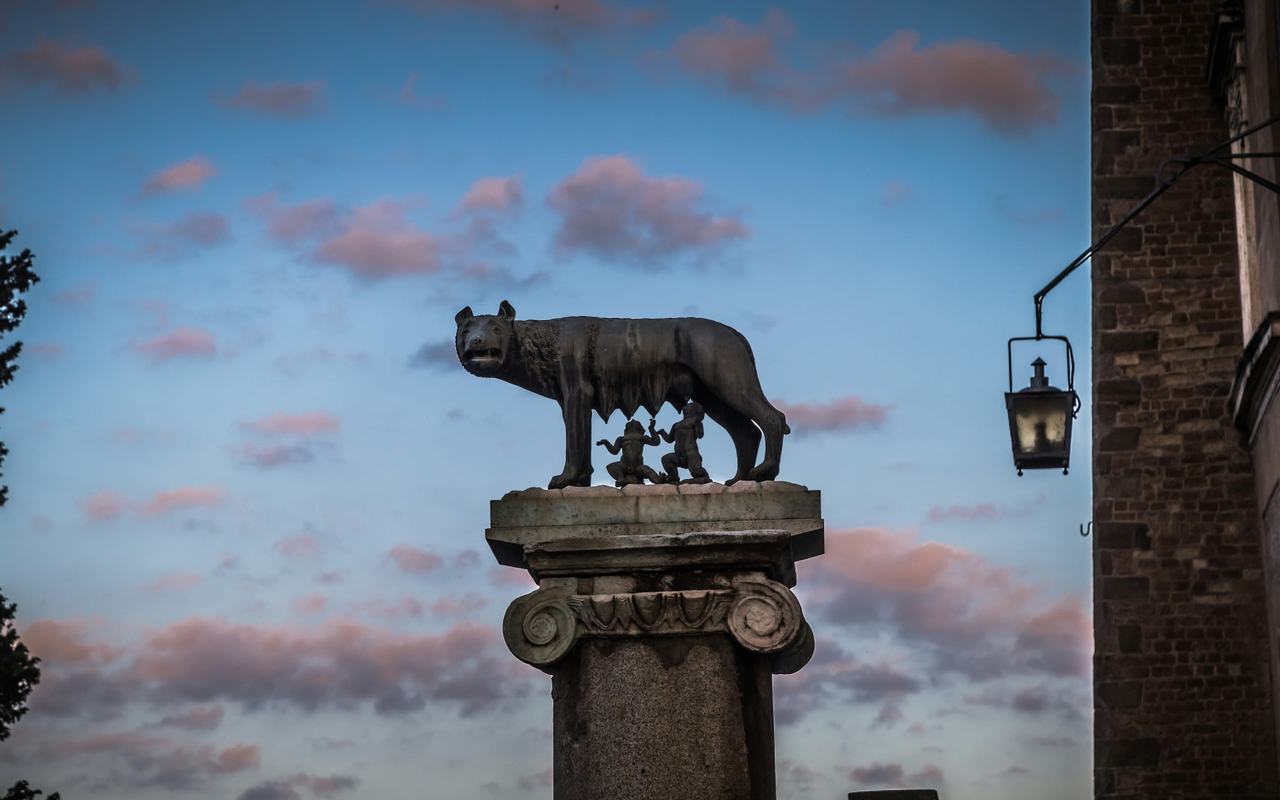
The Capitoline Wolf was originally a solitary animal
The figures of Romulus and Remus beneath her were added in the 15th century.
On site, look closely
-
Marcus Aurelius on horseback
The gilded bronze equestrian statue of the emperor, a rare survivor from antiquity, is sheltered inside the museum; a copy stands in its place on the square.
-
The She-Wolf
The bronze she-wolf suckling Romulus and Remus is the symbol of Rome; the twins were added in the Renaissance.
-
Michelangelo’s square
Michelangelo designed the Capitol square: its star-patterned paving and facades open up as you climb the Cordonata.