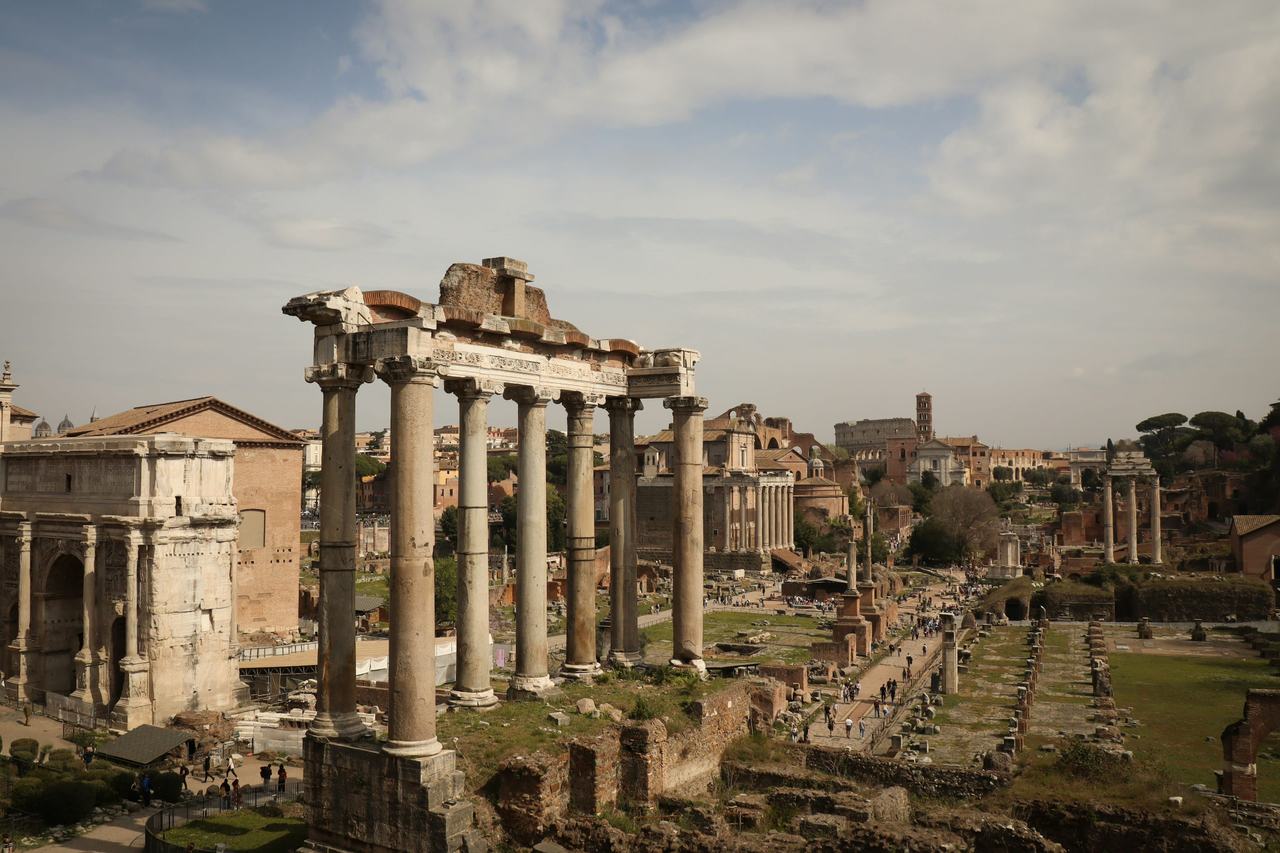
Temples, speakers’ platforms, triumphal arches: for more than a thousand years, this is where Rome voted, judged, prayed and celebrated its victories.
The story
The Roman Forum grew from a marketplace into the center of Rome’s political, legal, commercial, and religious life. Over centuries, temples, basilicas, government buildings, and memorials accumulated around its square rather than following a single master plan. Julius Caesar reshaped the complex with the Basilica Julia and a new Senate house, the Curia Julia, while the Basilica of Maxentius marked its last major expansion in AD 312. Its surviving ruins preserve the setting for elections, public speeches, criminal trials, and triumphal processions.
Did you know?
-
The site was originally a marshy lake fed by runoff from the surrounding hills; the Tarquins drained it using the Cloaca Maxima.
-
As flood deposits and eroded soil raised the ground, successive generations paved over accumulated debris.
The travertine paving still visible dates from the reign of Augustus.
On site, look closely
-
The Temple of Saturn
Its eight columns still standing housed Rome’s public treasury. It is one of the most photographed silhouettes of the site.
-
The House of the Vestals
Around a pool, the statues of the priestesses who tended the city’s sacred fire still line their former home.
-
The view from the Capitoline
To grasp the overall plan, climb to the terraces behind the Capitoline: the whole Forum spreads out before you.