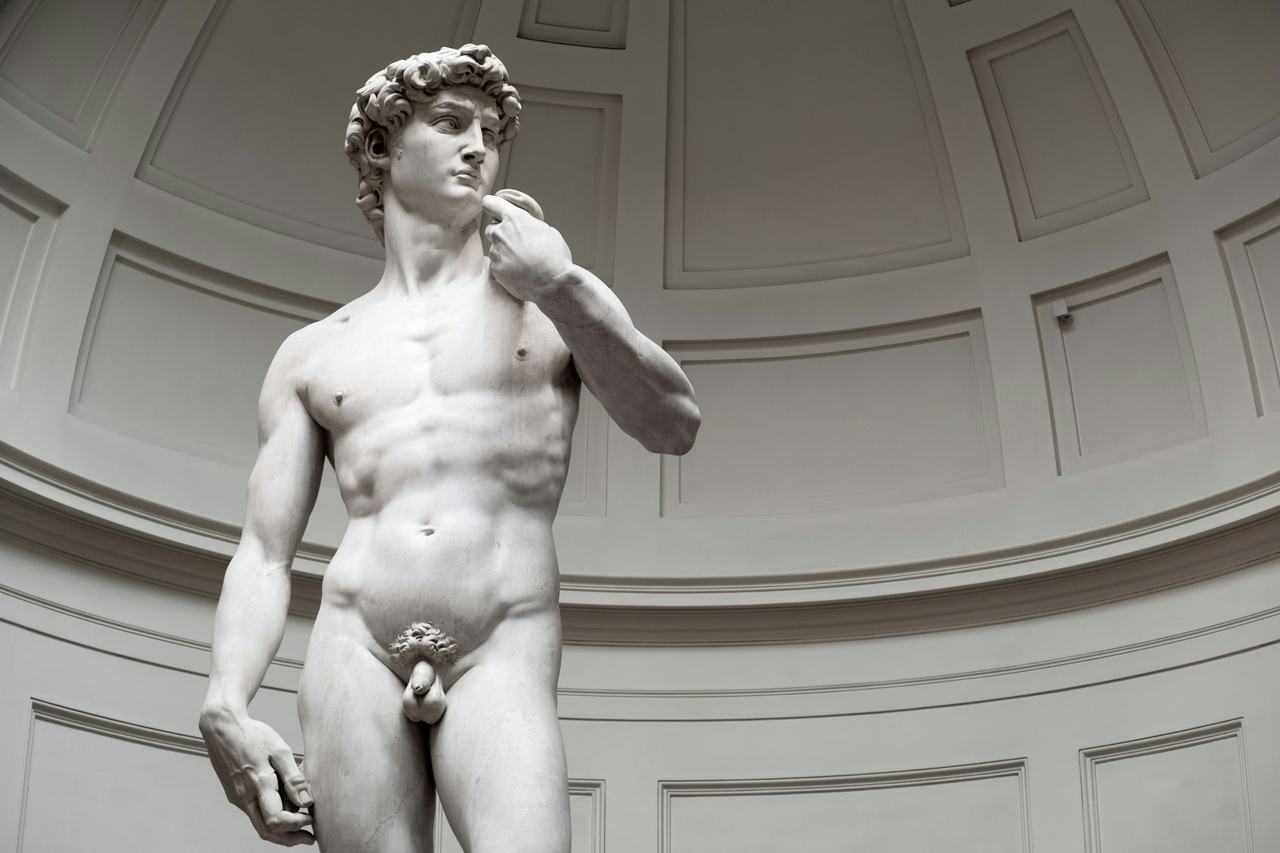
Founded in 1784 for the students of the Academy of Fine Arts, the gallery received Michelangelo’s “David” in 1873, when it was moved from Piazza della Signoria. A tribune was built for it, at the end of a hall lined with the “Prisoners”.
The story
The Galleria dell’Accademia began in 1784 as a teaching collection alongside the Academy of Fine Arts refounded by Grand Duke Pietro Leopoldo in the former hospital of San Matteo and convent of San Niccolò di Cafaggio. Original artworks, plaster casts, and models gave students examples to study and imitate, while paintings from suppressed religious institutions soon expanded the collection. A decisive change came in 1872, when authorities decided to move Michelangelo’s David here from its exposed position in Piazza della Signoria; architect Emilio De Fabris was commissioned to create a dedicated tribune for the statue. Alongside its Michelangelo sculptures, the museum preserves Tuscan gold-ground paintings and historical musical instruments from the Luigi Cherubini Conservatory’s collection.
Did you know?
-
The museum still holds Giambologna’s original plaster model for The Rape of the Sabine Women, one of the teaching collection’s founding works.
-
The room now housing the Bartolini plaster collection was once the women’s ward of the hospital of San Matteo.
On site, look closely
-
David
Over five meters tall, carved by Michelangelo between 1501 and 1504, he stands beneath a dome built for him; look at his hands and his tense gaze.
-
The Prisoners
In the gallery leading to David, unfinished figures seem to struggle to break free of the marble block.
-
The Medici instruments
One room gathers instruments from the Medici court, including a viola signed by Stradivari.