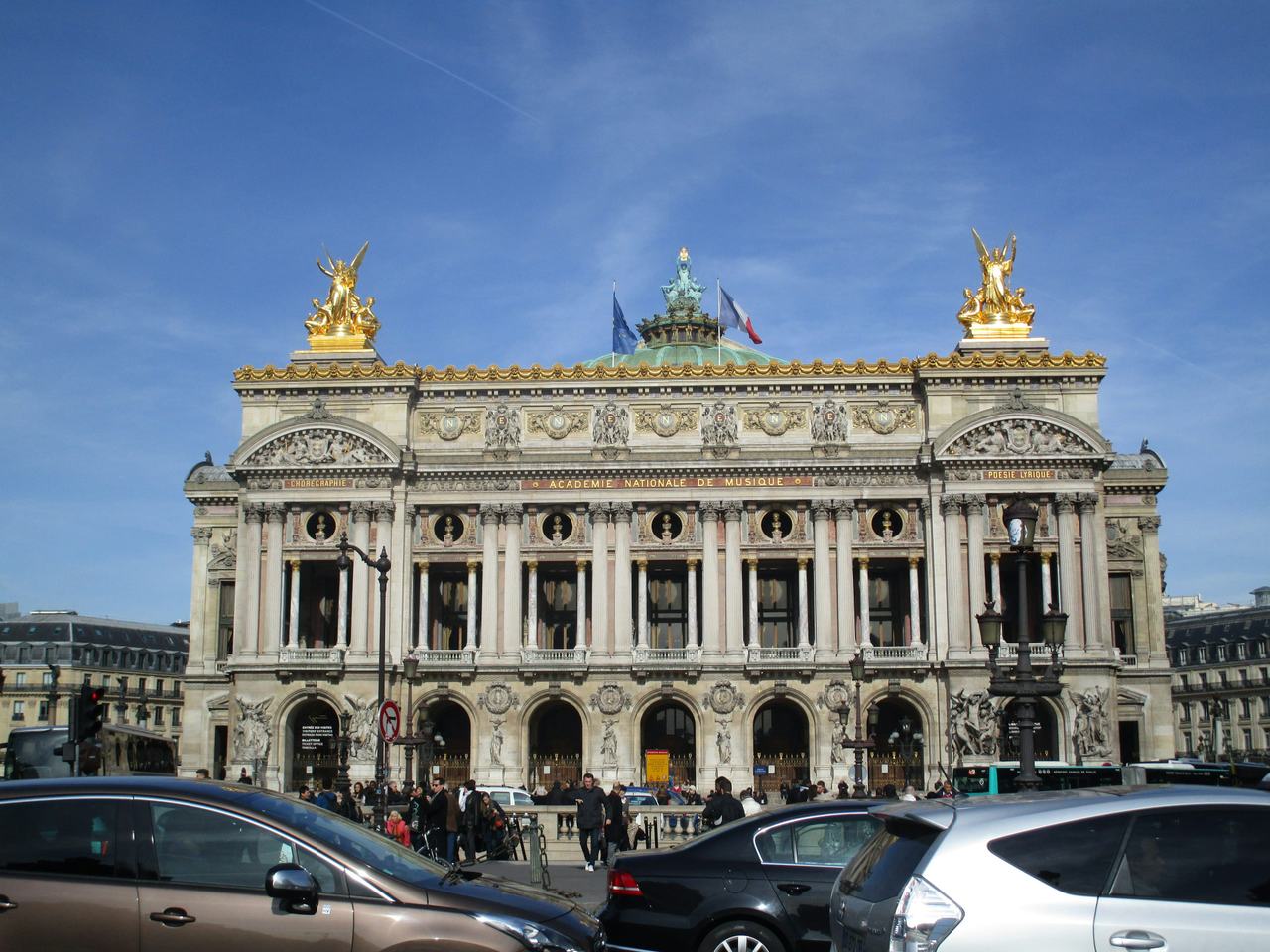
Built from 1861 to 1875 by Charles Garnier for Napoleon III, the Palais Garnier is the Second Empire opera house par excellence. Visitors see the grand staircase, the gilded Grand Foyer and the red-and-gold auditorium, crowned since 1964 by the ceiling painted by Marc Chagall.
The story
The Palais Garnier was commissioned under Napoleon III and designed by Charles Garnier, winner of an architectural competition held in 1861. Construction began in 1861, was disrupted by the Franco-Prussian War and the Paris Commune, and culminated in the inauguration of the opera house on 5 January 1875 under the Third Republic. Its ceremonial interiors combine marble, gilding, sculpture and painting within a building that became a defining work of French Second Empire architecture. After the Opéra Bastille opened in 1989, the Palais Garnier remained an active venue, particularly for the Paris Opera Ballet as well as opera performances.
Did you know?
-
Because groundwater complicated the foundations, Garnier created a subterranean reservoir beneath the building; this real body of water helped inspire the underground-lake setting in Gaston Leroux’s novel The Phantom of the Opera.
-
In 1964, a new ceiling painted by Marc Chagall was installed above the auditorium under the direction of culture minister André Malraux, while the earlier ceiling by Jules-Eugène Lenepveu was preserved behind it.
On site, look closely
-
The Grand Staircase
Marbles of every color, a double flight and balconies: the staircase was designed as a stage where the audience put itself on show.
-
Chagall’s ceiling
Above the red and gold auditorium, the ceiling painted by Marc Chagall in 1964 sets operas and ballets dancing around the great chandelier.
-
The lake beneath the Opera
Under the building, a water reservoir stabilizes the foundations on waterlogged ground; it inspired The Phantom of the Opera.