People once waited here for trains to Orléans; today they come for Monet, Renoir and Van Gogh, under the same glass roof.
The story
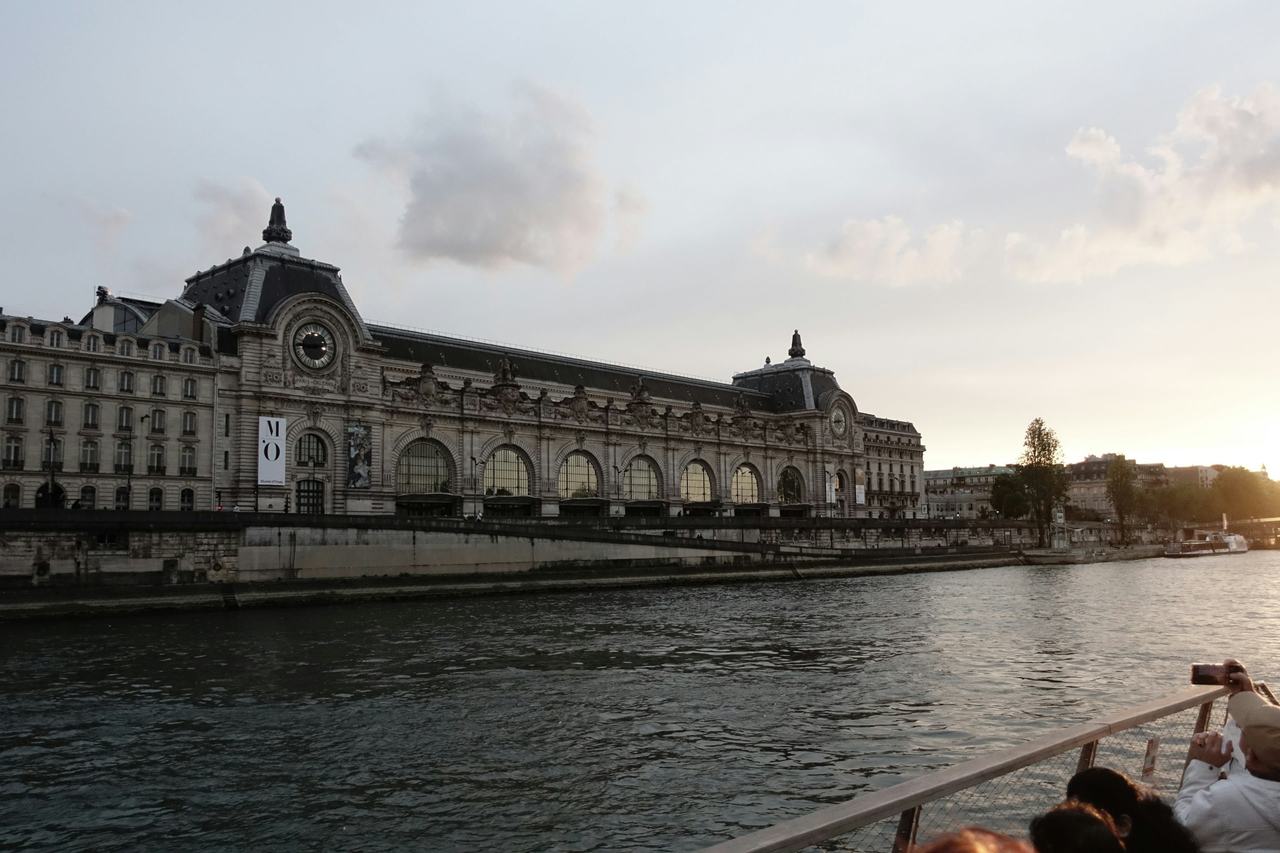
The Musée d'Orsay occupies a former railway station built for the 1900 Universal Exhibition, designed by Victor Laloux with a monumental stone exterior concealing its metal structure. As longer trains outgrew its platforms, the station lost its mainline passenger services in 1939. Its conversion into a museum preserved the great vaulted train hall, while architect Gae Aulenti shaped the interior exhibition spaces. Opened in 1986, the museum presents art from 1848 to 1914, bringing painting, sculpture, decorative arts, photography and architecture into a shared account of the period.
Did you know?
-
Before its conversion, the disused station served as a filming location for Orson Welles's 1962 adaptation of Franz Kafka's The Trial.
-
The six cast-iron figures representing continents on the forecourt were originally made for the Palais du Trocadéro at the 1878 Universal Exhibition; they were brought here for the museum's opening.
On site, look closely
-
The clock
On the fifth floor, behind the clock face of the former station, the view crosses the Seine all the way to Montmartre.
-
The nave
The great central aisle follows the line of the old tracks. The sculptures stand where the trains used to arrive.
-
The Impressionists
They are gathered on the top floor, under the glass roof: natural light serves the paintings there.