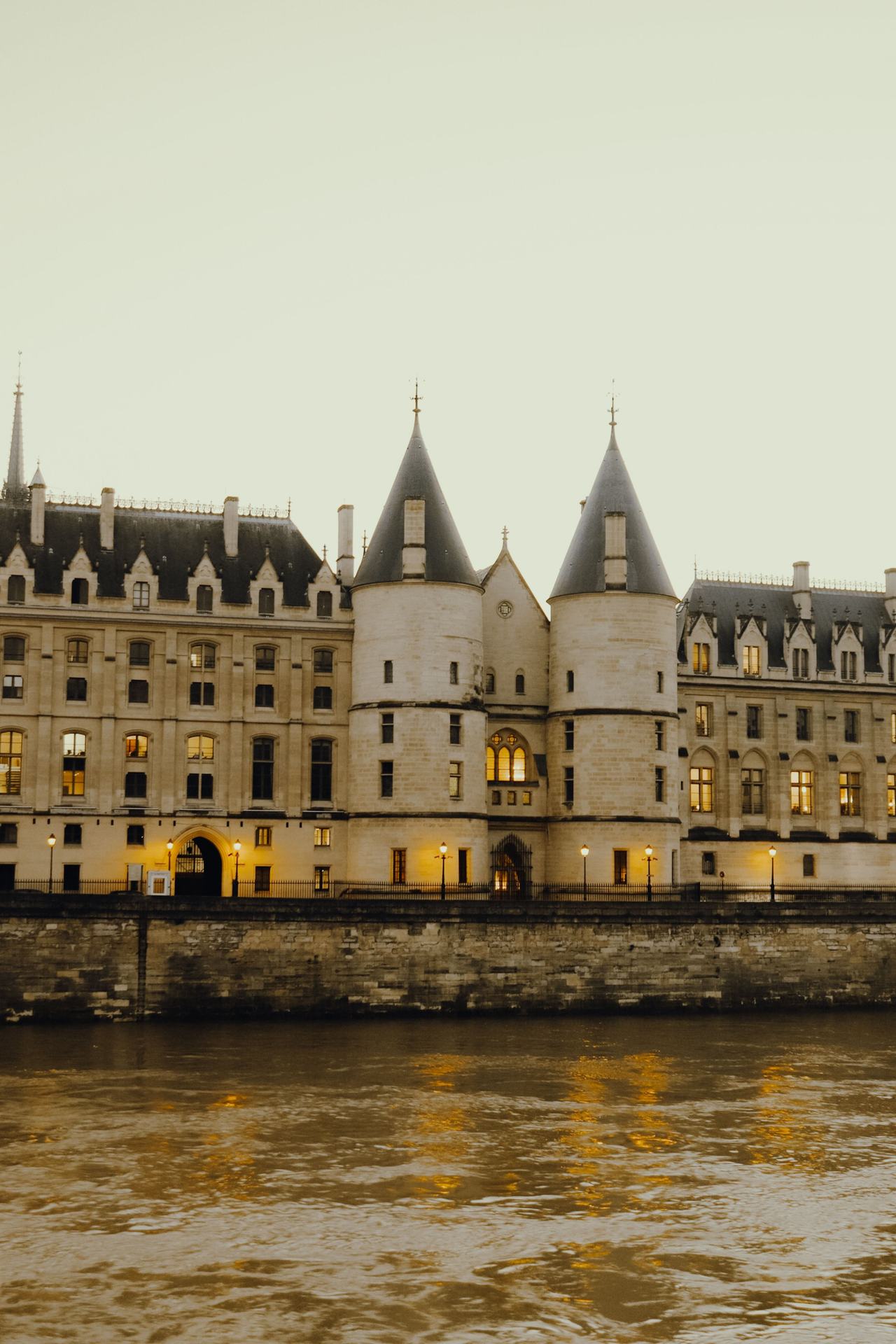
A remnant of the Palais de la Cité, home of the kings of France until the 14th century, the Conciergerie keeps the immense Hall of the Men-at-Arms, one of the largest Gothic halls in Europe. During the Revolution it became the prison of the Revolutionary Tribunal; Marie Antoinette was held here in 1793.
The story
The Conciergerie occupies part of the former royal palace on the Île de la Cité, where French kings lived before the court moved away in the 14th century. Its surviving medieval spaces include the vast vaulted Hall of the Men-at-Arms, built under Philip IV in the early 14th century to serve the royal household. As the palace increasingly housed judicial institutions, the Conciergerie became a prison. During the French Revolution, it held prisoners awaiting judgment by the Revolutionary Tribunal, including Marie Antoinette before her execution in October 1793.
Did you know?
-
The name comes from the palace’s concierge, an officer responsible for overseeing the royal residence who later also supervised its prison.
-
In 1816, under Louis XVIII, a commemorative chapel was created on the site of Marie Antoinette’s former cell.
On site, look closely
-
The Hall of the Men-at-Arms
This immense 14th-century Gothic hall, with four aisles, served as the refectory for the palace’s two thousand or so people.
-
The memory of Marie Antoinette
The queen spent her last weeks here in 1793; an expiatory chapel was built on the site of her cell.
-
The tower clock
At the corner of the boulevard, the Clock Tower carries the first public clock in Paris, installed in the 14th century and later adorned with sculpted figures.