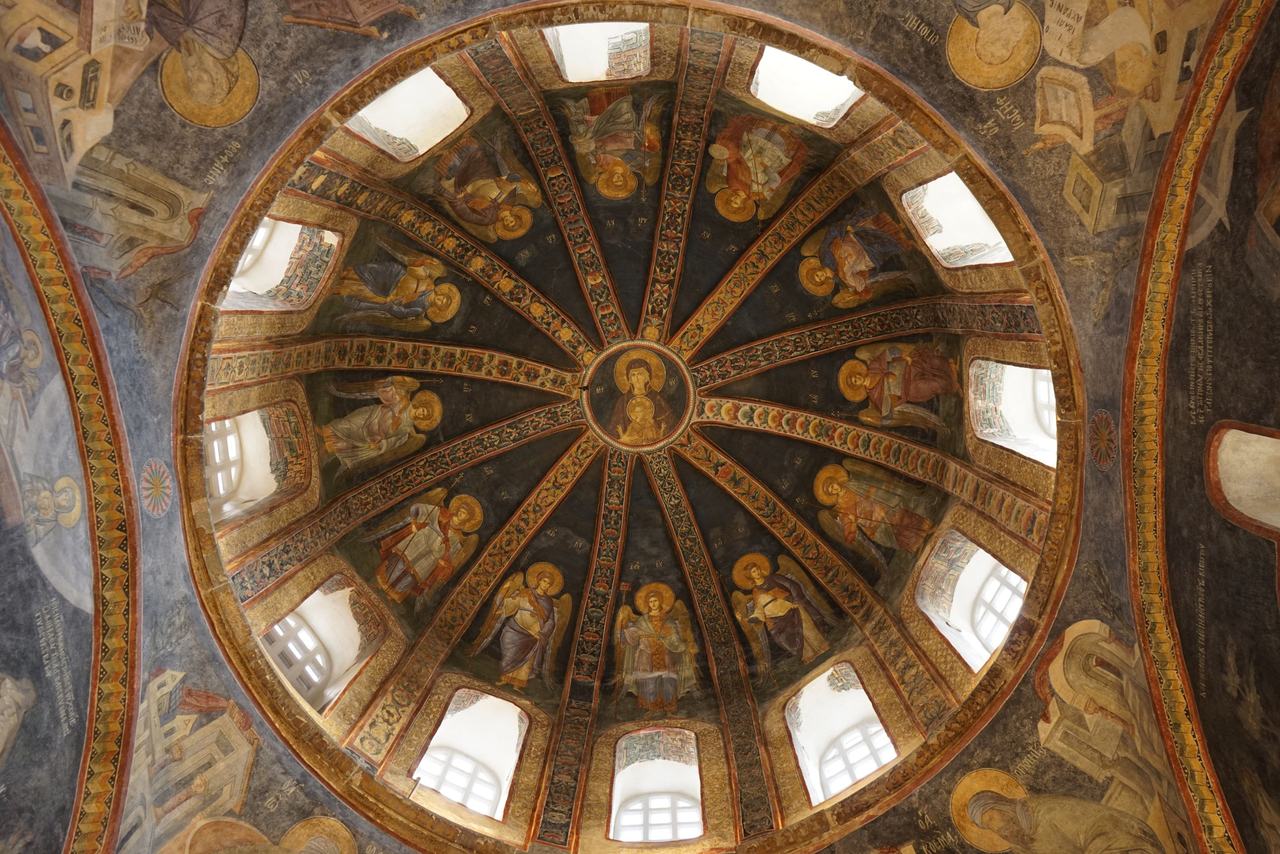
Rebuilt in the early 14th century by Theodore Metochites, the Church of the Holy Saviour in Chora was then given mosaics and frescoes among the most refined in Byzantine art. A mosque under the Ottomans, then a museum, it reopened as a mosque in 2024.
The story
Chora Church, now the Kariye Mosque, was the centerpiece of a Byzantine monastery near Istanbul’s Theodosian walls, with a history reaching back to the sixth century. Rebuilt repeatedly, it underwent a major transformation under the scholar and statesman Theodore Metochites, who added an outer entrance hall and a side chapel, decorated with mosaics and frescoes between 1310 and 1317. It remained a church after the Ottoman conquest until Atik Ali Pasha converted it into a mosque in 1511; coverings of paint and limewash helped preserve its Christian imagery. The building became a museum in 1948 and reopened for Muslim worship on May 6, 2024.
Did you know?
-
After falling from favor and being exiled, Metochites was allowed to return to the monastery in 1330 as a monk named Theoleptos. He was buried in the funerary chapel he had prepared for himself.
-
During the siege of Constantinople in 1453, an icon of the Virgin believed to protect the city was brought here from the Hodegon Monastery.
On site, look closely
-
The Anastasis
In the funerary chapel, Christ in white pulls Adam and Eve from their tombs: one of the most powerful images in Byzantine art.
-
The narthex mosaics
The two vestibules tell, in gold mosaics, the life of the Virgin and the childhood of Christ, scene after scene.
-
The donor
Above a doorway, Theodore Metochites, the statesman who had the church decorated in the 14th century, kneels to offer Christ a model of the building.