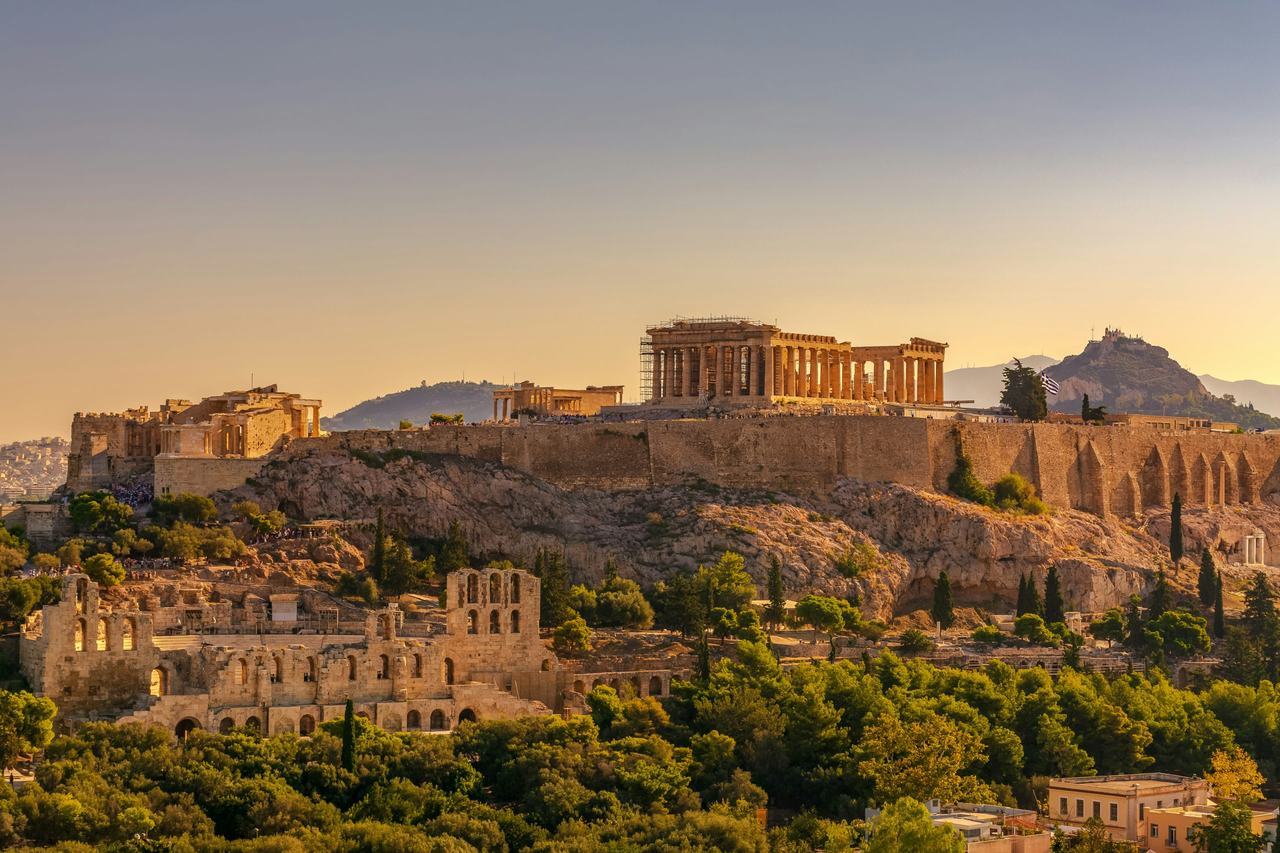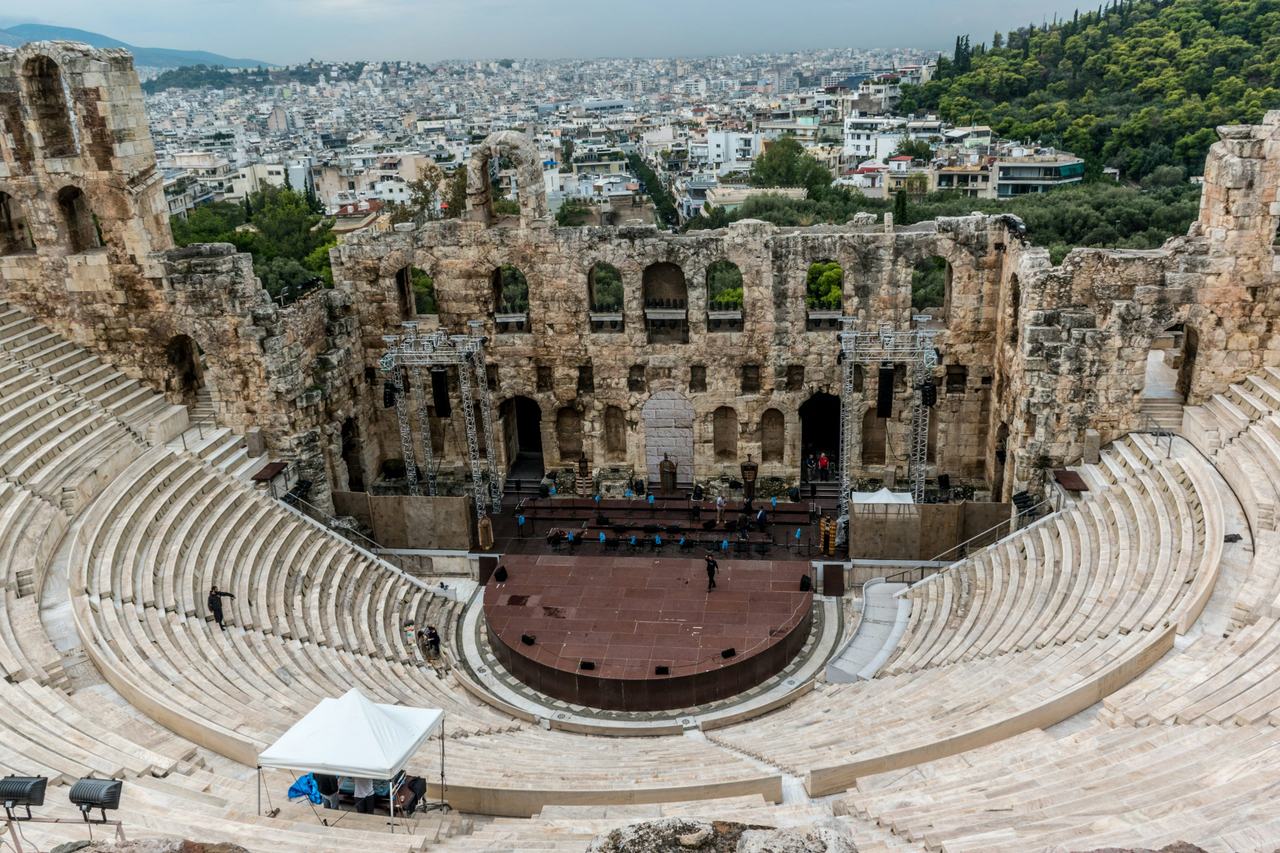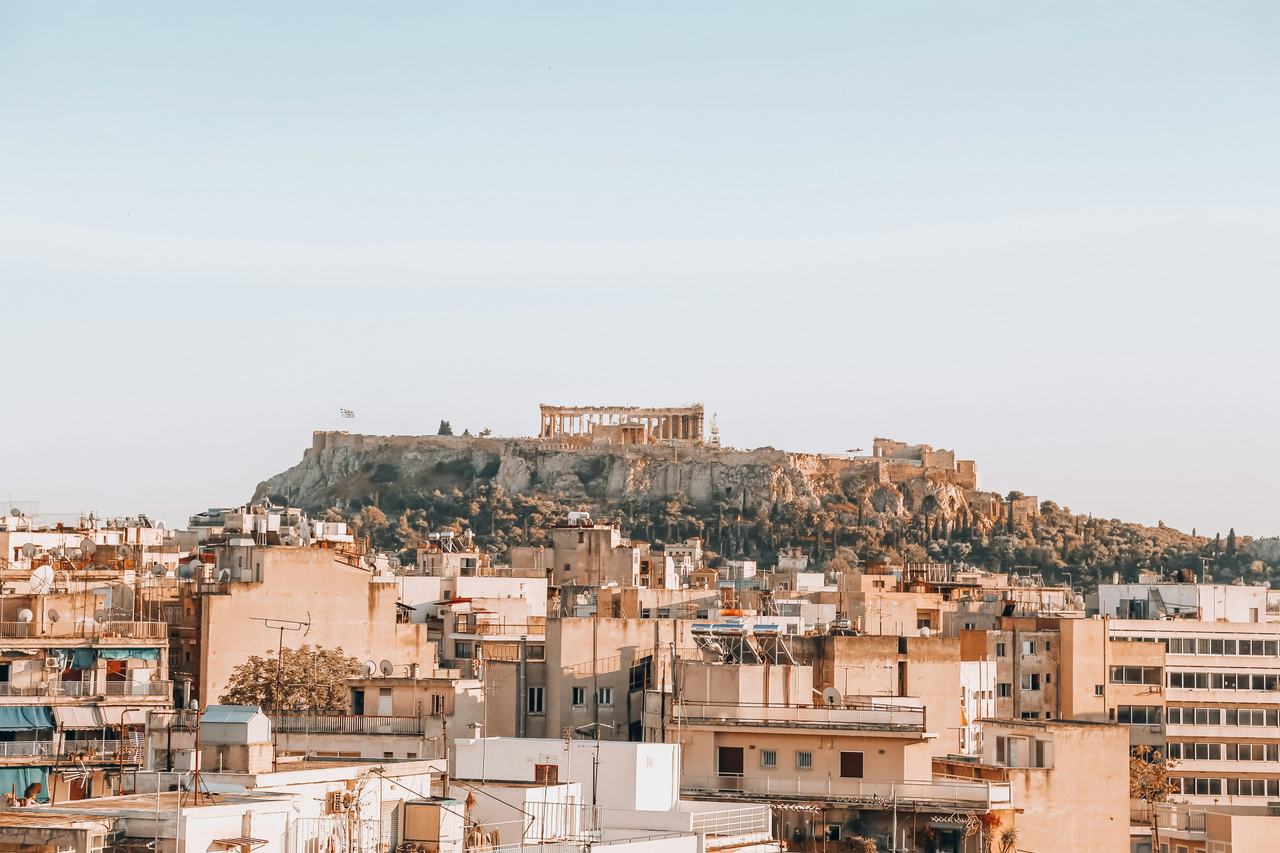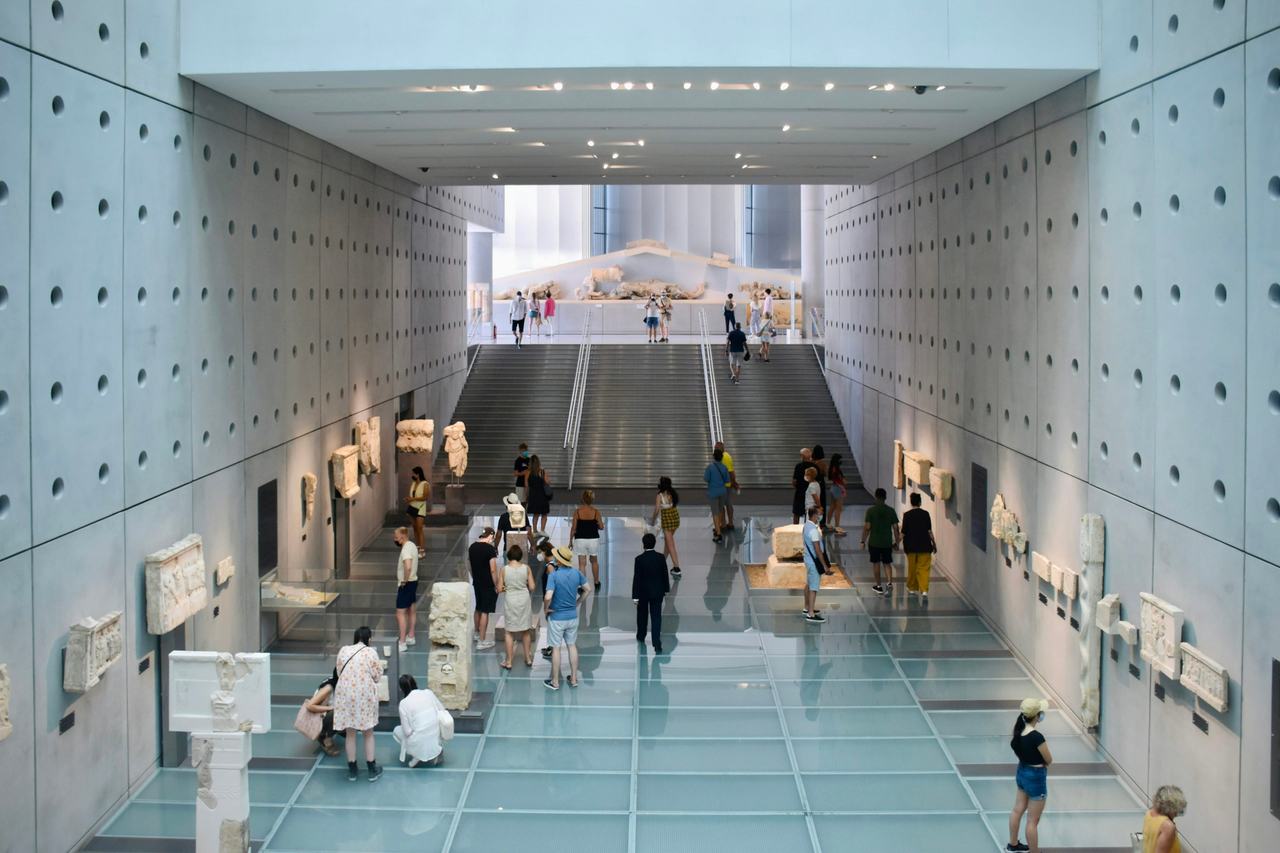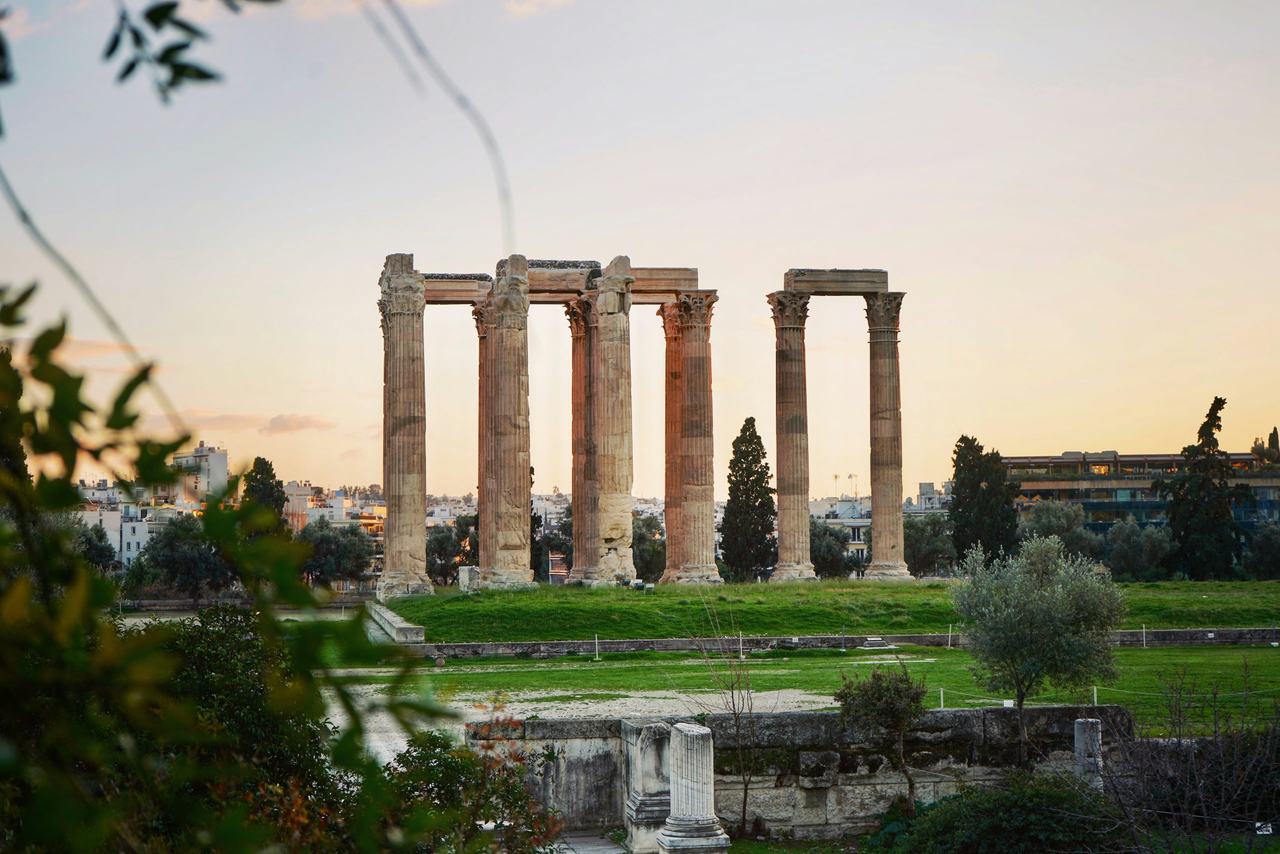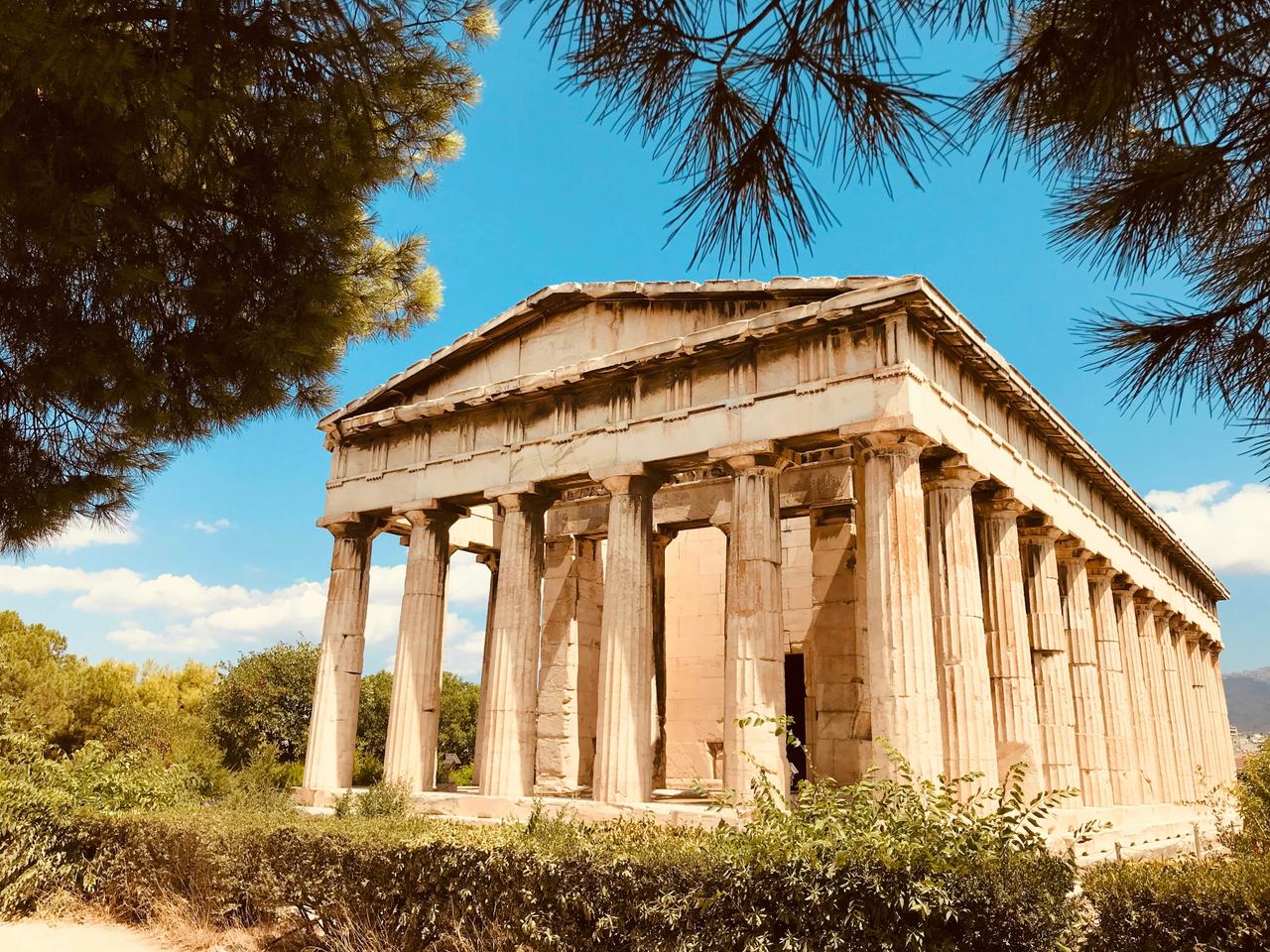
At the foot of the Acropolis, the Agora was the political and commercial heart of ancient Athens. It holds the Temple of Hephaestus, from the 5th century BC and almost intact, and the Stoa of Attalos, rebuilt in the 1950s, which houses the site museum.
The story
The Ancient Agora of Athens, northwest of the Acropolis, was the city’s center of government, commerce, and public life. Previously used for habitation and burial, the area developed into a public gathering place from the sixth century BC; the democratic reforms of Cleisthenes brought new buildings to serve its civic institutions. The Panathenaic Way crossed the Agora, carrying the festival procession toward the Acropolis. Repeated destruction and later settlement eventually buried the ancient remains beneath a densely inhabited neighborhood of modern Athens. Systematic excavations by the American School of Classical Studies began in 1931, recovering the public spaces and buildings of the ancient city.
Did you know?
-
The Altar of the Twelve Gods served as the reference point from which road distances were measured.
-
Around the year 1000, the Church of the Holy Apostles was built within the former Agora, marking a medieval chapter in the site’s history.
On site, look closely
-
The Temple of Hephaestus
On the hill above the agora, it is one of the best-preserved Greek temples: columns, pediments and roof almost complete.
-
The Stoa of Attalos
This long two-story portico was rebuilt in the 20th century on its ancient foundations; it houses the Agora Museum.
-
The heart of the city
This is where Athenians voted, traded and debated: Socrates held his discussions here with anyone who would listen.