



The Parthenon was never white
The white marble we admire is an accident of time. In 2023, scientists found traces of blue, purple and white paint on the Parthenon sculptures: what the temple looked like, and why we forgot.
Read the story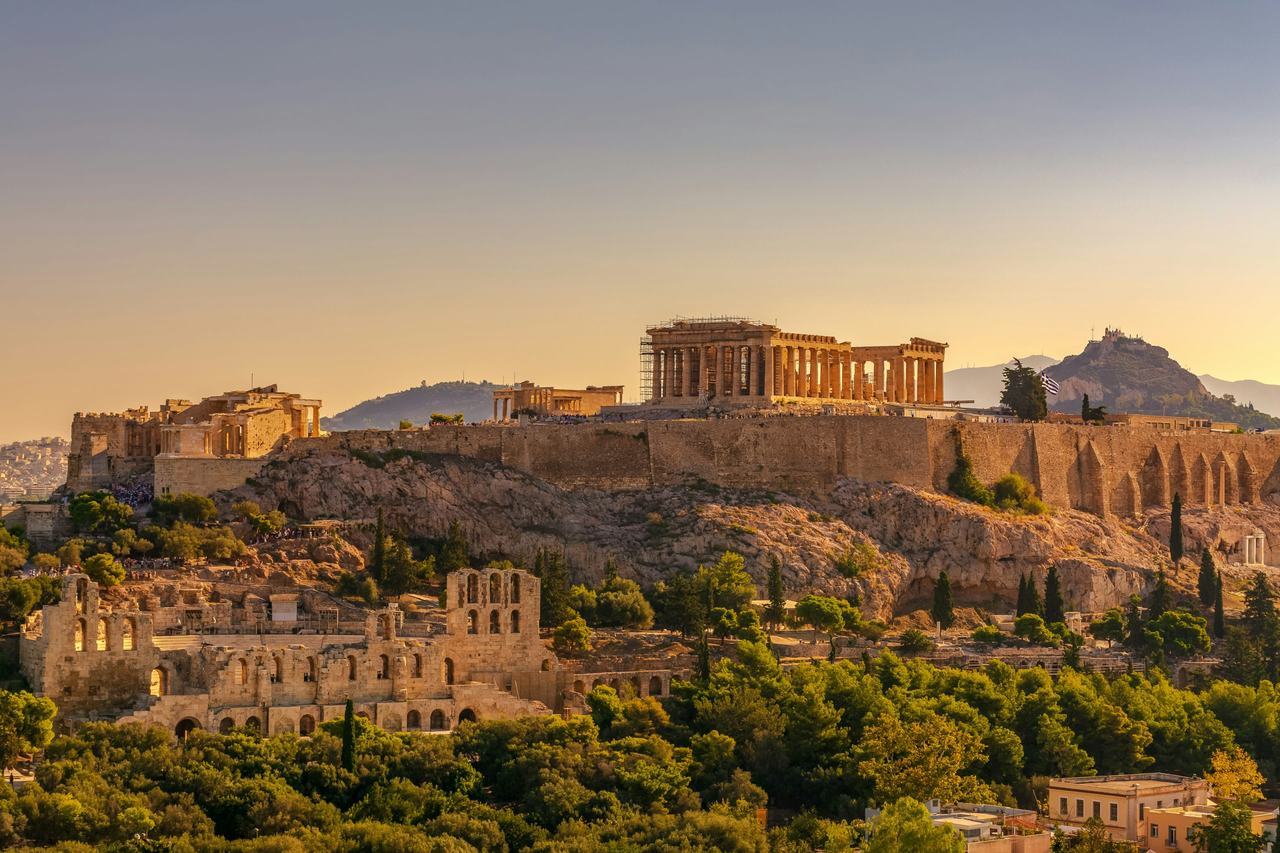
The Acropolis of Athens and the Parthenon at golden hour, seen from Philopappos Hill · Photo by Constantinos Kollias, Unsplash
Sources: Hellenic Ministry of Culture (hhticket.gr) (booking); Lonely Planet (time needed, best time); Acropolis Museum (don’t miss). Photo by Constantinos Kollias, Unsplash.
After the Persians sacked the city, Pericles had the sanctuaries on the rock rebuilt: the Parthenon, the Erechtheion and the Propylaea became the model for classical architecture.
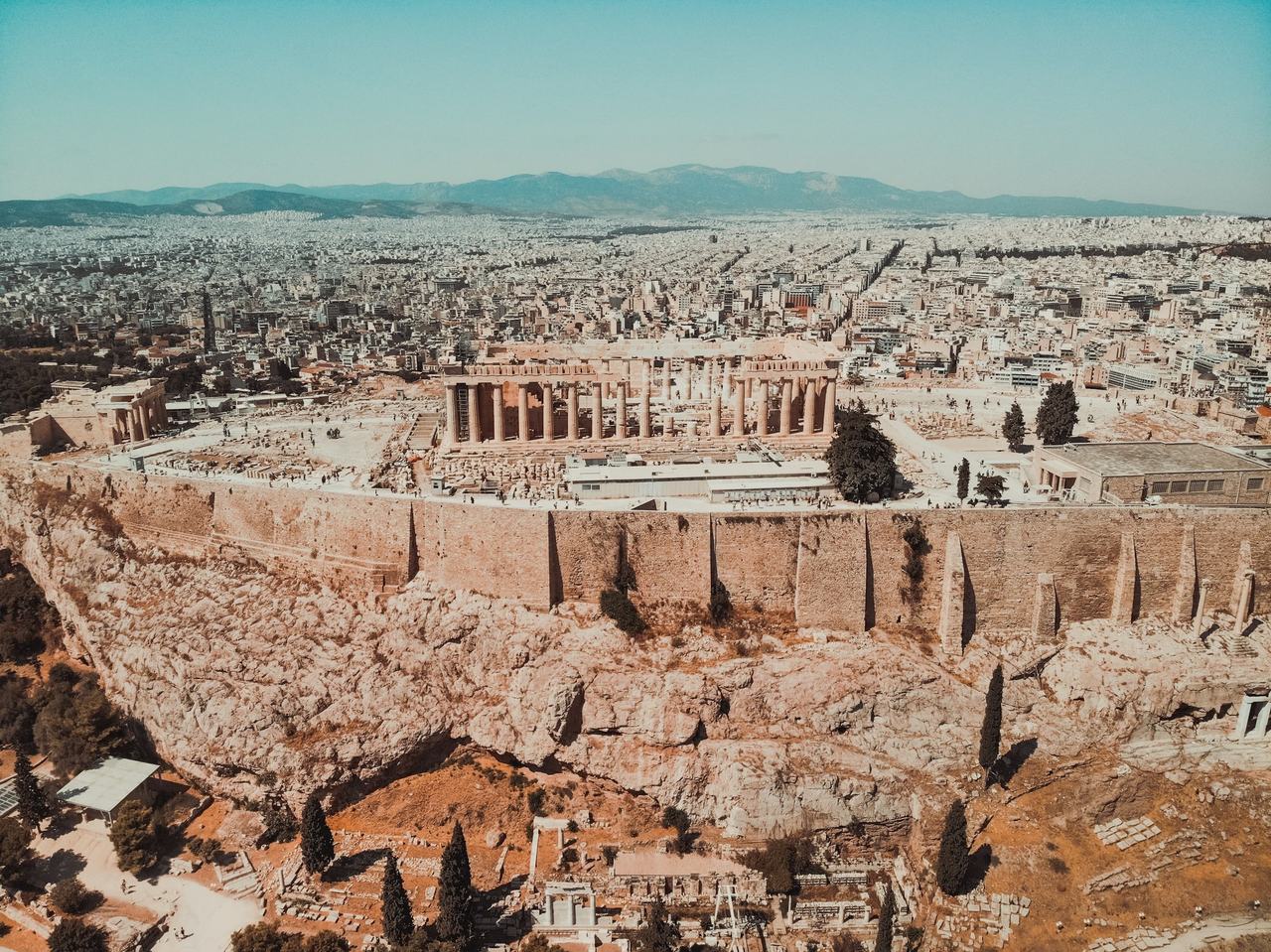
The Acropolis of Athens occupies a rocky summit above the city, where the Parthenon stands among the remains of temples and monumental gateways. Inhabited as early as the fourth millennium BC, the hill became a fortified stronghold during the Mycenaean period, protected by massive stone walls. In the fifth century BC, Pericles coordinated the building program that gave the sanctuary its defining monuments: the Parthenon, the Propylaea, the Erechtheion, and the Temple of Athena Nike. These buildings transformed an ancient defensive site into a monumental expression of Athens’s devotion to Athena, the city’s protecting goddess.
During the Venetian siege of 1687, a bombardment struck gunpowder stored by the Ottoman rulers inside the Parthenon. The resulting explosion devastated the building.
In antiquity, the hill was also called Cecropia after Cecrops, the legendary first king of Athens, who was represented as part human and part serpent.
No straight lines
The columns of the Parthenon swell slightly and lean inward, and the steps curve upward: corrections calculated so that the eye sees a perfectly straight temple.
The Caryatids
Those on the porch of the Erechtheion are copies. Five originals are in the Acropolis Museum, the sixth in the British Museum.
The Theater of Dionysus
On the south slope of the rock, this is the theater where the tragedies of Aeschylus, Sophocles and Euripides were performed.
Too far to walk comfortably: take public transit.
Distances as the crow flies; walking times are estimates. Known places from Wikidata.
The white marble we admire is an accident of time. In 2023, scientists found traces of blue, purple and white paint on the Parthenon sculptures: what the temple looked like, and why we forgot.
Read the story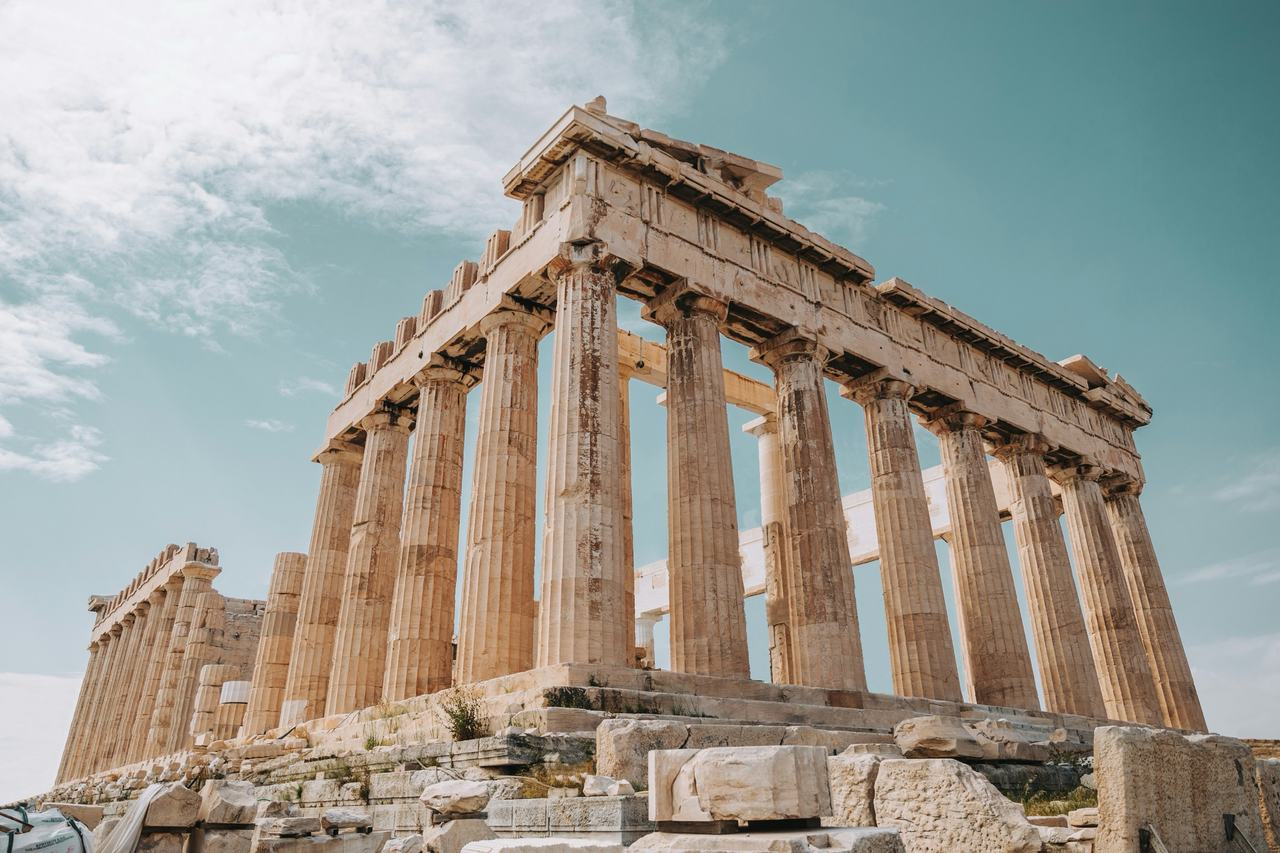
Skip the checklist. A slower route through the city — from the marble of the Acropolis to a quiet hill at dusk — reveals far more than a sprint between landmarks.
Read the story