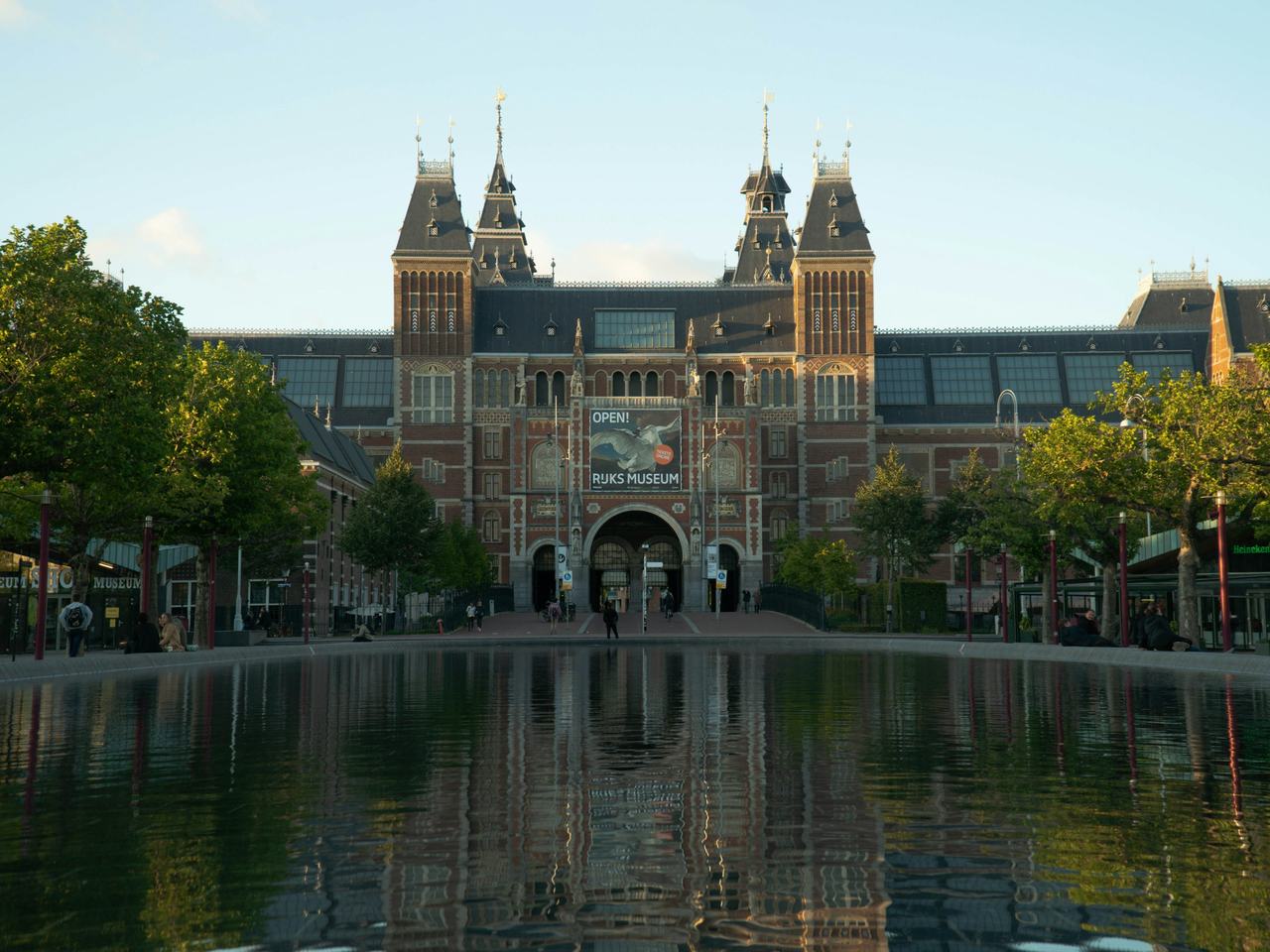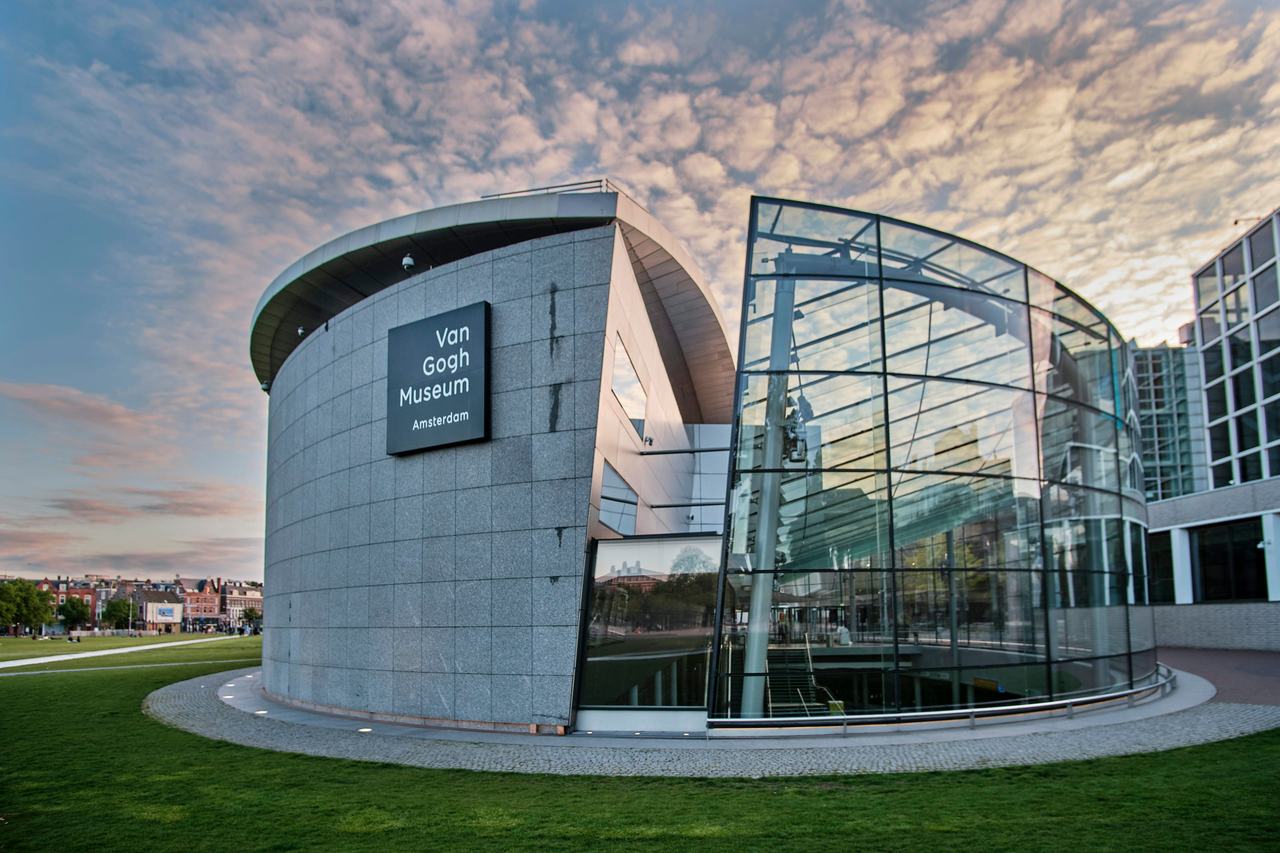
Opened in 1973 on Museumplein, in a building by Gerrit Rietveld, the museum holds the collection that stayed in the painter’s family. It follows Van Gogh year by year, from “The Potato Eaters” to the fields of Auvers.
The story
The Van Gogh Museum on Amsterdam’s Museumplein opened in 1973 to house the collection preserved by Vincent van Gogh’s family. After passing through his brother Theo and Theo’s widow, Jo van Gogh-Bonger, the works came to their son, Vincent Willem, whose agreement with the Dutch state in 1962 laid the foundation for a dedicated museum. Its holdings form the world’s largest collection of Van Gogh’s paintings, including The Potato Eaters, Sunflowers, and The Bedroom, alongside drawings, letters, and his Japanese prints. Gerrit Rietveld designed the main building, completed after his death by his associates; Kisho Kurokawa’s wing opened in 1999 for temporary exhibitions.
Did you know?
-
Jo van Gogh-Bonger rejected an offer from collector Anton Kröller to buy the entire collection, keeping together a body of work representative of Vincent’s career.
-
Two paintings stolen from the museum in 2002 were recovered in 2016 in a house near Pompeii, where they had been concealed by the Neapolitan mafia. They returned to public view at the museum in 2017.
On site, look closely
-
Sunflowers
The 1889 version of Sunflowers is among the museum’s most sought-after paintings: Van Gogh repeated it himself from the one painted in Arles.
-
The Bedroom
The first version of his bedroom in Arles, from 1888: the bed, the two chairs and the pictures on the wall, painted in flat, bright colors.
-
Almond Blossom
White branches against a blue sky, painted in 1890 for the birth of Vincent’s nephew, whom his brother Theo had named after him.