



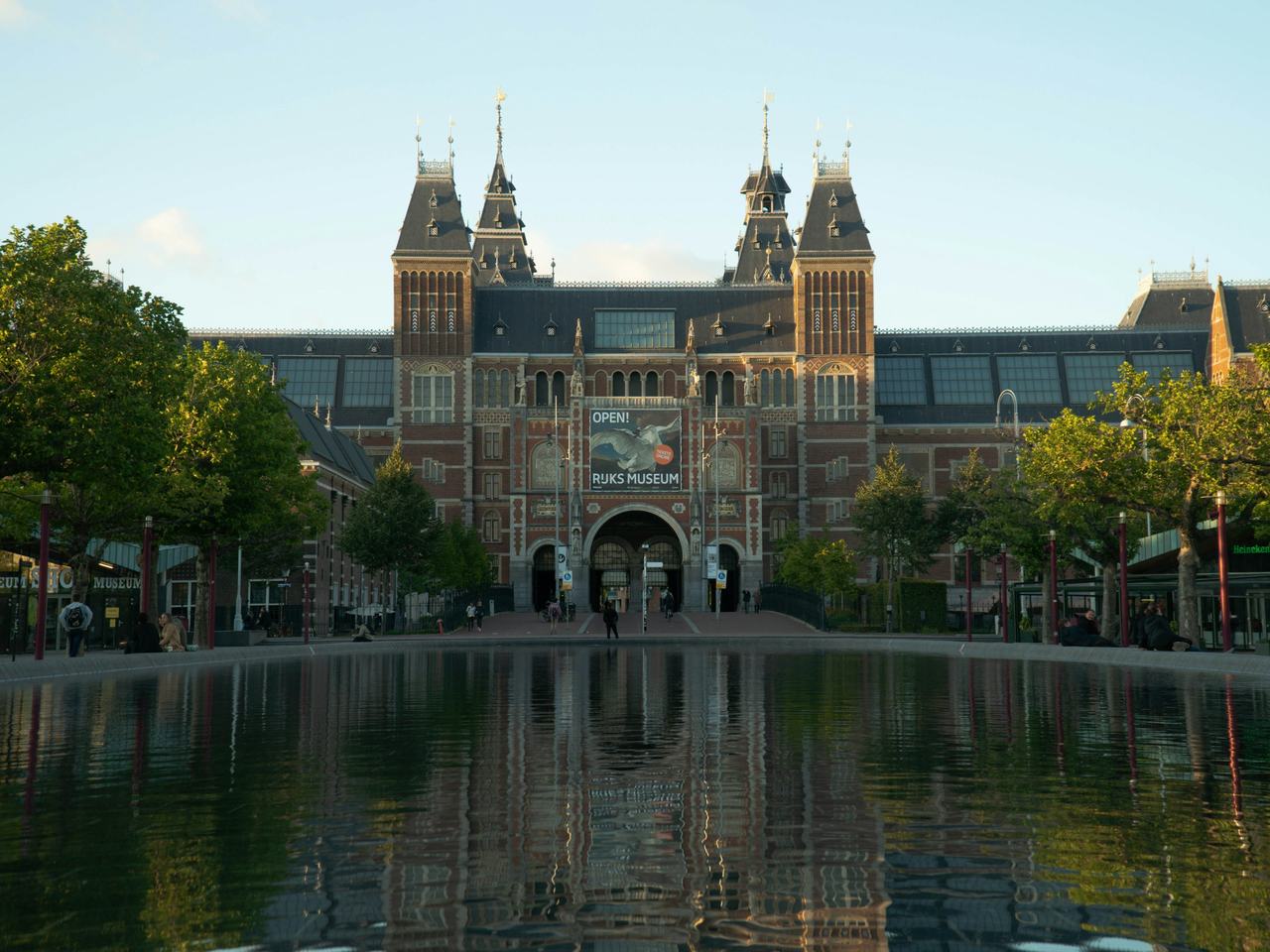
The national museum of the Netherlands tells eight centuries of Dutch history and reserves its Gallery of Honor for the masters of the 17th century, Rembrandt and Vermeer first among them.
The story
The Rijksmuseum on Museumstraat has occupied its purpose-built home, designed by Pierre Cuypers, since 1885. Its collection traces Dutch art and history, including paintings by Rembrandt, Vermeer, and Frans Hals. The institution began in 1800 at Huis ten Bosch near The Hague and moved to Amsterdam in 1808, occupying earlier premises before the present building brought several collections together. After successive alterations had obscured much of the original interior, a major renovation began in 2003; the renewed main building reopened on April 13, 2013.
Did you know?
-
In April 1942, a large part of the collection was placed in a specially constructed vault in the underground passages of Sint-Pietersberg near Maastricht for wartime safekeeping.
-
The collection bequeathed to Amsterdam by banker Adriaan van der Hoop in 1854 nearly slipped away: the city required private donors to cover 40,000 guilders of the 50,000-guilder inheritance tax needed to retain its 224 paintings.
On site, look closely
-
A trimmed Night Watch
In 1715, to make it fit into a room of the town hall, strips of canvas were cut from its edges. An early copy shows the figures that were lost.
-
The Milkmaid
A painting barely 45 centimeters (18 inches) high, in which Vermeer lays the light on the bread, the jug and the wall in tiny dots of color.
-
The bikes under the museum
The passage that runs through the building stayed open to cyclists after the renovation, at the request of local residents.