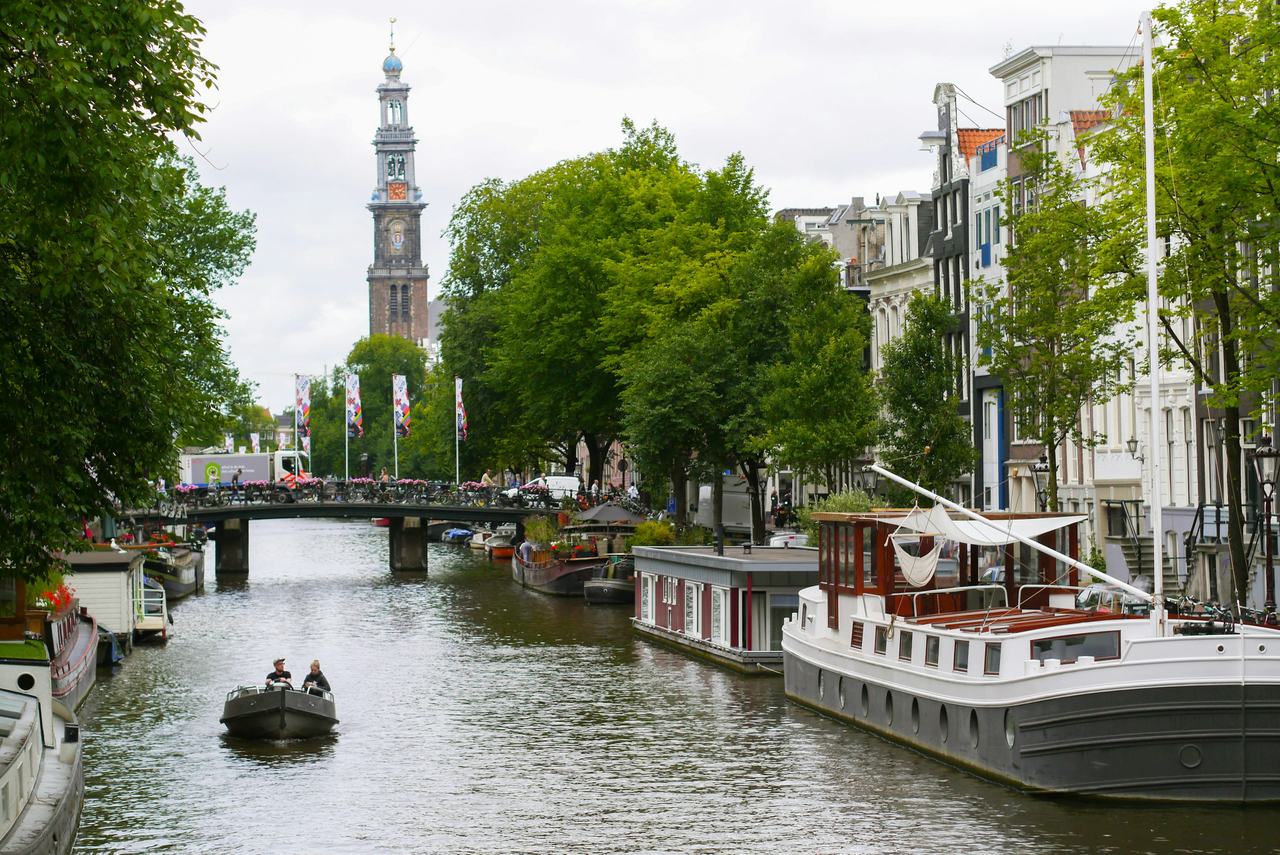
Raised from 1620 to 1631 to designs by Hendrick de Keyser, the Westerkerk is the great Protestant church of the canal ring. Its tower, the Westertoren, rises 85 meters; Rembrandt was buried here in 1669.
The story
The Westerkerk on Prinsengracht was built between 1620 and 1631 to designs by Hendrick de Keyser and completed by his son Pieter. Unlike Amsterdam’s older churches that were converted after the Reformation, it was purpose-built for Protestant worship and inaugurated on June 8, 1631. Its Renaissance design combines a high central nave, lower side aisles, and two equal transepts, creating a plan resembling two joined Greek crosses. It remains the largest church in the Netherlands built for Protestants and continues to serve the Protestant Church in the Netherlands.
Did you know?
-
The church opened without an organ because Calvinist thinking at the time regarded instrumental music in church as profane. An organ was eventually commissioned from Roelof Barentszn Duyschot in 1681 and completed by his son in 1686.
-
Gerard de Lairesse painted the main organ’s inner shutters with scenes of King David before the Ark of the Covenant and the Queen of Sheba presenting gifts to Solomon.
On site, look closely
-
The tower
At 85 meters, Amsterdam’s tallest church tower carries at its top the imperial crown of Maximilian of Austria.
-
Rembrandt
The painter was buried in the church in 1669; the exact place of his grave is lost, and a plaque recalls it.
-
The organ
Its large shutters, painted by Gerard de Lairesse, close over the pipes like an altarpiece.