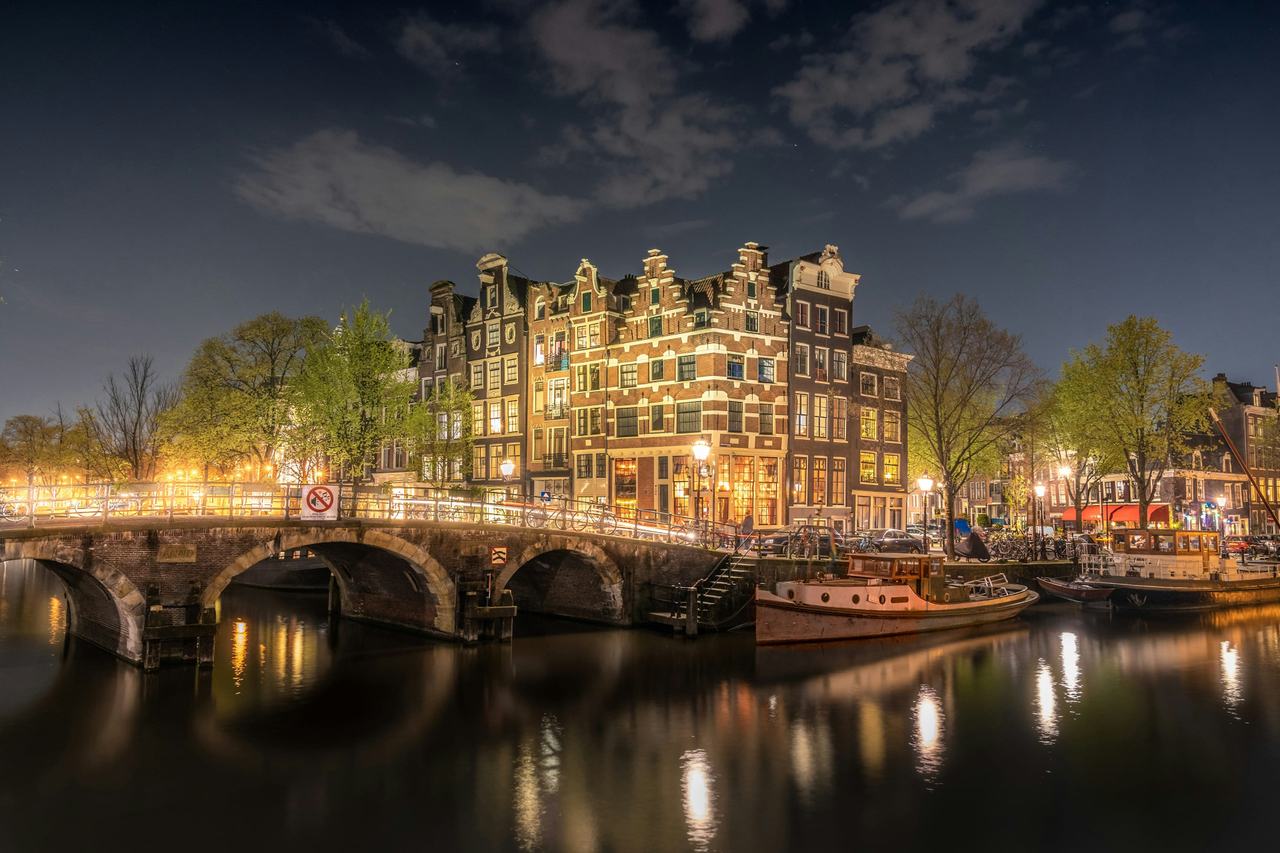
A first, very narrow bridge crossed the Amstel here as early as 1691; it gave the Skinny Bridge its name. The present drawbridge, of white-painted wood, dates from 1934 and is reserved for pedestrians and cyclists.
The story
The Magere Brug, or “Skinny Bridge,” crosses the Amstel between Kerkstraat and Nieuwe Kerkstraat and now carries only pedestrians and cyclists. A broad stone bridge was originally planned for this crossing, but the economic downturn following 1672 led to a cheaper, narrower wooden bridge, built in or shortly after 1691. After a replacement in 1871, the present bridge was completed in 1934 to a design by P. L. Kramer, following the city council’s requirement that it closely resemble its predecessor. Its wooden exterior conceals steel girders supported on concrete piles, preserving the appearance of a timber crossing while changing its underlying construction.
Did you know?
-
Until 1994, two bridge keepers operated the bridge by hand, using their own body weight to control the moving leaves. Safety concerns about this balancing act led to mechanization and automation.
-
The bridge appears in the James Bond film Diamonds Are Forever
The assassins Wint and Kidd watch from it as a victim is recovered from the water in view of tourists aboard a passing sightseeing boat.
On site, look closely
-
A wooden drawbridge
The white double-leaf bridge still opens to let boats pass along the Amstel.
-
The “skinny” bridge
Its name is said to come from the narrow 17th-century bridge it replaces; the present wooden structure dates from 1934.
-
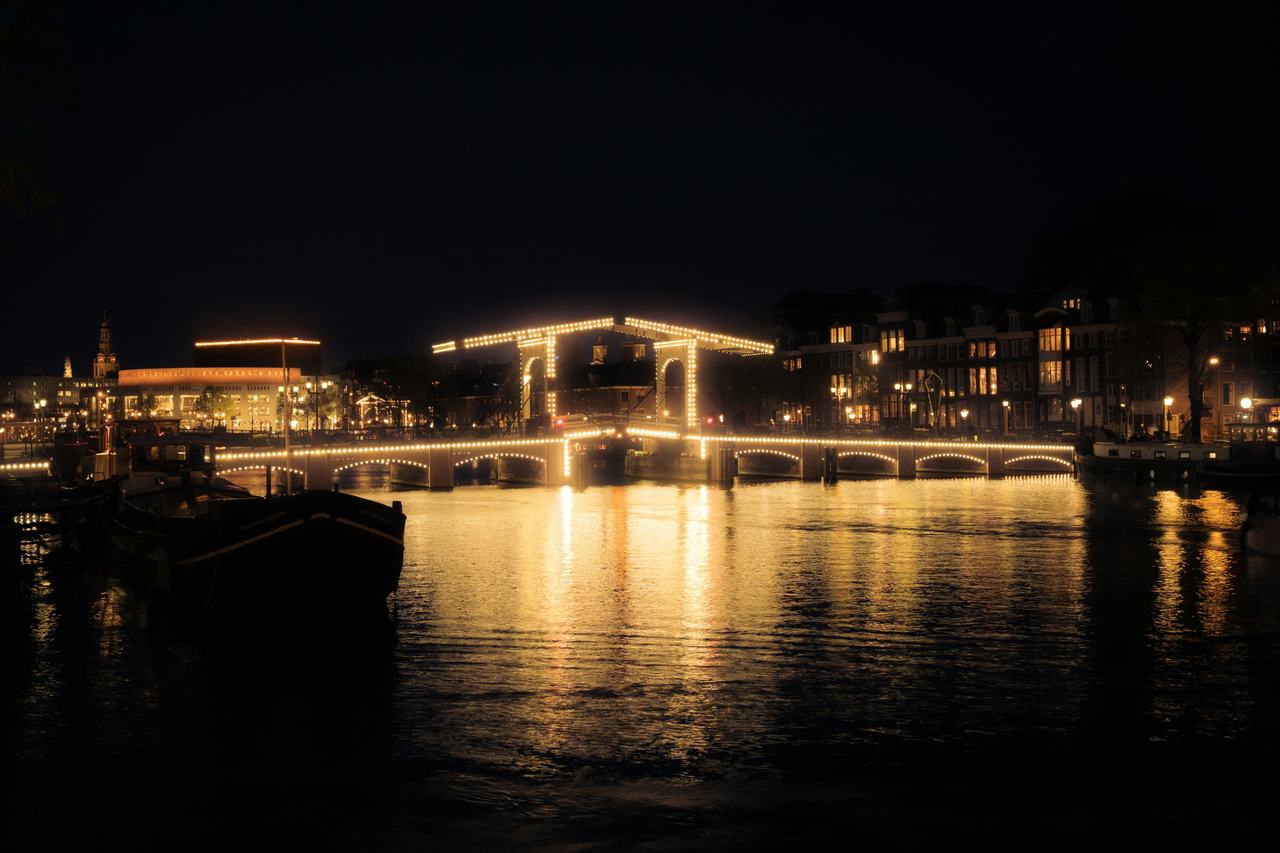
In the evening
At night, hundreds of light bulbs trace its arches and cables on the waters of the Amstel.