The Parthenon was never white
The white marble we admire is an accident of time. In 2023, scientists found traces of blue, purple and white paint on the Parthenon sculptures: what the temple looked like, and why we forgot.
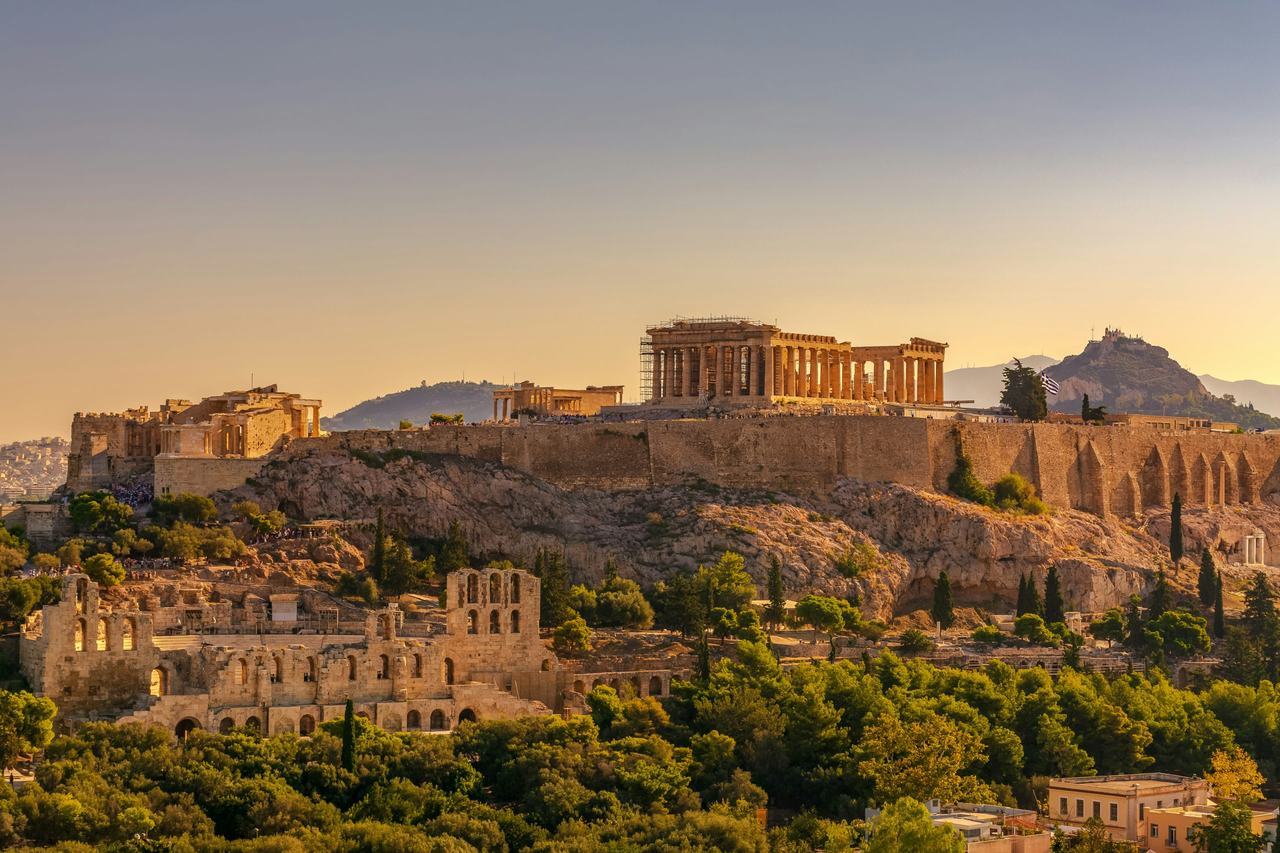
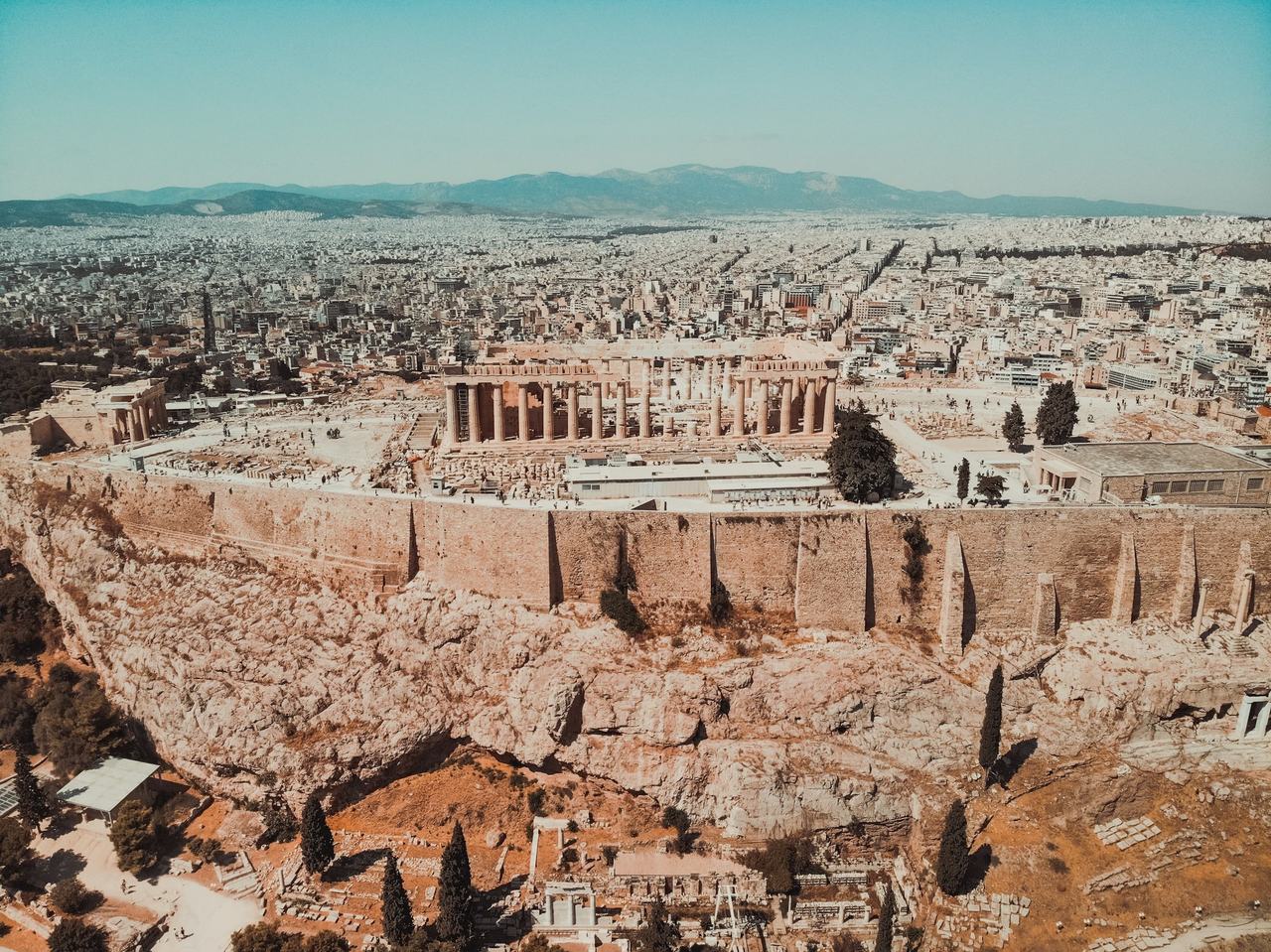
Stand on the Acropolis at noon and the Parthenon is almost too bright to look at: white marble against a white sky. It is one of the most copied images in Western architecture. It is also not what the Athenians built. When the temple was finished, in 432 BC, its sculptures were painted.
The evidence in the light
The proof is hard to see, because very little pigment is left. In October 2023, a team led by Giovanni Verri, of the Art Institute of Chicago, published in the journal Antiquity a new examination of the Parthenon sculptures kept in the British Museum. They used a technique called visible-induced luminescence: under the right light, a pigment known as Egyptian blue glows, even when no trace of it is visible to the eye.
It glowed in many places. The blue had been used for the sea from which the sun god Helios rises with his chariot, for the empty space between figures and above all for the patterns on the clothes of the gods. The team also identified a purple, made without the shellfish dye that was usual around the Mediterranean, and two different whites. Paint on the backs of the statues suggests they were colored before they were lifted into place.
How marble became white
So why do we picture antiquity in white? Partly because paint is fragile: centuries of weather, burial and cleaning removed it. And partly because white became an idea. In 1764 the German scholar Johann Joachim Winckelmann, in his history of ancient art, praised white marble as the essence of beauty. Museums, academies and architects followed, and the bare stone of the ruins was taken for the intention of their makers.
The white marble we admire is an accident of time.
What to look for
A full reconstruction of the Parthenon’s colors is not yet possible; so far the imaging has revealed mostly the blue. But the idea is enough to change the visit. In the Acropolis Museum, at the foot of the hill, look closely at the older statues: several still carry traces of red, blue and green. Then climb to the temple and picture the sea blue behind the horses of the sun, and the robes of the goddesses patterned like cloth. The building did not whisper. It spoke in color.