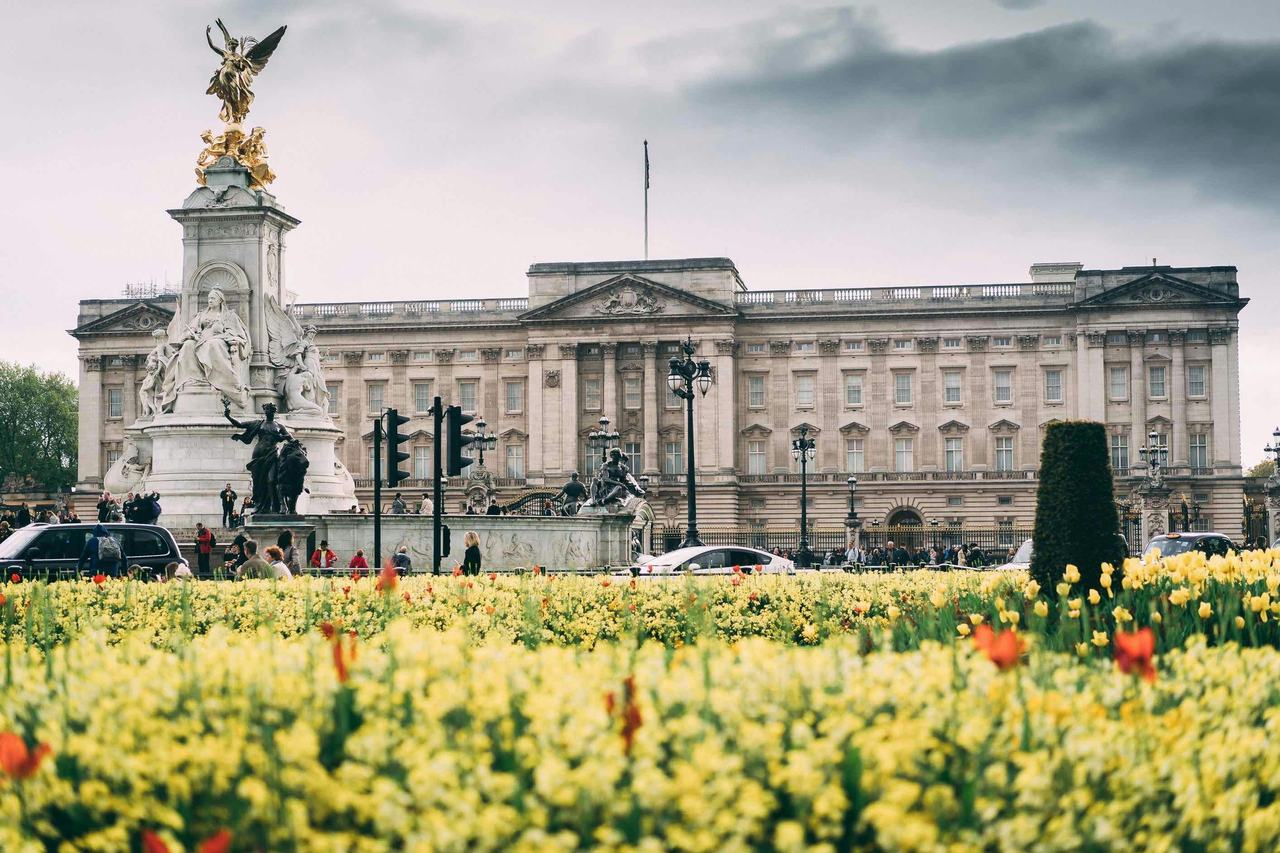
The official residence of the sovereign since Queen Victoria’s accession in 1837, Buckingham Palace has 775 rooms. Its State Rooms open to visitors every summer; the rest of the year, people come for the Changing of the Guard.
The story
Buckingham Palace grew around a townhouse built in 1703 for the Duke of Buckingham and Normanby to designs by William Winde. George III bought it in 1761 as a private retreat for Queen Charlotte, giving rise to its name, the Queen’s House. In the early 19th century, John Nash and Edward Blore expanded the building with three wings around a central courtyard; it became the monarch’s London residence when Queen Victoria acceded in 1837. Later additions included the East Front, whose balcony became the setting for royal appearances before gathered crowds.
Did you know?
-
A German bomb destroyed the palace chapel during World War II.
The King’s Gallery was built on its site and opened in 1962 to display works from the Royal Collection.
-
The River Tyburn still flows beneath the palace courtyard and south wing, a reminder of the marshy ground on which the estate developed.
On site, look closely
-
The Changing of the Guard
On certain days, in the late morning, guards in red tunics and bearskins take over in front of the palace; the schedule is published in advance.
-
The balcony
It is from the central balcony of the main facade that the royal family greets the crowds on great occasions.
-
The State Rooms
In summer, part of the palace opens to visitors: the Throne Room, the Picture Gallery and a walk through the garden.