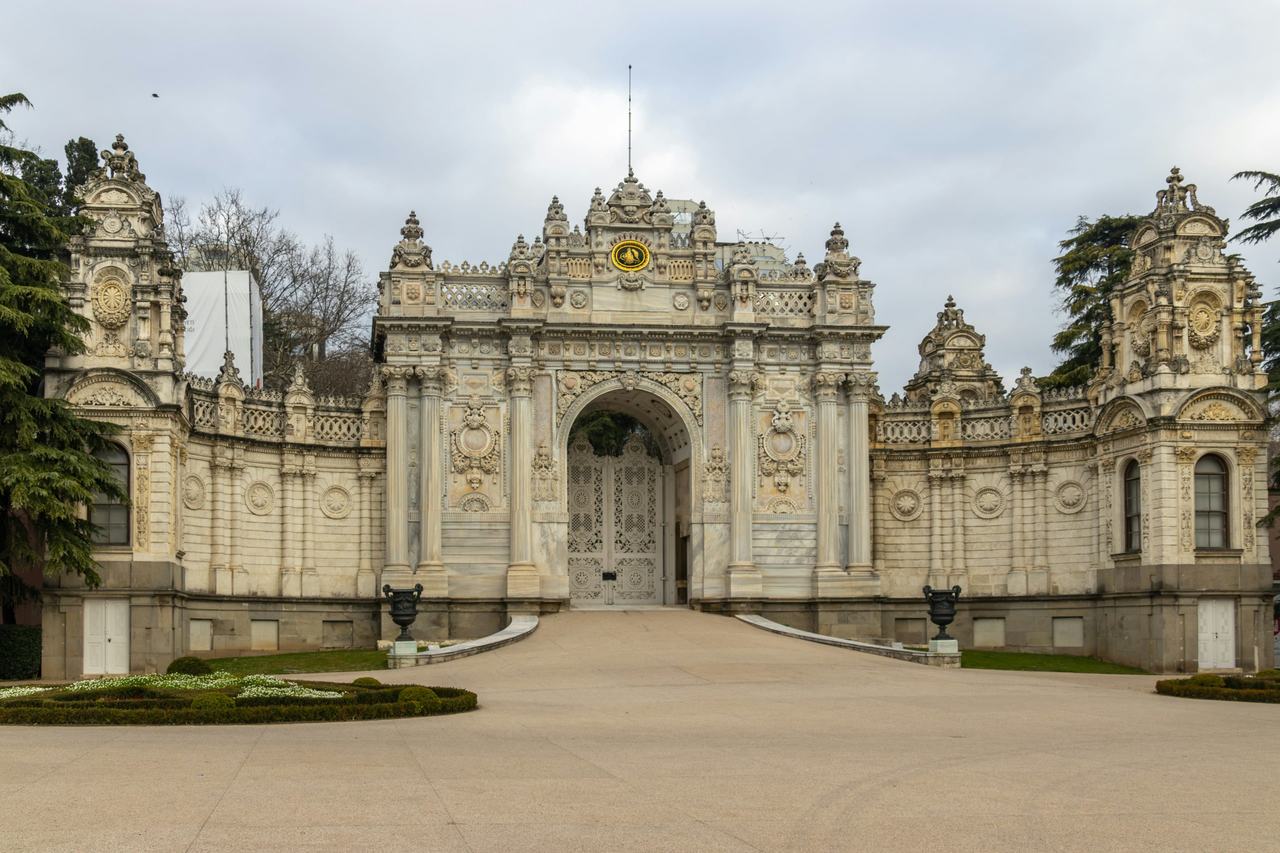
Built from 1843 to 1856 for Sultan Abdülmecid, Dolmabahçe Palace replaced Topkapı as the residence of the sultans. Its façade runs six hundred meters along the Bosphorus; Atatürk died here on November 10, 1938.
The story
Dolmabahçe Palace stands on Istanbul’s European Bosporus shore, on land reclaimed from a bay and developed into imperial gardens. Sultan Abdülmecid commissioned it to replace the older Beşiktaş waterfront palace, bringing royal residence, official receptions, and state business together in a European-style setting. Designed by the Armenian architects Garabet Amira Balyan and his son Nigoğos, it combines European architectural styles along an extensive waterfront façade and officially opened in 1856. Abdülhamid II later moved his residence to Yıldız Palace, leaving Dolmabahçe chiefly for ceremonial use; under Mehmed V, it underwent restoration to serve again as the sultan’s administrative center. Today, the palace is a museum.
Did you know?
-
Before the site became an imperial garden, its bay was an anchorage for the Ottoman fleet and a setting for naval ceremonies.
-
Abdülhamid II lived at Dolmabahçe for only 236 days before moving to Yıldız Palace out of fear of assassination.
On site, look closely
-
The Ceremonial Hall
Beneath a dome more than thirty meters high hangs one of the largest crystal chandeliers in the world, with hundreds of lamps.
-
The Crystal Staircase
Its double horseshoe banister is made of crystal balusters that catch the light of the Bosphorus.
-
Atatürk’s room
Mustafa Kemal Atatürk died in the palace on November 10, 1938, at 9:05 a.m.; the clocks there remain stopped at that time.