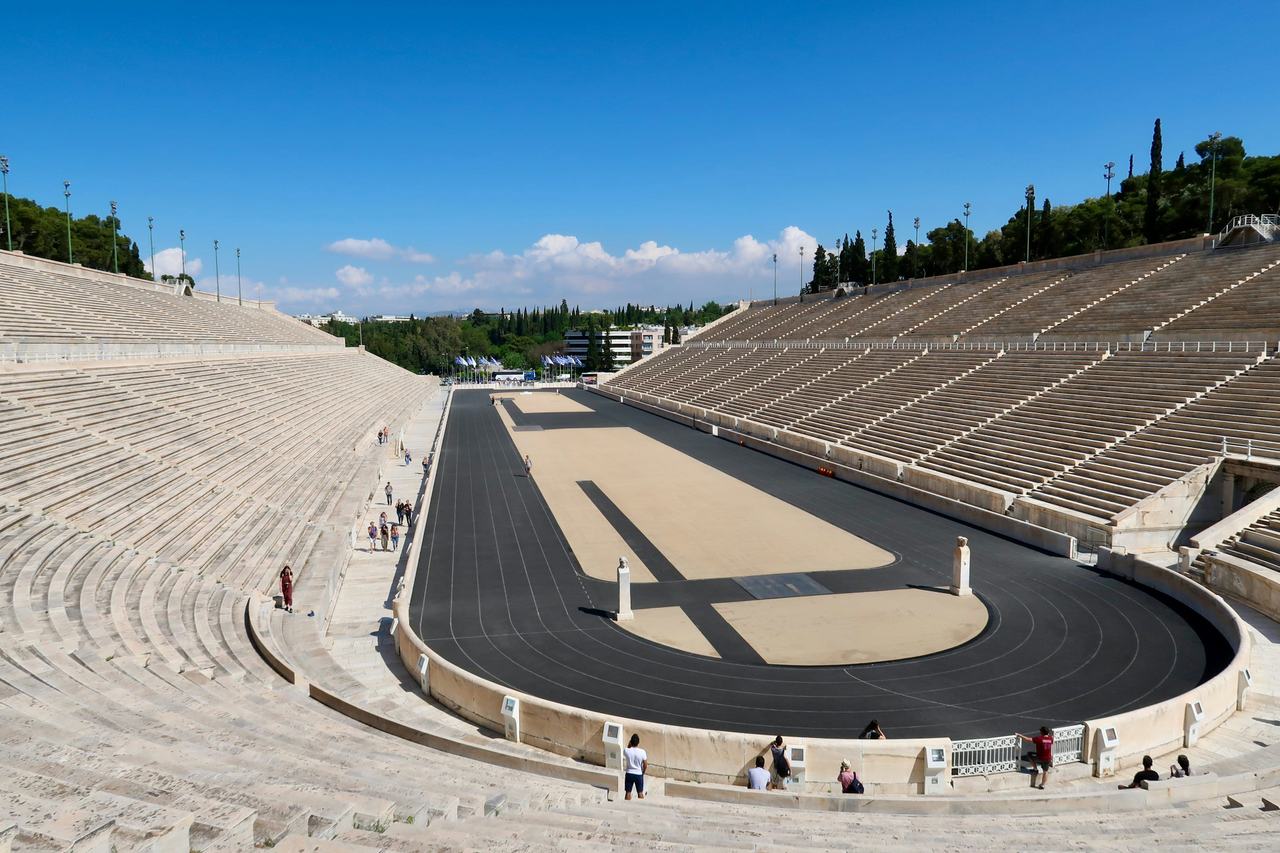
Laid out in the 4th century BC for the Panathenaic Games, the stadium was remade in marble by Herodes Atticus around AD 144. It was rebuilt to host the first modern Olympic Games in 1896; it is the only stadium in the world built entirely of marble.
The story
The Panathenaic Stadium occupies a natural ravine where Athenians once watched races held in honor of Athena. Around 330 BC, the statesman Lykourgos developed the racecourse into a stone stadium; by AD 144, Herodes Atticus had rebuilt it in Pentelic marble with seating for about 50,000 spectators. Abandoned in late antiquity, it was excavated in 1869 and later refurbished to host the opening and closing ceremonies and several sporting events of the first modern Olympics in 1896. It returned to Olympic use in 2004 and serves as the finish of the annual Athens Classic Marathon.
Did you know?
-
The stadium’s other name, Kallimarmaro, means “beautiful marble”; it is the only stadium in the world built entirely of marble.
-
The Ilissos River once flowed in front of the entrance.
It now runs beneath Vasileos Konstantinou Avenue, having been covered in the 20th century.
On site, look closely
-
All in marble
It is the only large stadium in the world built entirely of marble, from Mount Pentelicus, like the Parthenon.
-
The first modern Games
It hosted the first modern Olympic Games in 1896; you can walk on the hairpin-shaped track.
-
The Olympic flame
This is where the flame, lit at Olympia, is handed over to the country hosting the next Games.