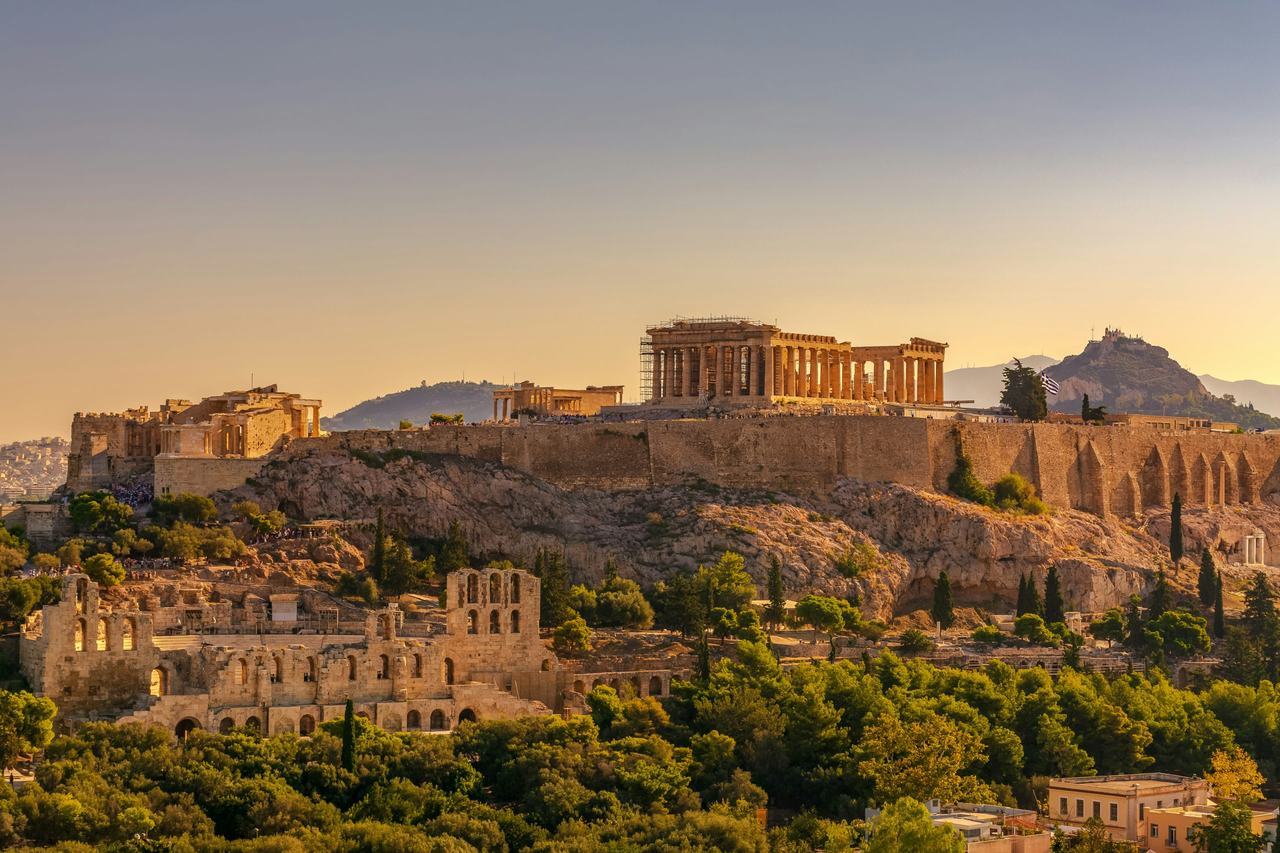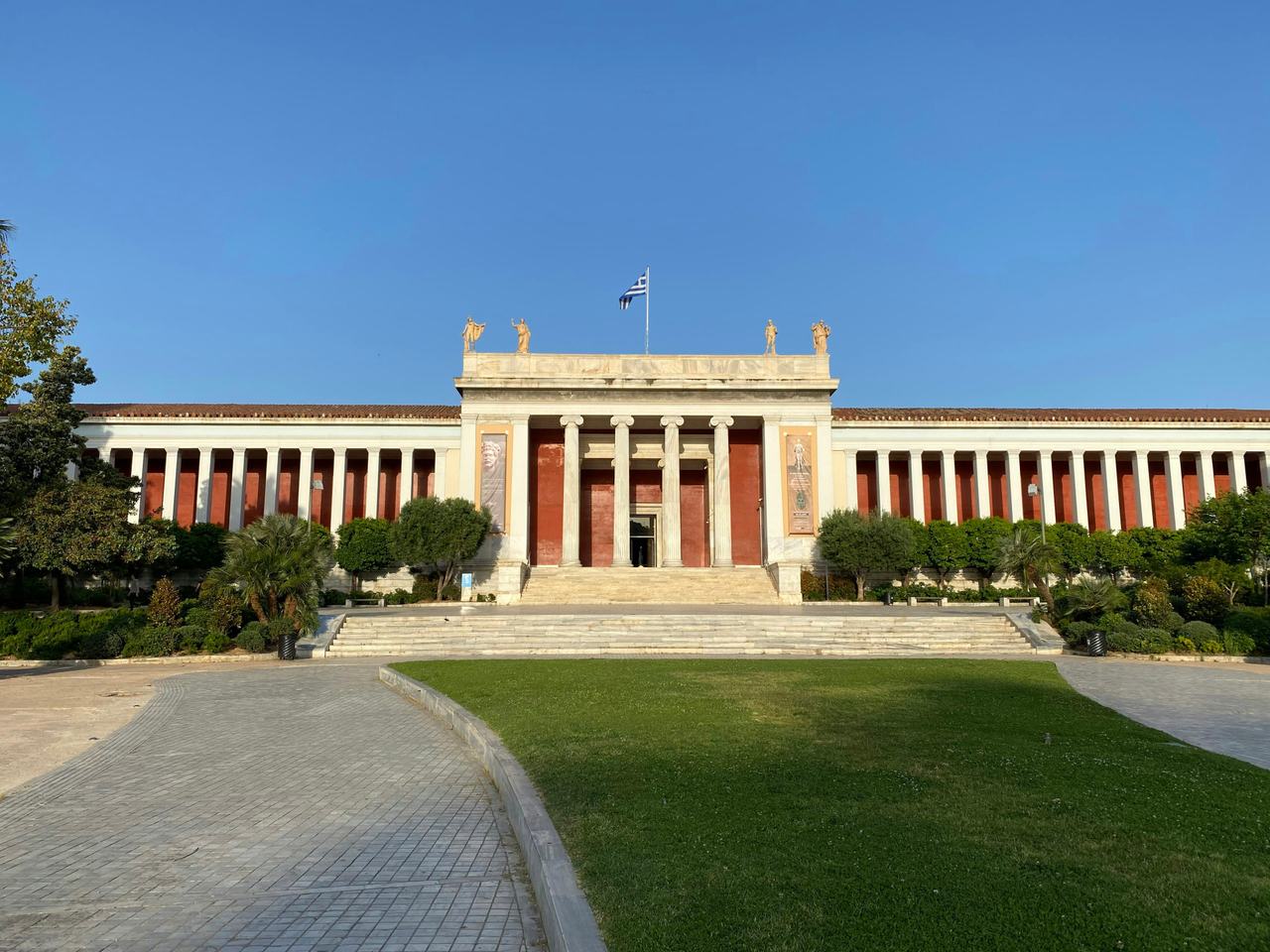
The largest museum in Greece gathers, in a neoclassical building completed in 1889, finds from all over the country. It follows Greek art from prehistory to late antiquity, from the tombs of Mycenae to the classical bronzes.
The story
The National Archaeological Museum on Patission Street houses archaeological finds from across Greece, spanning prehistory to late antiquity. Its building rose between 1866 and 1889 on land donated by Eleni Tositsa, giving collections previously moved among several exhibition spaces a permanent home. Ludwig Lange conceived the initial neoclassical plan, which was subsequently modified by Panagis Kalkos, the principal architect, and by Armodios Vlachos and Ernst Ziller. Later wings accommodated the expanding collections, whose holdings include Cycladic marble figures, Mycenaean goldwork, and objects excavated by Heinrich Schliemann.
Did you know?
-
During World War II, the museum’s antiquities were packed into protective boxes and buried to prevent destruction and looting. Exhibits went back on display in 1945 under Christos Karouzos and Semni Karouzou.
-
The museum’s famous gold “Mask of Agamemnon” bears a misleading name
Its identification with the legendary king was erroneous. It belongs to a group of funerary masks that covered the faces of deceased Mycenaean nobles.
On site, look closely
-
The Mask of Agamemnon
This gold funeral mask, found at Mycenae in 1876, was named after the king of the Iliad, but it is older than the Trojan War.
-
The Antikythera mechanism
Recovered from a shipwreck, this assembly of bronze gears calculated the positions of the heavens: a computer more than two thousand years old.
-
The god from Artemision
This large bronze, Zeus or Poseidon, arm drawn back to throw, was recovered from the sea off Cape Artemision.