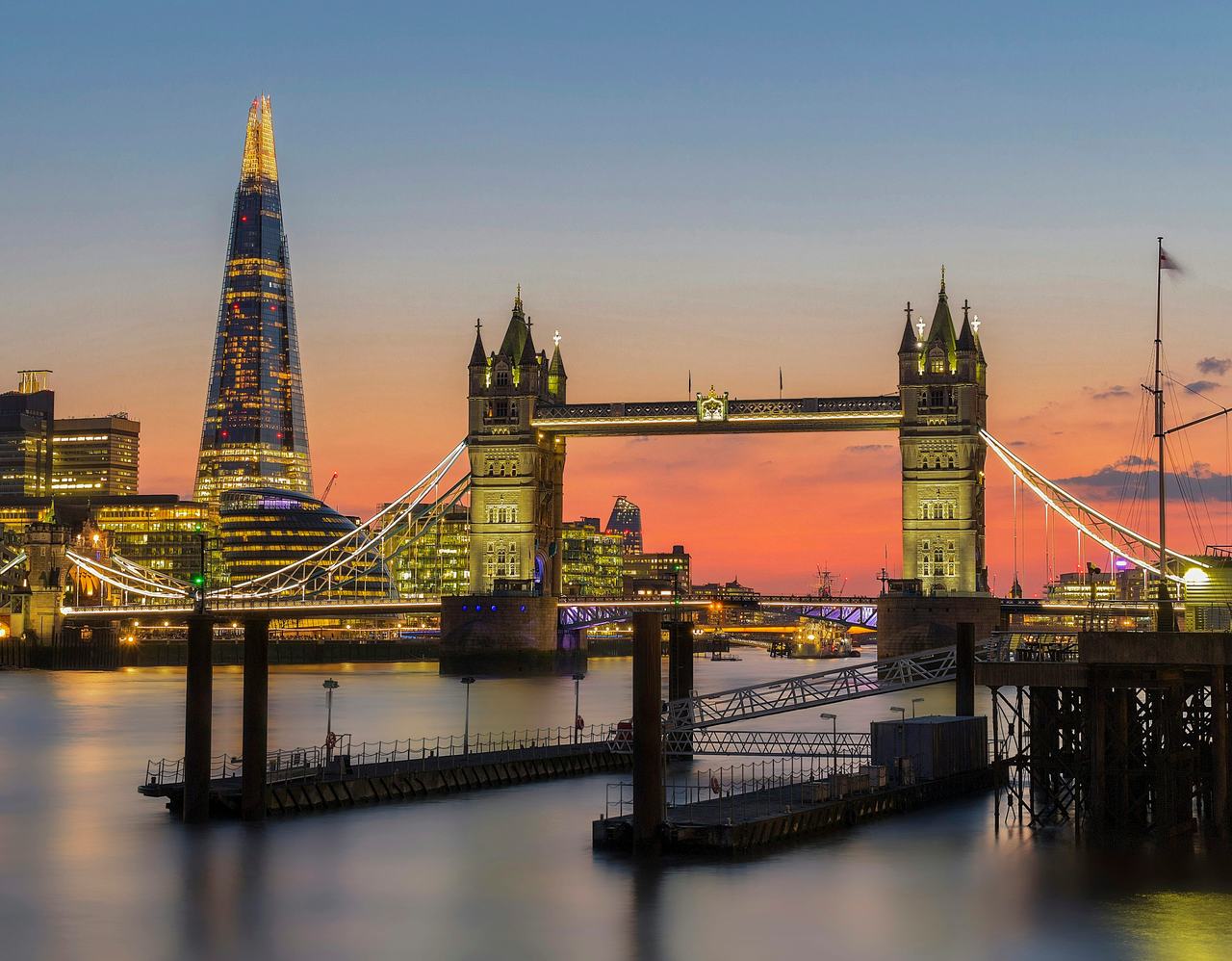
Opened in 1894 to designs by Horace Jones and the engineer John Wolfe Barry, Tower Bridge is both a suspension bridge and a bascule bridge. Crossing it is free; the exhibition takes you up to the high-level walkways and into the old engine rooms.
The story
Tower Bridge crosses the Thames beside the Tower of London, built between 1886 and 1894 to provide a new road crossing without blocking ships from the Pool of London. Architect Horace Jones and engineer John Wolfe Barry, assisted by Henry Marc Brunel, developed a structure whose central roadway lifts in two leaves between towers linked by high-level walkways. Edward, Prince of Wales, and Alexandra, Princess of Wales, opened the bridge on June 30, 1894. Its original hydraulic operating machinery was converted to an electro-hydraulic system in 1972; today, the bridge still carries road traffic and pedestrians, while its towers, upper walkways, and Victorian engine rooms form a visitor exhibition.
Did you know?
-
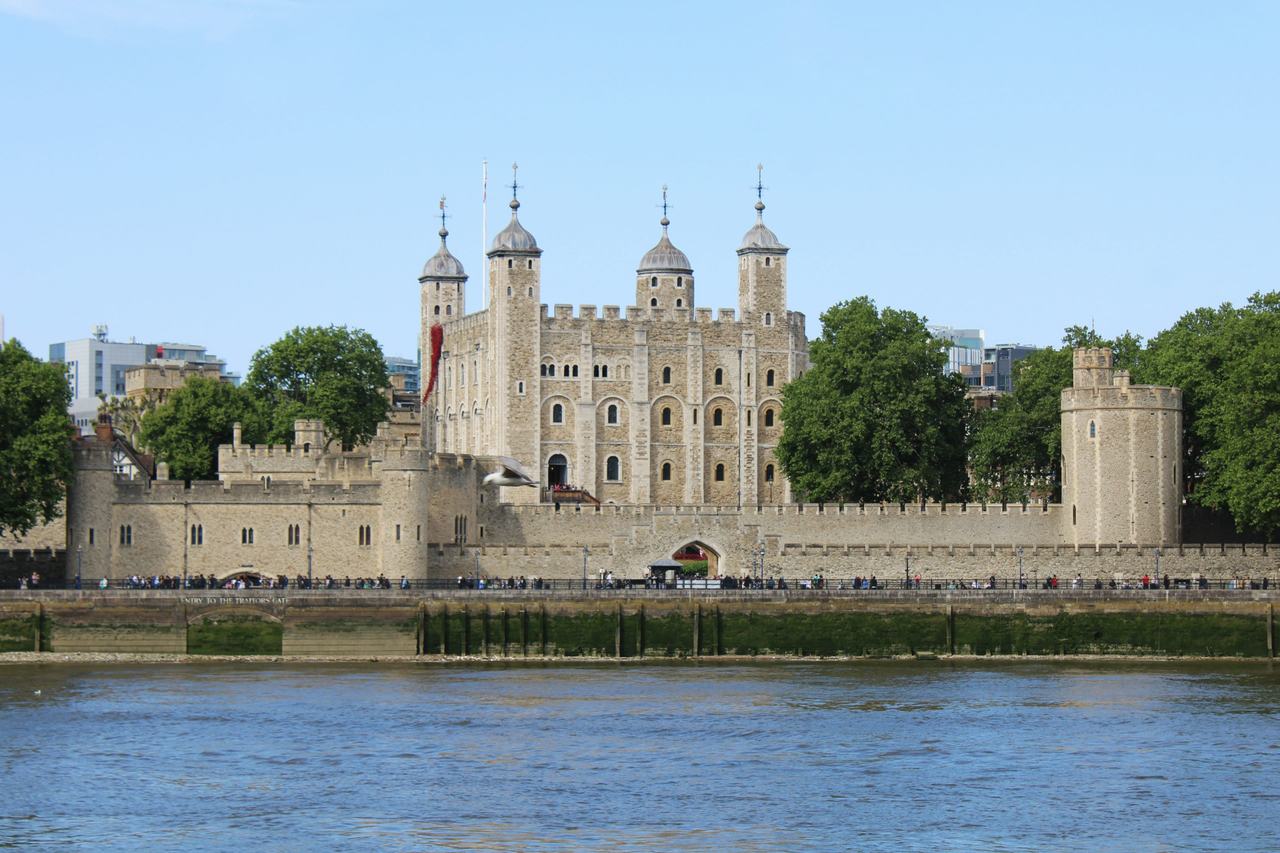
The 1885 act authorizing construction required the bridge's design to harmonize with the architecture of the neighboring Tower of London.
-
The same act required the bridge to open for vessels regardless of delays to road traffic, giving river passage explicit priority.
On site, look closely
-
The glass walkways
Forty-two meters above the Thames, the high-level walkways have a glass floor: you watch cars, boats and sometimes the bridge itself opening beneath your feet.
-
The engine rooms
On the south bank, the Victorian steam engines that raised the bridge until 1976 are still in place, brass and pistons included.
-
The bridge that opens
The two bascules still lift several hundred times a year to let tall ships through; lift times are published in advance.