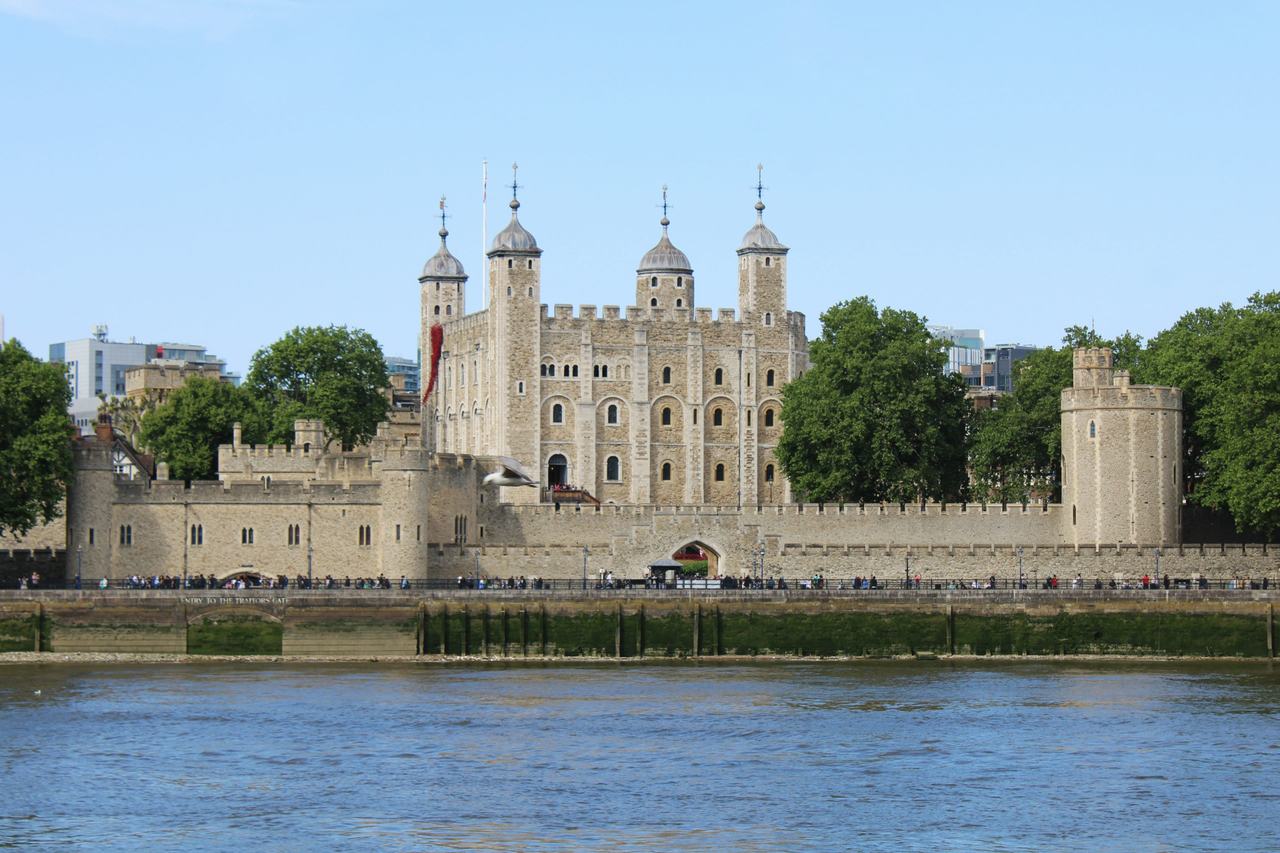
Founded by William the Conqueror at the end of 1066, the Tower is laid out around the White Tower, its 11th-century keep. It houses the Crown Jewels, guarded by the Yeoman Warders.
The story
The Tower of London was founded toward the end of 1066 as William the Conqueror established Norman rule over England. Its central keep, the White Tower, was built in 1078, combining royal accommodation with a forceful assertion of the new king’s authority. Expansions under Richard I, Henry III, and Edward I surrounded it with defensive walls and a moat, creating the fortress whose general layout has endured since 1285. Over the centuries, the complex served as a royal residence, prison, armory, treasury, and home of the Royal Mint; it remains the home of the Crown Jewels. In the 19th century, restorers Anthony Salvin and John Taylor reshaped parts of the site to recover what they understood as its medieval appearance.
Did you know?
-
Before becoming queen, Elizabeth I was imprisoned within the Tower’s walls—a reminder that even members of the royal family could become its captives.
-
The White Tower’s original entrance stood above ground and was reached by a wooden staircase that could be removed during an attack.
On site, look closely
-
The ravens
At least six ravens live within the walls at all times: belief has it that the kingdom will fall if they leave.
-
Traitors’ Gate
This water gate, beneath St Thomas’s Tower, built from 1275 to 1279, opened onto the Thames.
-
Henry VIII’s armor
In the White Tower, the Royal Armouries display armor made for the king, including a silvered and engraved armor from about 1515.