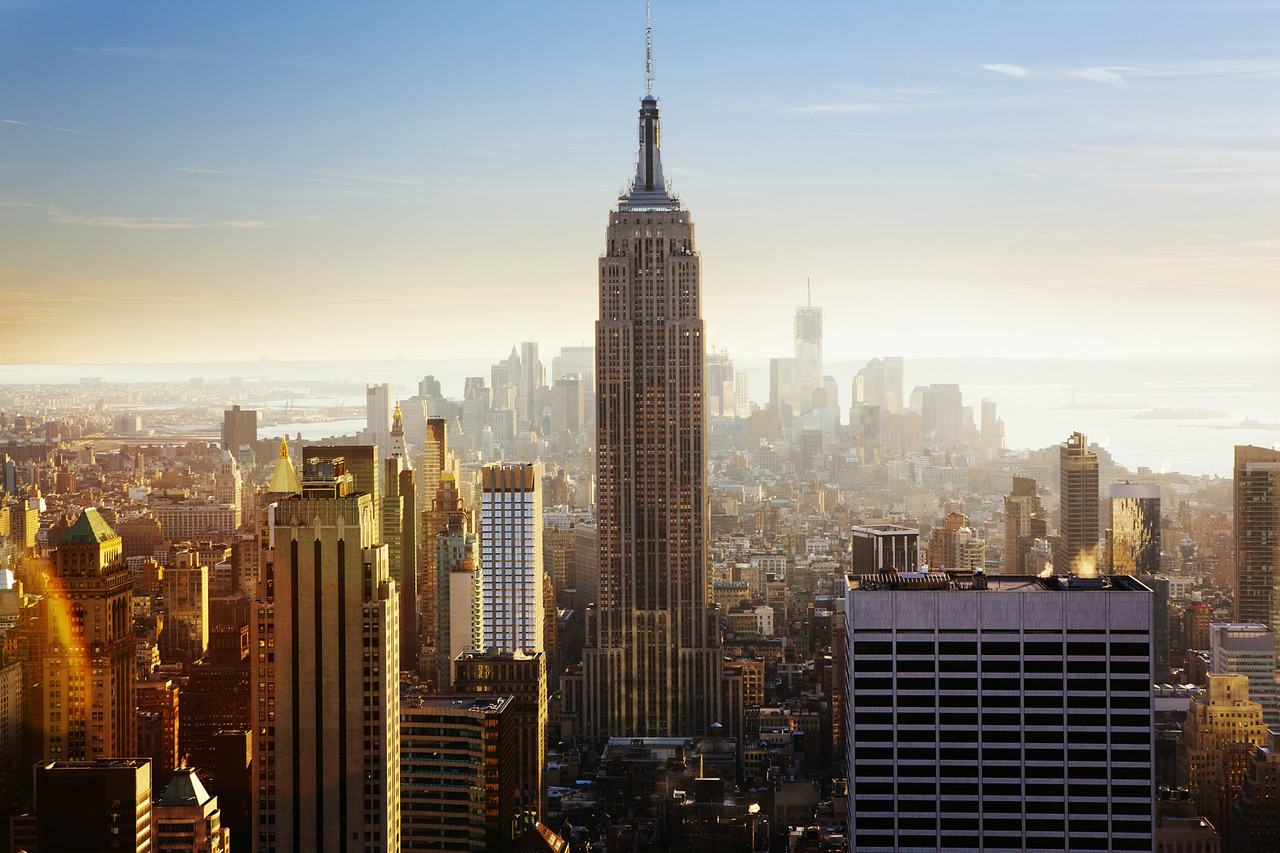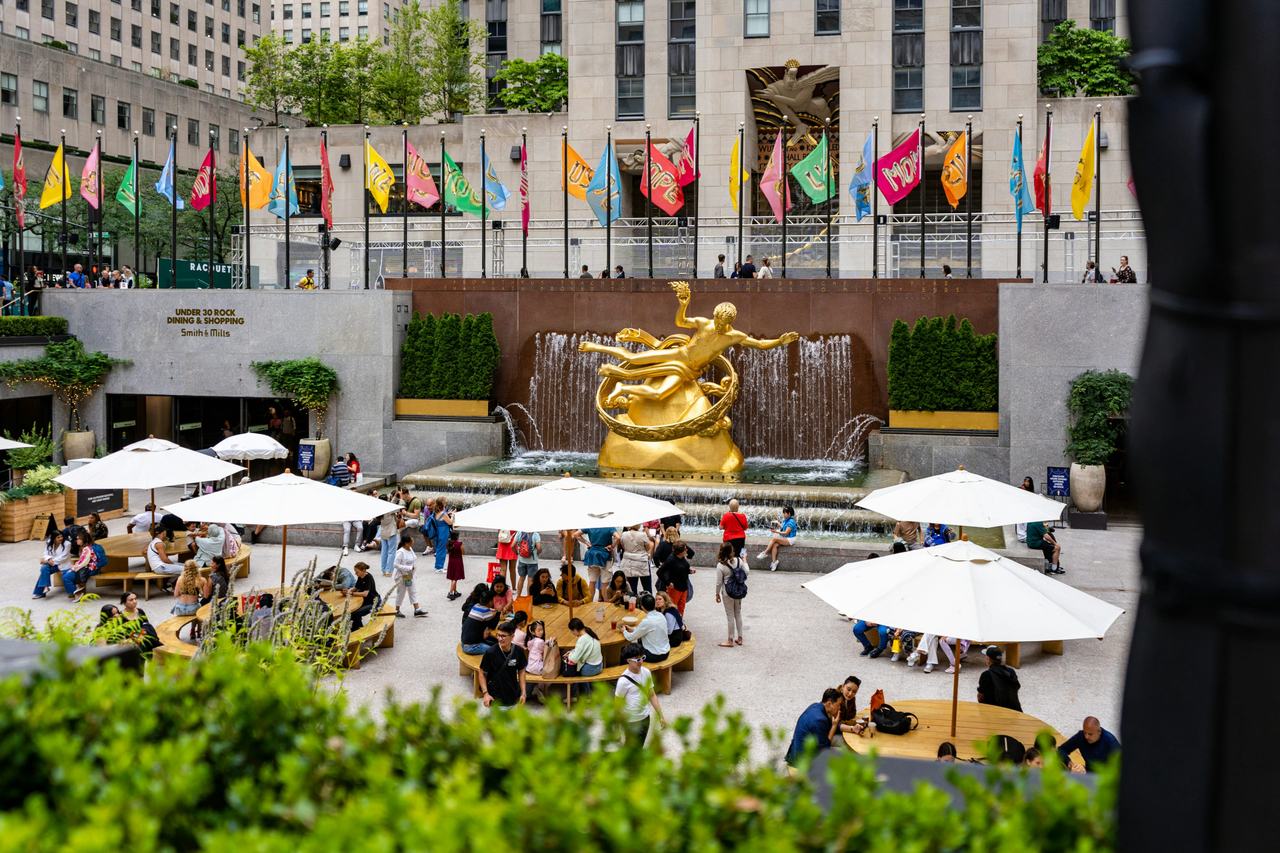
Conceived by John D. Rockefeller Jr., the complex lines up fourteen original Art Deco buildings between Fifth and Sixth Avenues, around a plaza where people skate in winter; at the top of 30 Rockefeller Plaza, Top of the Rock looks out on Central Park and the Empire State Building.
The story
Rockefeller Center grew from John D. Rockefeller Jr.’s plan to build a new Metropolitan Opera house on land leased from Columbia University in 1928. When the opera company withdrew after the 1929 stock market crash, Rockefeller redirected the development toward broadcasting and entertainment, securing RCA and its subsidiaries NBC and RKO. Designed by the Associated Architects under Raymond Hood, construction began in 1931, the first buildings opened in 1933, and the core was completed by 1939. Its original 14 Art Deco buildings combine offices and entertainment venues with a sunken plaza, rooftop gardens, and extensive public art; later additions brought the complex to 19 buildings.
Did you know?
-
Before the skyscrapers, part of this site held the Elgin Botanic Garden, opened by physician David Hosack in 1801 as the country’s first public botanical garden.
-
John D. Rockefeller Jr. initially resisted attaching his family name to the commercial development.
Publicity adviser Ivy Lee persuaded him that it would help attract tenants, and the name Rockefeller Center was formally adopted in December 1931.
On site, look closely
-
Prometheus
At the end of the sunken plaza, Paul Manship’s gilded Prometheus, installed in 1934, overlooks the skating rink, which opened two years later.
-
Atlas
Facing Fifth Avenue, the statue of Atlas is one of the twelve works the sculptor Lee Lawrie contributed to the complex.
-
The lost mural
In the lobby of 30 Rockefeller Plaza, Josep Maria Sert’s large painting, American Progress, replaced a fresco by Diego Rivera that was destroyed before it was finished: it showed Lenin.