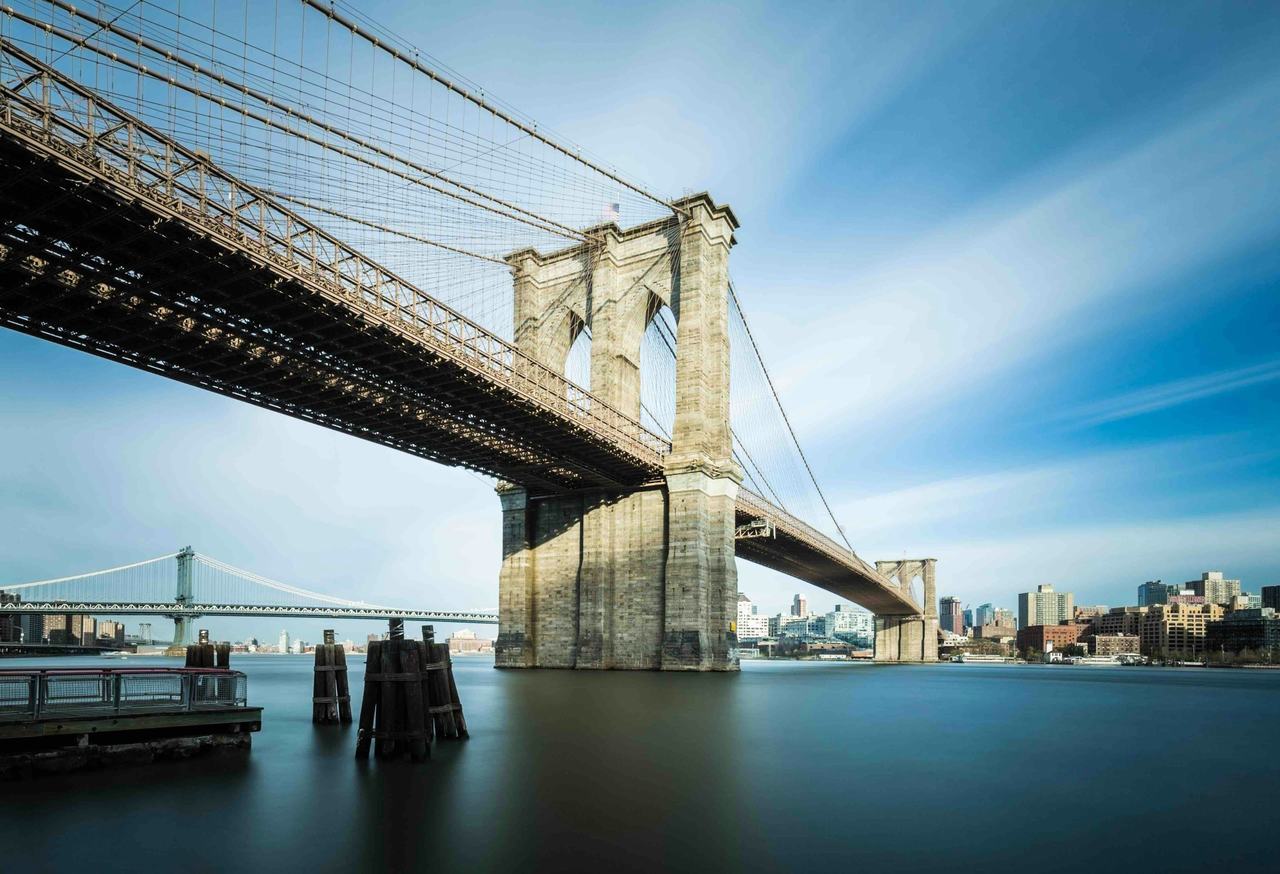
Designed by John A. Roebling and opened on May 24, 1883, the Brooklyn Bridge was the first fixed crossing between Manhattan and Brooklyn and, when it opened, the longest suspension bridge in the world. You cross it on foot, for free.
The story
The Brooklyn Bridge spans the East River between Manhattan and Brooklyn, combining neo-Gothic stone towers with a steel-wire system of suspension cables and diagonal stays. Designed by John A. Roebling, it was built beginning in 1870 under his son Washington Roebling, with engineering assistance from Washington’s wife, Emily Warren Roebling. Its opening on May 24, 1883, created the first fixed crossing of the East River and made it the world’s longest suspension bridge at the time. Originally carrying horse-drawn vehicles and later elevated trains, the bridge was repeatedly reconfigured and renovated as transportation changed. Its raised pedestrian promenade runs between and above the roadways, giving you a separate route through the bridge’s structure.
Did you know?
-
During construction, a supplier fraudulently substituted inferior wire for the specified material.
A reassessment still found the bridge to be four times as strong as necessary.
-
The promenade’s iron railings came from Janes & Kirtland, the Bronx foundry that also made the United States Capitol dome.
On site, look closely
-
A family of engineers
John A. Roebling died of tetanus in 1869, at the very start of the project. His son Washington, who fell ill in turn, followed the work from his bedroom; his wife, Emily Warren Roebling, was the link with the engineers. A plaque on the Brooklyn-side tower honors them.
-
The arches of the towers
Each neo-Gothic stone tower opens in two pointed arches; in front of them, the steel cables cross like a web.
-
Barnum’s elephants
On May 17, 1884, the Barnum circus led twenty-one elephants across the bridge, with Jumbo at the head.