



Why the great sites now sell time
A ticket used to open a door. At the Louvre, the Alhambra or Machu Picchu it now buys an hour. Where timed entry comes from, what it protects and how to turn it to your advantage.
Read the story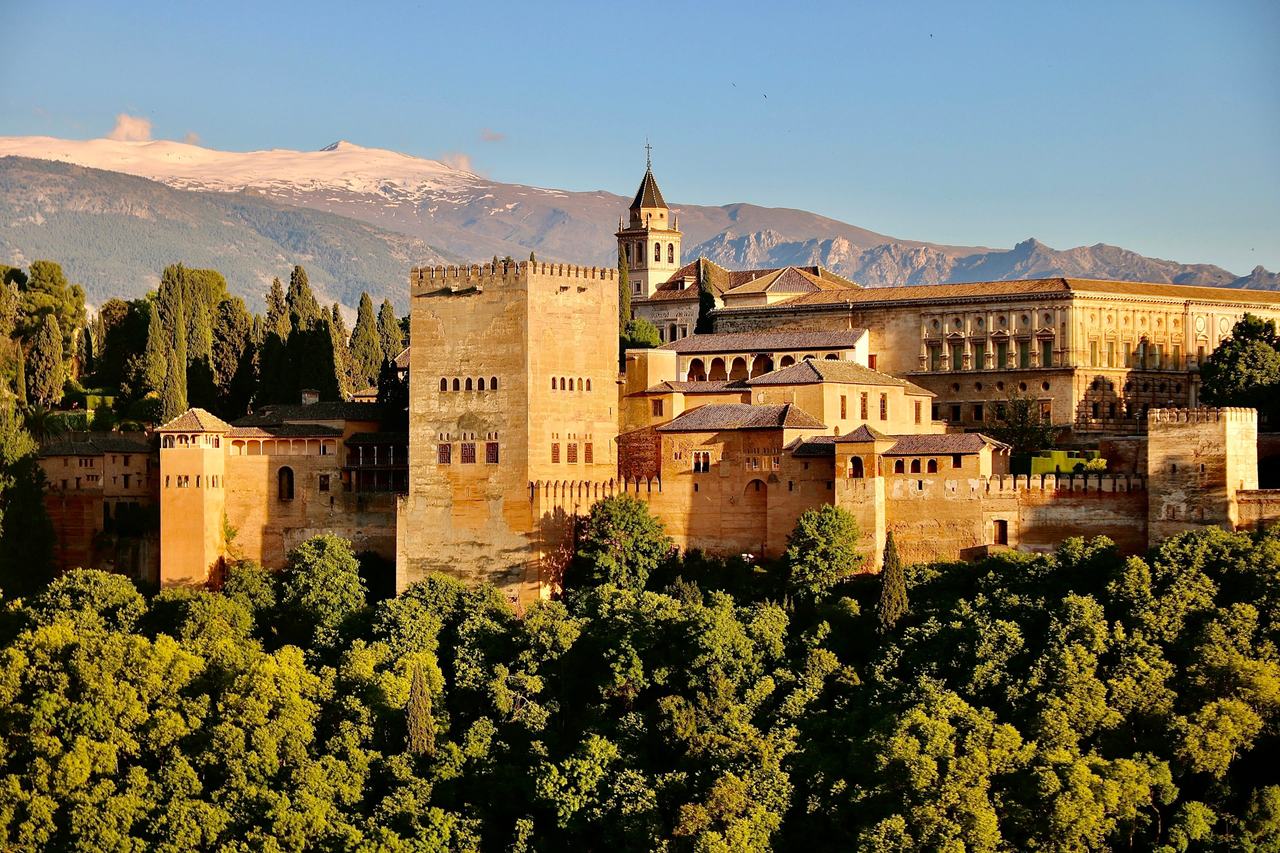
The Alhambra gilded by the sun above the trees, the snow-capped Sierra Nevada on the horizon · Photo by Jorge Fernández Salas, Unsplash
Sources: Turespaña, Spain’s tourism board (booking, best time); Patronato de la Alhambra y Generalife (time needed, don’t miss). Photo by Jorge Fernández Salas, Unsplash.
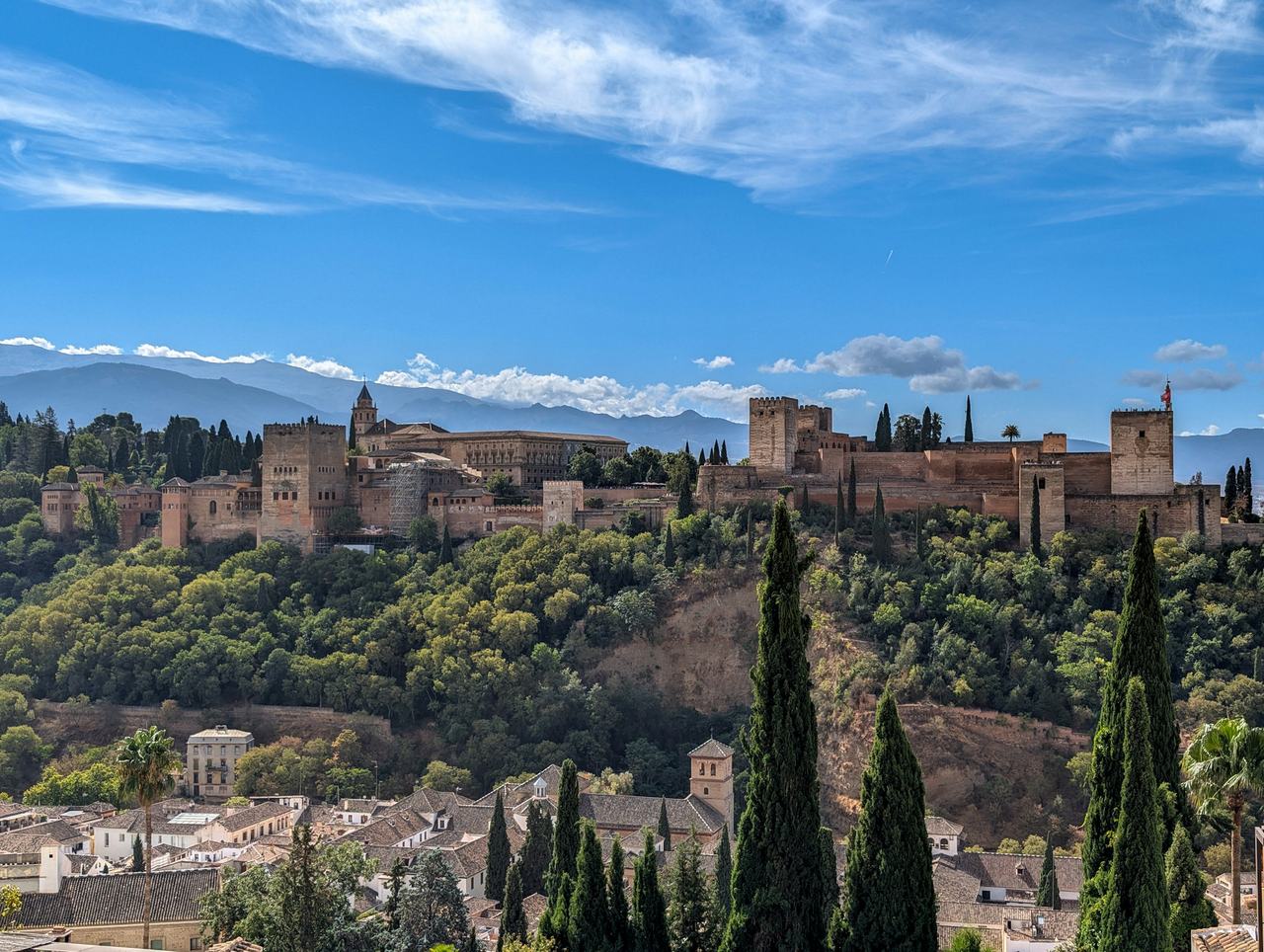
On Sabika Hill, facing the Sierra Nevada, the Nasrid sultans built a citadel and palaces whose carved stucco walls bear poems.
The Alhambra stands on Sabika hill above Granada, where Muhammad I Ibn al-Ahmar began building his royal complex in 1238. Under the Nasrid rulers, it developed into a fortified city with palaces, houses, workshops, baths, and a sophisticated water supply; Yusuf I and Muhammad V shaped much of its surviving palace architecture in the 14th century. Its royal rooms unfold around courtyards with pools and fountains, their interiors decorated with tile mosaics, carved stucco, Arabic inscriptions, and sculpted muqarnas vaulting. After the Christian conquest of Granada in 1492, the complex became the royal court of Ferdinand and Isabella, and Charles V commissioned a Renaissance palace beside the Nasrid palaces in 1526. Centuries of decline were followed by study and restoration beginning in the 19th century.
The name Alhambra comes from Arabic for “the red one,” referring to walls whose reddish color comes from iron oxide in the local clay used in their rammed-earth construction.
Washington Irving’s Tales of the Alhambra, published in 1832, helped bring the complex to international attention after Napoleon’s troops had destroyed parts of it in 1812.
The Fountain of the Lions
Twelve marble lions carry the basin of the courtyard named after them; channels in the shape of a cross run toward the halls around it.
The honeycomb vaults
In the Hall of the Two Sisters, the dome is made of thousands of stucco cells, the muqarnas, which break up the light like a starry sky.
The poems on the walls
Some of the inscriptions are verses composed for the place, notably by the poet and vizier Ibn Zamrak: the hall speaks of itself to those who can read it.
Distances as the crow flies; walking times are estimates. Known places from Wikidata.