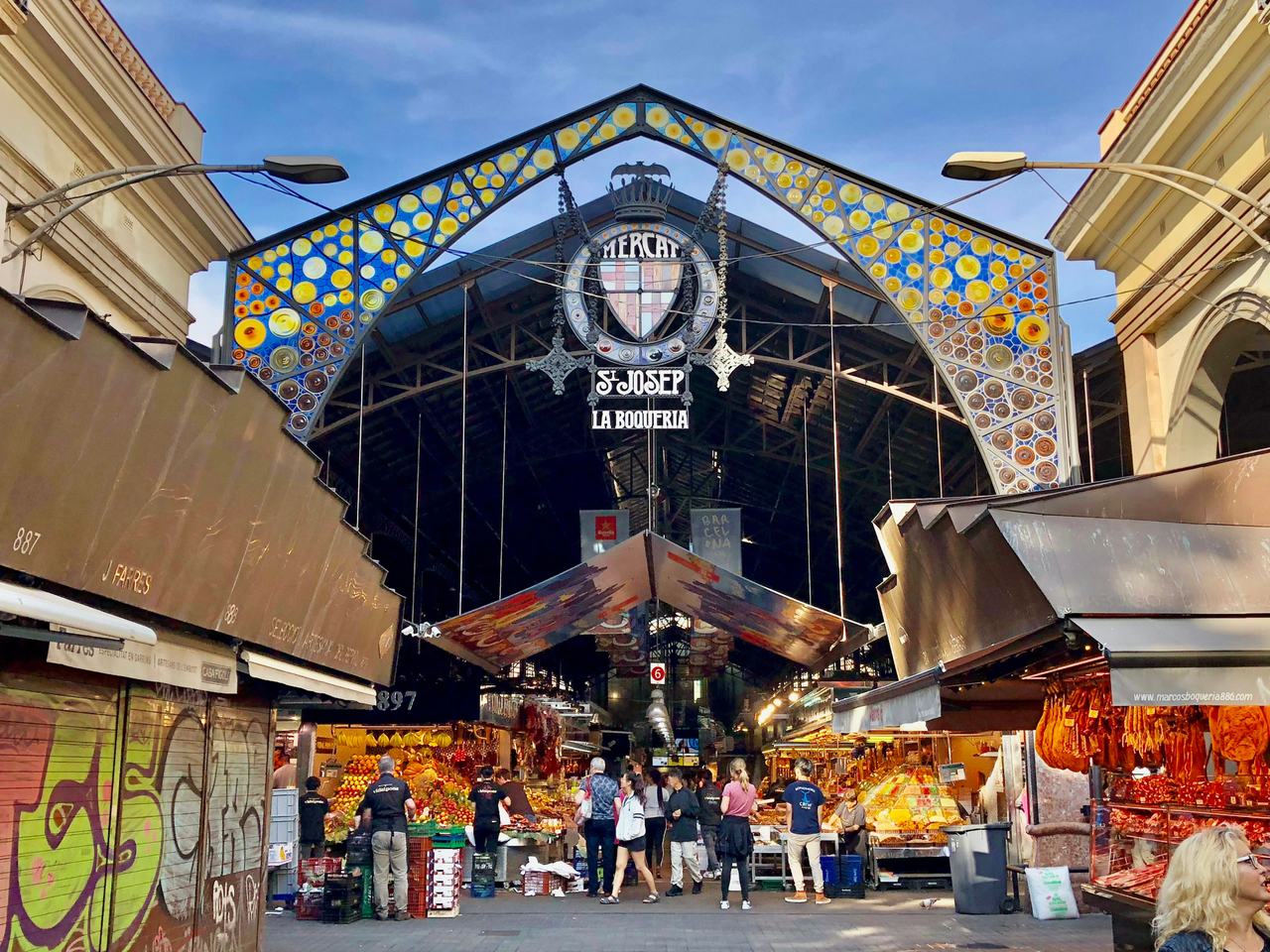
Opened in 1840 on the site of the former Convent of Saint Joseph, hence its official name, Mercat de Sant Josep, the market gained its iron structure and its entrance on La Rambla in 1914. Its hundreds of stalls and counter bars make it Barcelona’s most famous market.
The story
La Boqueria opened in 1840 on the site of the former convent of Sant Josep, which had been burned during anticlerical unrest in 1835 and subsequently demolished. A column-lined square with surrounding porticoes replaced the convent, and the market’s temporary move into that space became permanent. Its present metal roof was inaugurated in 1914, giving shelter to a market whose roots lay in open-air trading outside the old city walls. Today, its stalls supply fresh produce and foods to both household shoppers and Barcelona’s restaurateurs, while also drawing a substantial tourist trade.
Did you know?
-
The market’s early traders sold outside the city walls to avoid the tax charged on goods entering Barcelona.
-
Vendors once gave customers a flower with their food purchases; the article traces the origins of La Rambla’s flower sellers to this practice.
On site, look closely
-
The entrance on the Rambla
A great iron arch and a colorful stained-glass sign bearing the market’s name open onto the aisles, halfway along the Rambla.
-
The counters
Between the stalls, small counter bars serve dishes made with produce from the market, from the morning on.
-
The stalls
Fruit stacked in pyramids, hanging hams, fish on ice: the market is liveliest early in the morning, before the crowds.