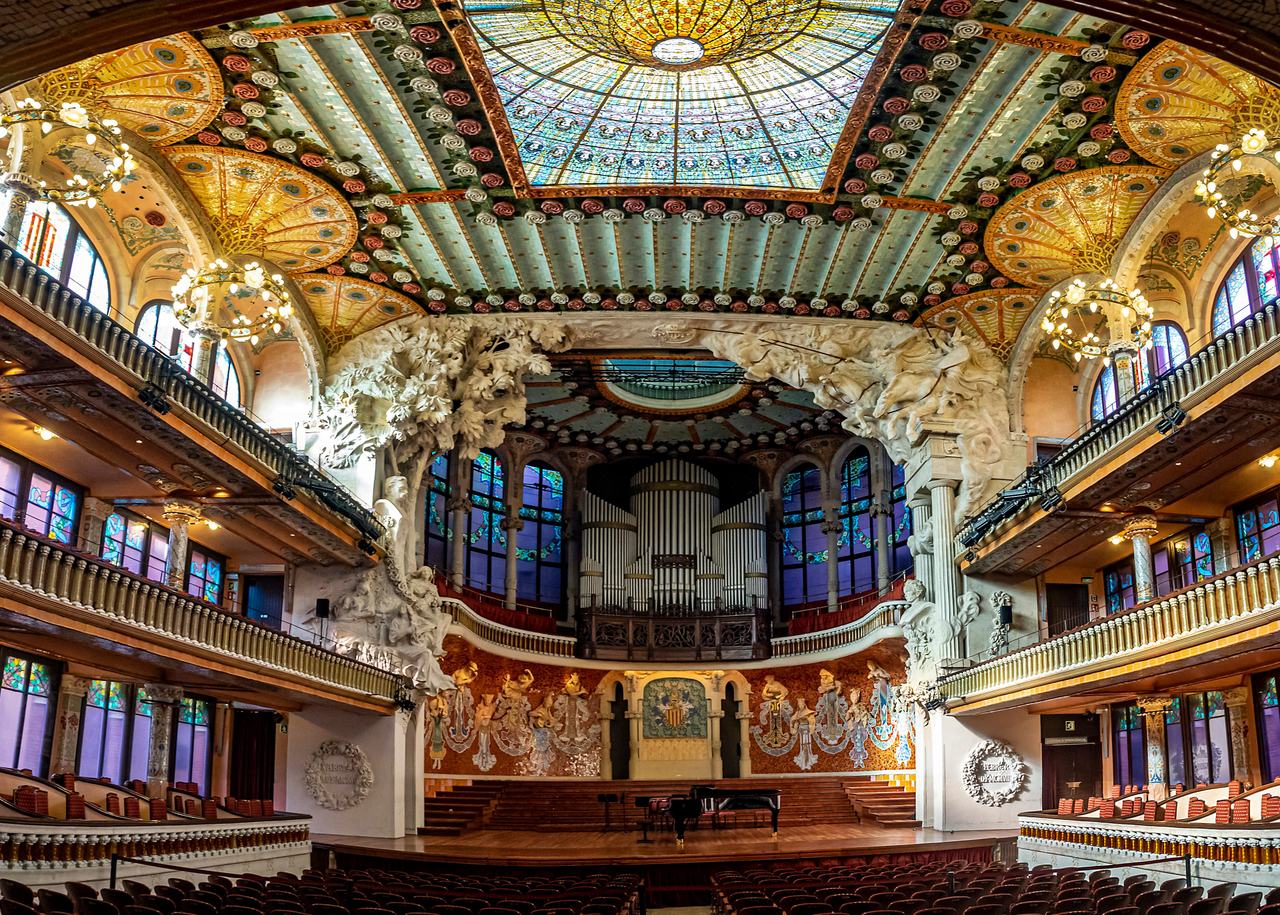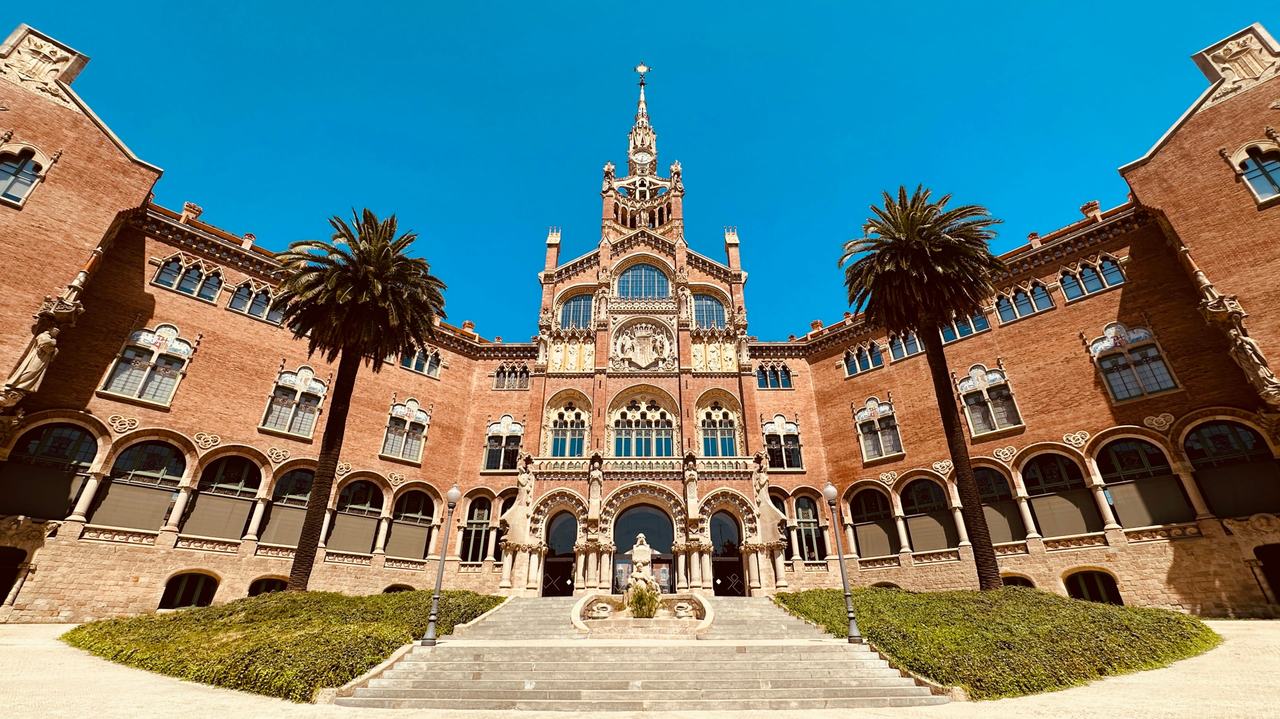
Designed by Lluís Domènech i Montaner and built from 1902 to 1930, the Hospital de la Santa Creu i Sant Pau is one of the largest Modernista ensembles in the world. Its pavilions, linked by underground galleries, cared for patients until 2009; restored, they are now open to visitors.
The story
Hospital de Sant Pau was built between 1902 and 1930 to provide a new home for Barcelona’s Hospital de la Santa Creu, an institution founded in 1401. Lluís Domènech i Montaner designed the complex as an administration building and separate hospital pavilions, linked by underground galleries that allowed patients to be moved between them. He built the first phase in the language of Catalan Modernisme; his son Pere Domènech i Roura continued the work from 1920 in a more restrained version of that style. Although the original scheme was never fully realized, the complex received UNESCO World Heritage recognition in 1997.
Did you know?
-
Banker Pau Gil’s bequest helped finance the new hospital.
The name Sant Pau was added to Santa Creu to honor him.
-
During the Spanish Civil War, the Catalan government took over the hospital to care for wounded combatants and civilians, renaming it Hospital General de Catalunya.
On site, look closely
-
The Administration Pavilion
Beneath its domes, mosaics, ceramics and stained glass by Lluís Domènech i Montaner make up the most spectacular entrance of Catalan Modernisme.
-
The underground galleries
The pavilions of the former hospital are linked by tunnels, through which patients were moved sheltered from the weather.
-
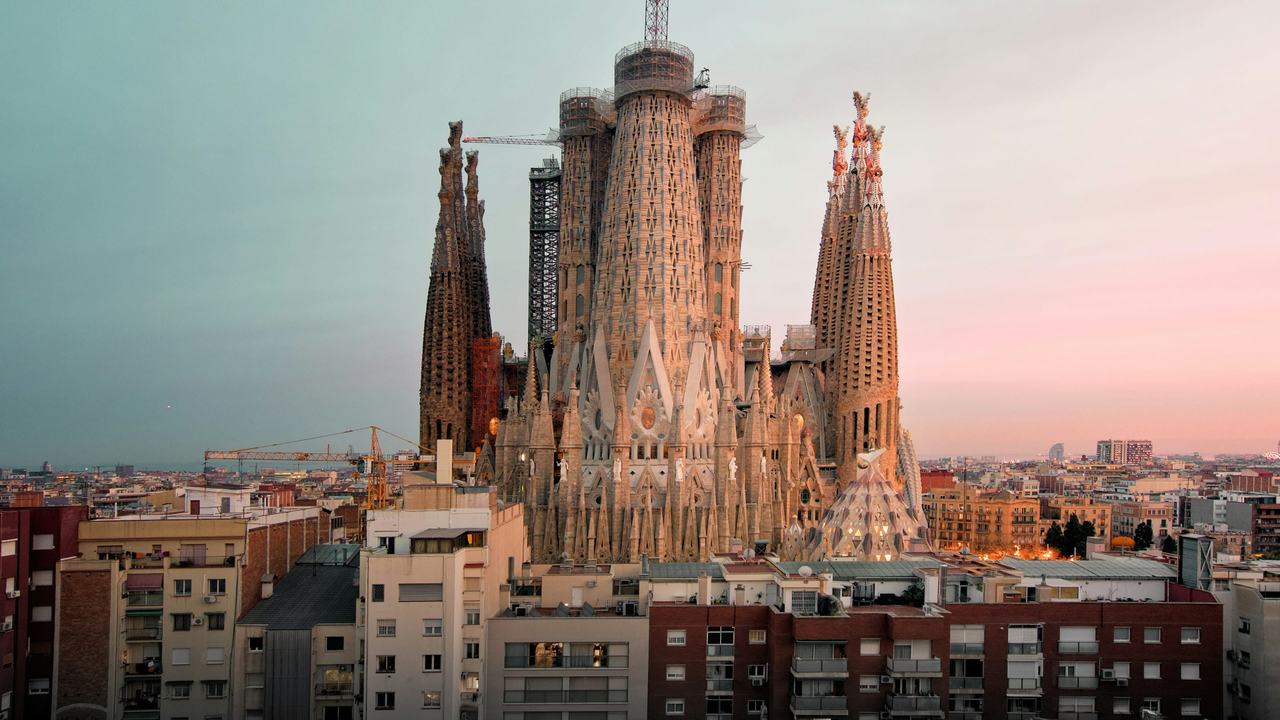
Facing the Sagrada Família
The hospital sits at an angle to the city grid; Avinguda de Gaudí links it in a straight line to the basilica.