



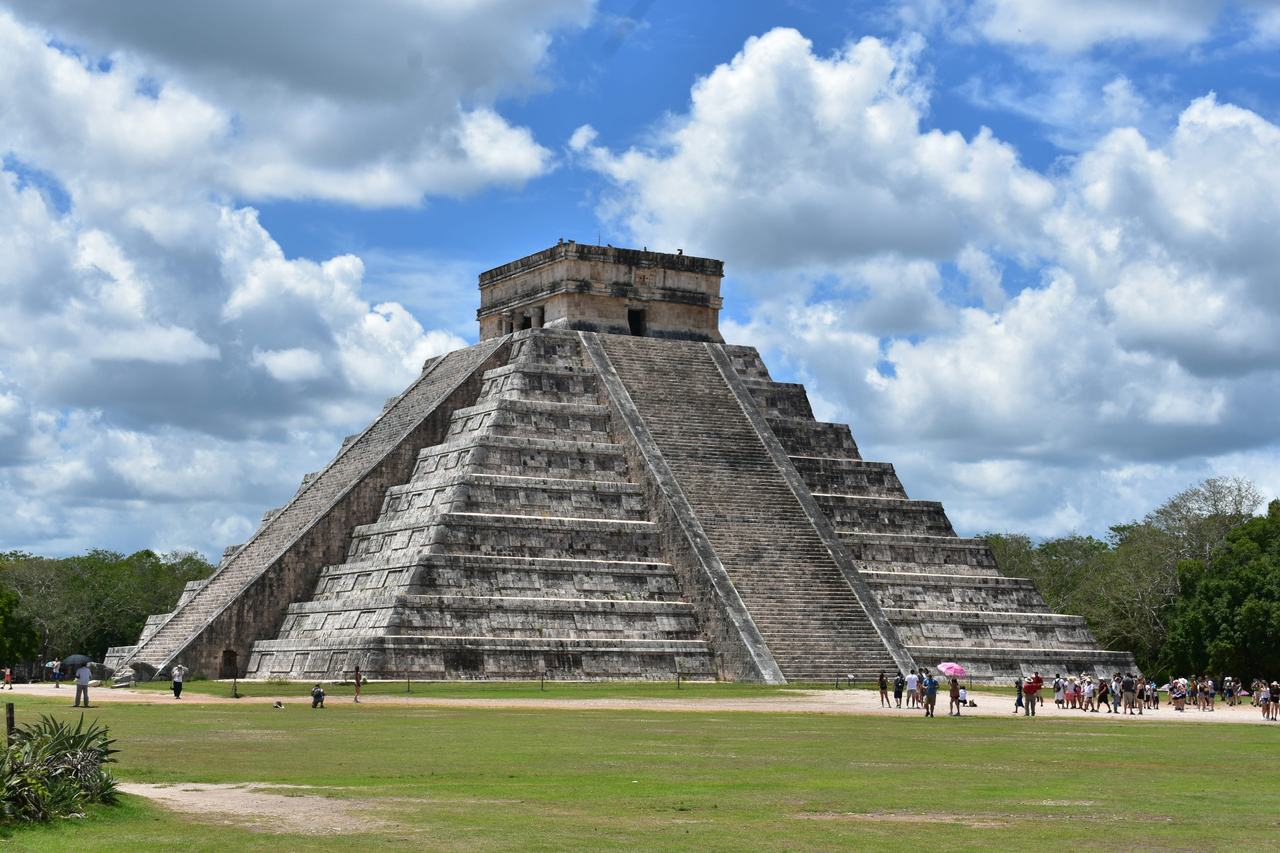
A Maya capital of the Yucatán Peninsula between 987 and 1200, Chichen Itza blends Maya and Toltec features. Around the pyramid of El Castillo lie the largest ball court in Mesoamerica and the Sacred Cenote.
The story
Chichen Itza was one of the largest Maya cities and a major center of the northern Maya lowlands from about AD 600 into the early Postclassic period, roughly AD 900–1200. Its natural sinkholes, known as cenotes, supplied water in a limestone landscape without surface rivers, helping make the site suitable for settlement. Its surviving architecture combines local Puuc and Chenes traditions with forms associated with central Mexico; contemporary interpretations generally understand this mixture as cultural exchange rather than proof of conquest. The ruins are now federal property under the stewardship of Mexico’s National Institute of Anthropology and History.
Did you know?
-
The name Chichén Itzá means “At the mouth of the well of the Itzá,” referring to an ethnic-lineage group that gained political and economic dominance in northern Yucatán.
-
Between 1904 and 1910, Edward Herbert Thompson dredged the Sacred Cenote, recovering gold, jade, pottery, incense, and human remains. Studies of the remains identified wounds consistent with human sacrifice.
On site, look closely
-
El Castillo
The pyramid of Kukulcán rises about thirty meters (98 feet), on nine terraces. You can walk around it, but climbing has not been allowed since 2006.
-
The Great Ball Court
168 by 70 meters (551 by 230 feet): it is the largest ball court of ancient Mesoamerica, and the best preserved.
-
The Sacred Cenote
This great natural well gave the city its name: Chichen Itza, “at the edge of the well of the Itza.”