



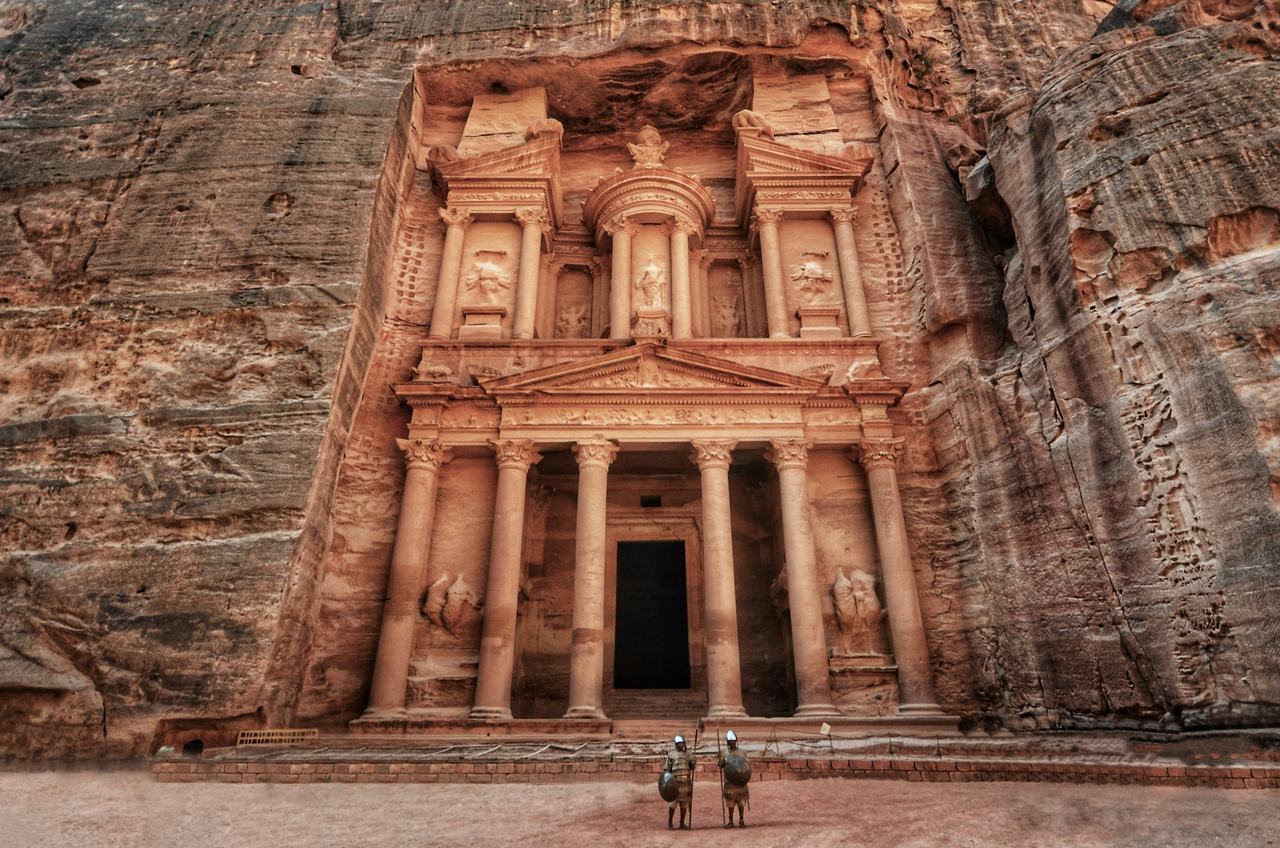
Where the Siq, a gorge three-quarters of a mile long, opens out, the facade of the Khazneh appears all at once: Petra, capital of the Nabataeans, carved its tombs and temples into the cliff.
The story
Petra, near Wadi Musa in southern Jordan, preserves a city of rock-cut tombs and buildings carved into rose-colored sandstone. Settled by the Nabataeans in the fourth century BC, it became their kingdom’s capital in the second century BC and grew wealthy through the incense trade. Water conduits, rainwater collection, and desert farming sustained this trading center in an arid landscape. Rome annexed the Nabataean kingdom in AD 106; shifting trade routes and an earthquake in 363 later contributed to Petra’s decline, although Christian churches were built there during the Byzantine era.
Did you know?
-
Al-Khazneh, often called the Treasury, may actually have been the mausoleum of the Nabataean king Aretas IV; its original purpose remains uncertain.
-
Swiss traveler Johann Ludwig Burckhardt brought Petra to Western attention in 1812, although local people had continued to know the site.
On site, look closely
-
The Siq
For more than a kilometer (over half a mile), the gorge narrows to a few meters; along the walls, the channel that carried water to the city can still be seen.
-
The colors of the sandstone
Pink, ocher, violet: the veins of the rock ripple across the facades and inside the tombs, and change with the light.
-
The Monastery
Ad Deir, even larger than the Khazneh, has to be earned: you climb to it by hundreds of steps cut into the mountain.