Opened in 1957, the Camp Nou is FC Barcelona’s stadium and the largest in Europe by capacity. Renamed Spotify Camp Nou, it has undergone a major renovation; the club museum traces its history, from its beginnings to its European trophies.
The story
Camp Nou opened on September 24, 1957, as FC Barcelona’s new home, replacing Camp de Les Corts, which had no room to expand. Designed by Francesc Mitjans and Josep Soteras with the collaboration of Lorenzo García-Barbón, its continuous oval tiers were inspired by Feyenoord’s De Kuip stadium in Rotterdam. The ground later hosted matches in the 1982 World Cup, the 1992 Olympic soccer final, and European Cup finals in 1989 and 1999. A major renovation began in 2023, prompting the club to play elsewhere before competitive matches returned in November 2025 with reduced seating capacity.
Did you know?
-
Camp Nou means “New Field” in Catalan.
Supporters kept using that name even after a 1965 members’ vote favored the more formal “Estadio del Club de Fútbol Barcelona.”
-
During construction, the nearby farmhouse La Masia served as a workplace for the architects and builders and as a workshop for making models of the stadium.
On site, look closely
-
The club museum
Trophies, jerseys and Ballons d’Or tell the history of FC Barcelona, one of the most visited museums in the city.
-
Behind the scenes
The tour passes through the dressing rooms, the players’ tunnel and pitchside, where the teams walk out to the roar of the stands.
-
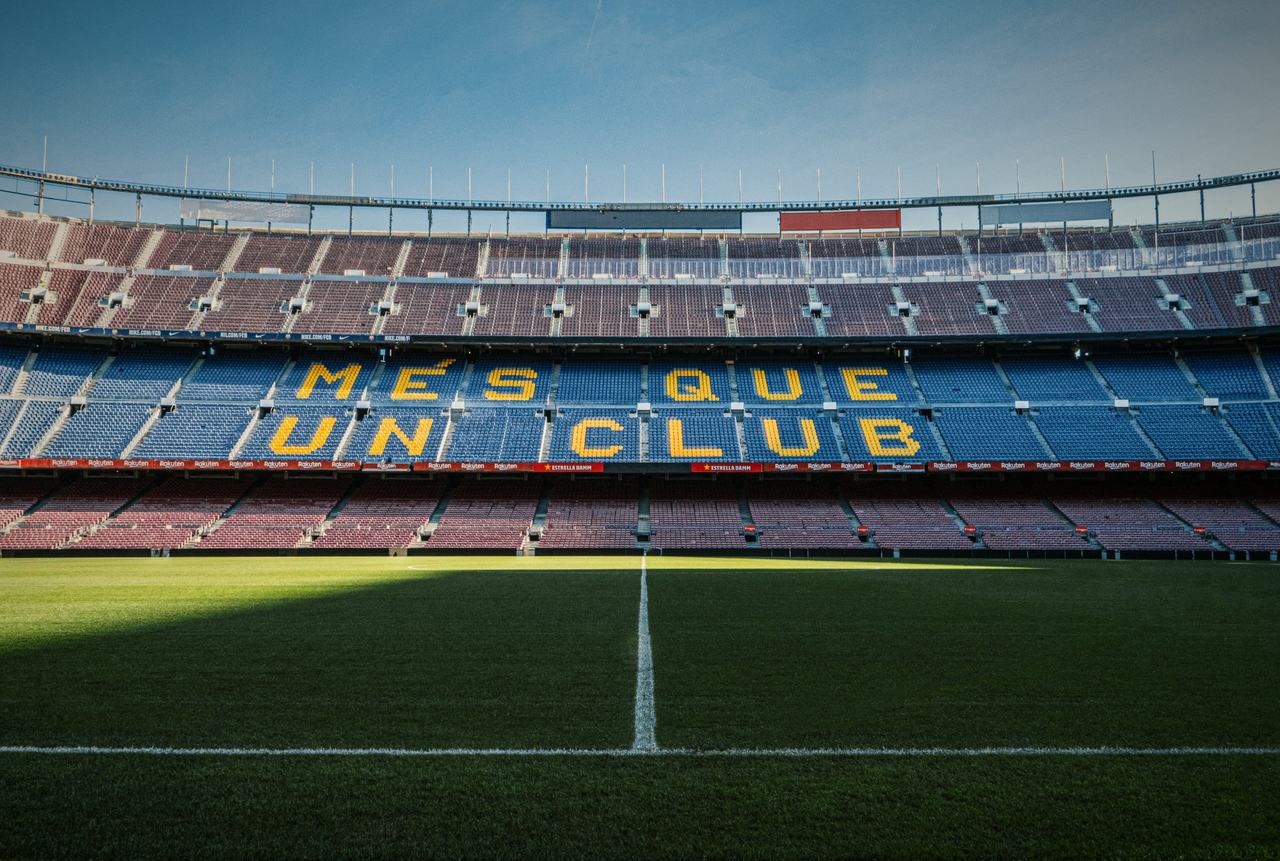
Europe’s largest stadium
Its stands form the largest football ground on the continent, overlooked by the club’s motto, “Més que un club”.